
Shine in Sun: Train Safely for Summer Runs
You’ve finally tossed out the treadmill, spring is upon us, and that Canadian sun is starting to do some real work. Now, it’s time to give ‘er on the roads and knock out those summer kilometres. But have you thought about whether your body’s “battery” is properly charged for the task at hand? Because it looks like not having a running plan before diving headfirst into summer workouts will result in an absolute circus of cramps and “it hurts to walk” mornings.
Sweat is Just Your Fat Crying (And Your Electrolytes Leaving Home).
What happens when you run in the heat? Your body starts up the sweat factory, a fantastic feat of engineering that allows you to cool off as much as possible and prevents the core body temperature from spiking. But this natural body function comes at a price: while you’re losing water, you are also losing important electrolytes such as sodium, chloride, and potassium.
Imagine your electrolytes as being similar to the data plan of your cell phone. You do not actually miss them unless you go without them, and all of a sudden, everything just goes dead. Once your “data” gets low, your body starts experiencing a reduction in blood volume, increased workload on your heart to keep the pace (cardiovascular drift), and even cramps in your muscles, telling you that you are in desperate need. The measurement for such a deficiency is known as Whole-Body Washdown; however, this is usually done by the scientific community, while you and I only get the salt crust.
The 8-Week Itch: Why Consistency Beats the Summer Sprint.
If you believe it is possible to train yourself adequately for a race in the summer by packing all of your mileage into the last two weeks of July, then your shins have something to say about that. Researchers tracking high school runners learned that participants who trained for less than eight weeks during the summer had close to three times the risk of being hurt in their first month of competition.
The key to not ending up in the clinic, then, is consistency – the “secret sauce,” as it were. Based on the data, it seems that the key here is variation. The runners who did not regularly switch between shorter and longer mileage days ended up at significantly higher risk of musculoskeletal injuries. In other words, your body needs a “variety pack” of running distances in order to be able to adapt; otherwise, it will break down eventually.
Lone Wolves vs. The Guidance Gang: The Battle for Better Knees.
Here lies a striking dichotomy in the way we tackle our training. According to statistics, 84% of males prefer being “lone wolves” when it comes to training, whereas females are much more inclined to become part of the “guidance gang.”
What does this mean for your safety in the summer? Professional assistance typically implies adopting a well-rounded periodization schedule, which means giving your body time to heal during training phases. Where men usually aim to achieve higher daily mileage and duration regardless of the training phase, females tend to prioritize their physical well-being and recreational motives. No matter whether you decide to take the route of a lone wolf or seek professional guidance, there should always be one thing in common – ensuring your exercise focus does not lead you to forget about the importance of transitional phases of your body.
Hills and Thrills: When Your Legs Decide to Stage a Walkout.
Who doesn’t love the feeling of success after tackling a big hill? Yet, for others, hills can be hazardous – particularly for women who train on very high elevation terrains or bumpy terrains for more than one-third of their training times. This results in an increased rate of occurrence of knee and tibia bone injuries, which can best be described as driving a sports car on a 4×4 trail.
In order not to let your “bouncer” go on strike, it is essential to perform regular NMT training. NMT incorporates different types of physical activities such as aerobic, agility, strength, and balance exercises. For example, simply performing planks and lunges at least twice per week is enough to protect your lower extremities from any possible injury. This means that there is no need for a long gym workout; a short session of pre-flight safety training of only 10 minutes in the morning is enough to guarantee safe jogging without pain in the physiotherapist’s office.
Disclaimer: The content provided is purely informative and educational and should not be considered a substitute for proper medical advice. It should not be used as a guide to diagnosing any medical conditions or seeking treatment for any illnesses or injuries.
Reference:
Keefe, M. S., Benjamin, C. L., Casa, D. J., & Sekiguchi, Y. (2024). Importance of electrolytes in exercise performance and assessment methodology after heat training: a narrative review. Applied Sciences, 14(22), 10103.
Levinger, P., Dreher, B., Fearn, M., & Hill, K. D. (2025). Successful Implementation and Sustainability of a Physical Activity Health Promotion Approach Utilising Community Peer‐Led Training: Case Studies of Two Local Governments in Victoria. Health Promotion Journal of Australia, 36(2), e70005.
Räisänen, A. M., van den Berg, C., Owoeye, O. B., McKay, C. D., & Emery, C. A. (2022). Running every time, planking sometimes: youth adherence to a neuromuscular training program. Translational Journal of the American College of Sports Medicine, 7(4), e000209.
Rauh, M. J. (2014). Summer training factors and risk of musculoskeletal injury among high school cross-country runners. Journal of orthopaedic & sports physical therapy, 44(10), 793-804.
Tanous, D., Motevalli, M., Wirnitzer, G., Leitzmann, C., Rosemann, T., Knechtle, B., & Wirnitzer, K. (2022). Sex Differences in Training Behaviors of 10 km to Ultra-Endurance Runners (Part A) – Results from the NURMI Study (Step 2). International Journal of Environmental Research and Public Health, 19(20), 13238.
- Share

Magazica Editorial Team
Magazica is a dedicated platform for businesses, subject matter experts, health advocates, and various sectors within the health industry. At Magazica, we are committed to sharing the latest health information and developments with our audience. We serve as a gateway for health-related businesses to showcase their progress and advancements, demonstrating how they contribute to enhancing people's wellness.

The Importance of Rest Days in Your Summer Fitness Routine
As summer arrives with its long daylight hours and inviting outdoor conditions, the temptation to ramp up your fitness...
Trailblazing: The Best Accessible Hiking Trails Across Canada
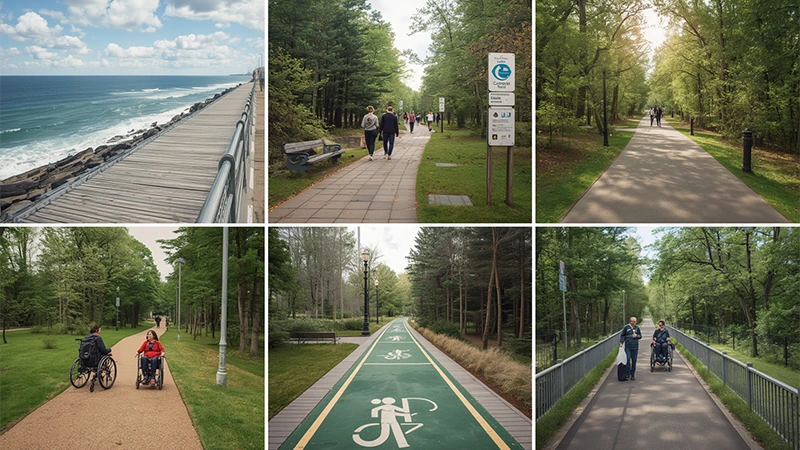
salty boardwalks on the Atlantic coast to city-side green spaces in Ottawa–Gatineau and coast-to-coast mapping on the...

Outdoor Yoga: Canada’s Most Beautiful Studio Is Outside
Fresh air, birdsong, a mat beneath your feet, and the scent of pine or saltwater in the breeze—outdoor yoga is...

Puddle-Jumping Workouts: Embracing the Rain for Outdoor Cardio
Remember when you couldn’t resist jumping into a puddle right after it rained? Let's be honest...

Winter Hair Care: Nourish Your Locks When the Mercury Drops
Winter’s dry air and indoor heating can make hair brittle, frizzy and prone to breakage. Dermatologists...

Women’s Health: Closing the Gap
Women’s health has historically been narrowly defined around reproduction...