The 24/7 of You: Why it is the Ultimate Season for a Self-Care Overhaul
Let’s say today the Canadian summer is at its peak, and you are probably trying to make the most of your time by enjoying a hike or a backyard barbecue party. However, there is one particular reason why this date is reminiscent of the name of a convenience store – it marks the International Self-Care Day and all its focus on the “24/7” aspect of self-care. Interestingly enough, it turns out that the whole month before this event, Self-Care Month, is anything but a period of relaxing with face masks and bubble baths – quite the contrary, it is the most active period when we can finally take care of ourselves.
DIY Body Renovations: Defining the Self-Care Movement.
If your experience with health care seems like a bit of a circus act nowadays, then you must be searching for a way out of it. The term ‘self-care’ is generally perceived as a privilege, but the WHO calls it “an ability” that is fundamental for promoting good health and managing diseases in individuals and communities, irrespective of whether there is a professional around or not. It can be described as an individual’s art of being the Chief Executive Officer of his or her biology.
It is safe to say that scientific studies reveal self-care as a multi-level phenomenon. These levels include the individual one, which deals with people’s daily activities, the interpersonal one that concerns how the family influences their lives, and the structural one, which consists of legal opportunities and tools. Most likely, all these mean that you should go beyond your role as a passenger of the healthcare system and become an active “decision-maker” whose adherence to medical prescriptions and healthy changes in lifestyle works.
Conclusion: Self-care is not an activity but a biological one.
The Pharmacy Pit Crew: Your Local Health Keeners.
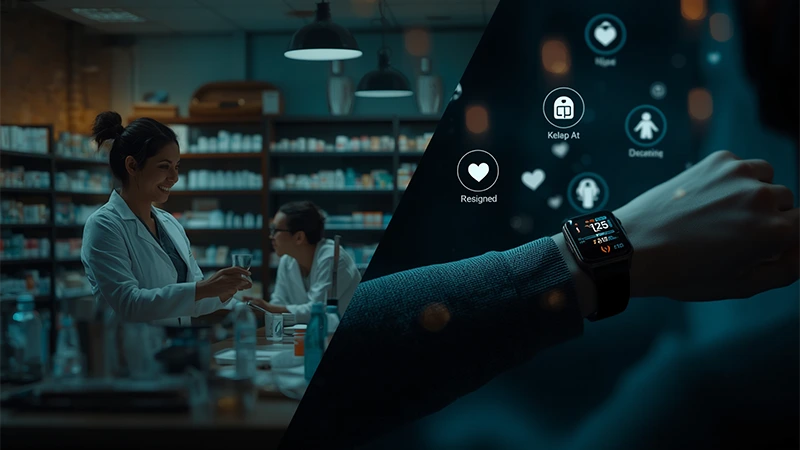
Although your local pharmacy could be viewed simply as a store where you get your prescriptions filled, these teams are, in fact, the healthiest keepers ready to assist you with “filling your boots” with useful information on your wellness. Community pharmacists are the most easily accessible healthcare providers that shift their attention from dispensing pills to dispensing advice about managing self-limiting health problems such as sore throat, hay fever, and mid-summer heartburn.
According to statistics collected through the global survey, more than 77% of pharmacy teams have an outstanding understanding of self-care and are willing to contribute to your health-related decision-making process. They function like a pit crew for your body, providing you with all possible information on medication adherence, nutrition, and physical activities. When engaging with these health care providers, you don’t only “purchase goods,” but enter into a collaboration intended to prevent you from getting sick and having to stay at home for long.
Conclusion: Pharmacists are credible sources of self-care tools that will enhance your quality of life without waiting for a long time at the clinic.
Digital Dashboards: A Personal Trainer in Your Pocket.
We now live in a time where our watches know more about our heartbeat than we ourselves do. The digital self-care tools, such as health tracking apps and wearables, have evolved from being mere “neat toys” to becoming crucial health equipment. Studies show that roughly 36% of patients have started using health tracking apps for monitoring their health, while the rest are using home diagnostic tests.
Such tools act like a dashboard of the physical engine of your body. Through them, you get an insight into what goes on with your physical body in real time. You could monitor everything from your blood pressure to your glucose level right from the comfort of your home. Although there might be some “technical glitches” to sort out concerning privacy and integration of data, such tools are the most important enabler of today’s self-care. With them, you have access to “low-down” on how your body performs so that you can take appropriate action before the small thing becomes something bigger.
Takeaway: Using digital health tools is a key aspect of self-care.
The Summer Sweet Spot: Why July 24th is the Big Deal.
Well, how exactly is it that the thesis claims the mid-summertime frame to be the “commercially viable” jackpot for wellness? The reason behind it is that the International Self-Care Day is the global lighthouse which will point towards the fact that developing good habits now will make a big difference in decades to come. It may be the marketing campaign of the new fitness application, but the month provides a “content-rich” environment, as there is no other time when people are more aware of public campaigns.
Maintaining proper self-care from your twenties till your fifties can be the difference between having a chronic illness and having a healthy, active retirement. Taking care of your health by eating well, moving regularly and sleeping properly is nothing but buying a “health insurance policy” which returns dividends in the form of an extended lifetime in optimal condition. Instead of reacting to your symptoms in the summer, use the power of the Self-Care Month to develop a healthy habit of being healthy. That way, you will avoid the problems and keep your inner “bouncer” busy kicking out the bad guys who wish to ruin your health.
Key Takeaways.
Sources.:
Anderson, S., Carter, R. Z., Roberts, D., Thomas, P., & Hassan, E. (2025). Establishing a common definition for care provided by hospice societies in British Columbia, Canada: a Delphi process. Palliative Care and Social Practice, 19, 26323524251320104.
https://doi.org/10.1177/26323524251320104
Ferguson, L., Anderson, M. E., Satchi, K., Capron, A. M., Kaplan, C. D., Redfield, P., & Gruskin, S. (2024). The ubiquity of ‘self-care’in health: Why specificity matters. Global Public Health, 19(1), 2296970. https://doi.org/10.1080/17441692.2023.2296970
Needs, A. F. M. (2023). Community pharmacy insights: Supporting the need for self-care.
This article is for informational and educational purposes only and does not constitute medical advice. It should not be taken as a medical diagnosis or treatment. Always consult with a qualified healthcare professional for personalized medical guidance.
- Share

Magazica Editorial Team
Magazica is a dedicated platform for businesses, subject matter experts, health advocates, and various sectors within the health industry. At Magazica, we are committed to sharing the latest health information and developments with our audience. We serve as a gateway for health-related businesses to showcase their progress and advancements, demonstrating how they contribute to enhancing people's wellness.

Beyond the Blues: Seasonal Affective Disorder and Winter Well Being
For many Canadians, winter’s shorter days bring more than cold hands and icy streets. Feelings of sadness, fatigue and...

When Temperatures Plunge: Understanding Cold Weather Risks and Staying Safe
Canada is famous for its winters, but plummeting temperatures bring real health risks. The federal...

Feeding the Winter Body: Vitamin D, Nutrition and Staying Well
Sunlight triggers the production of vitamin D, a hormone vital for bone, muscle, immune and mood health...

Wellness Boom; Navigating wellness trends
The global wellness market has become a $2 trillion juggernaut in recent years...

Rest Revolution: Prioritising Sleep and Recovery for Wellness
In a society that glorifies hustle, rest is emerging as a radical act of self care...

Mental Health at Work: Building a Healthy Workplace and Embracing Digital Wellness
October is Canada’s Healthy Workplace Month. The Department of National...