Living Fully, Caring Deeply: Kirsten Woodend on Nursing, Loss, Resilience, and the Power of Human Connection
Some people spend a lifetime mastering a craft. Others spend a lifetime mastering what it means to be human. Kirsten Woodend has done both. Her journey spans coronary care units, university classrooms, hospice rooms, and the quiet, unseen spaces where people confront their deepest fears. She has walked beside patients in crisis, mentored nurses finding their footing, and stood as a companion to amputees rediscovering possibility. Her story is not about titles – though she has many – but about presence, courage, and the radical act of showing up. This interview is an invitation to slow down, listen, and learn.
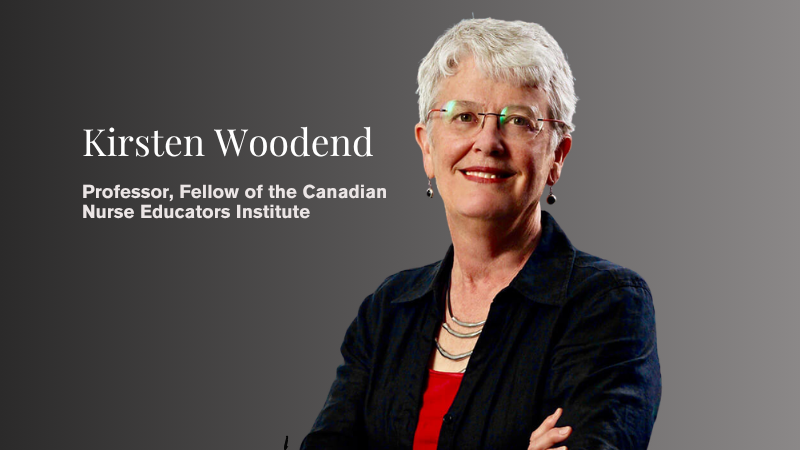
Magazica: Dear readers and viewers, Kirsten Woodend has spent her career at the intersection of science, compassion, and community. As Emeritus Professor of Nursing at Trent University, she has guided generations of students while shaping the future of nursing education in Canada. She’s a Fellow of the Canadian Nurse Educators Institute, an end-of-life doula, and a national leader in peer support for amputees. Her journey spans clinical practice, research, and leadership, including serving as dean. Today, she continues to mentor, write, and advocate for better health and human connection. What makes her story remarkable is not just the titles she has held, but the lives she has touched-whether helping internationally educated nurses find their place in Ontario, supporting families through hospice care, or building resilience in communities across Canada. Kirsten, welcome to Magazica.
Kirsten Woodend: Thank you.
Magazica: Let’s start at the very beginning. When I saw your profile, the first thought that came to my mind was: what an enriched career. How did it all start? Looking back, was there a single experience or turning point that made you realize nursing and advocacy would become your life’s work?
Kirsten Woodend: Sadly, no. I actually wanted to be a forensic pathologist, and life’s journey took me into nursing. I don’t think there was a moment when I said, “I’m going to spend my whole life, my whole career, nursing.” I think nursing became me, rather than me choosing nursing. The more I was involved at the bedside, and then in research, and then in teaching, the more in love I fell with my profession. It wasn’t that I sought it-it grew on me, and I became more passionate about it as I did it.
Magazica: It was like nursing happened to you.
Kirsten Woodend: Nursing happened. Exactly.
Magazica: Nursing chose you, not the other way around.
Kirsten Woodend: Exactly.
Magazica: What about the human side? Many people think of nursing only as medical care. What’s a story from your career that shows the deeper human connection behind the profession?
Kirsten Woodend: I don’t think of nursing as a medical career-I think of it as healthcare. Yes, there are technical tasks nurses do, but one of the biggest things we do is walk beside our patients. We’re there, we’re aware of what’s going on. In a hospital, we’re the one continuous presence.
I’m thinking of a story that reminds me of that humanness. I used to work in coronary care at the Heart Institute in Ottawa. One night, a patient was really frightened, and I had a quiet moment to sit with her. She eventually found that praying would help her sleep, so I stayed and created the space and support she needed. I wasn’t starting an IV or doing a task-it was simply being present when someone felt frightened and alone in an intensive care unit.
Magazica: Yes. Sometimes you just need that human presence that soothes you.
Kirsten Woodend: I think it’s harder and harder for nurses these days, particularly in hospital-based nursing. The structure forces them to focus on tasks and finding those human moments is more challenging. It’s very sad because those moments make a huge difference in people’s illness journeys and in their recovery.

Magazica: As you’ve mentioned, what’s happening in nursing today and how the profession is structured, you’ve taught and mentored countless students. What’s one lesson you hope every nurse you’ve guided carries with them into their career, if there is one?
Kirsten Woodend: I would say it’s relational practice-the being in relationship with the patients for whom you’re caring, making those connections so that you’re aware of what that person’s needs are in that moment and over the long term. It’s the ability to make that connection with people and be in relation with them. I think that leads to things like advocacy, but the most important part is the ability to be in relation with your patients, the people for whom you’re providing care.
Magazica: You have also worked with internationally educated nurses. You’ve helped create pathways for nurses who were trained abroad so they can practice in Ontario. Why does this matter, not just for healthcare, but for society as a whole? What is your take on it?
Kirsten Woodend: We are a multicultural society, and I think it matters for two reasons. One is that internationally educated nurses bring a huge resource to healthcare in Canada. They bring previous experiences, cultural understandings, and perspectives to nursing care in Ontario that are very important.
But the other part is that when people who were educated as nurses in other countries come to Canada and are not able to practice, it’s an enormous waste of a resource we badly need. That was the passion that drove the four of us who manage this program. We felt strongly about launching an internationally educated nurse pathway so we wouldn’t waste this wonderful resource. It was-and still is-very difficult, with many hoops to jump through to be registered to practice in Ontario if you were educated elsewhere.
And we still run the program. We have a cohort of students going through as we speak.
Magazica: Fantastic. What a beautiful way to uphold the Canadian spirit. Peer support for amputees-let’s go into that area. As president of the Amputee Coalition of Canada, you’ve seen resilience firsthand. Can you share a story of how peer support, without disclosing any sensitive details, can change someone’s outlook on life? A story, a trend, anything?
Kirsten Woodend: There’s a growing body of evidence that peer support makes a difference. It makes a difference personally, but interestingly, it can also make a difference in a person’s ability to stick with their rehabilitation program and to see a future for themselves. It can help them better access the resources they need to optimize their health.
I did a peer visit last Saturday-I always come away with a huge smile. When you visit someone, and you’ve been a little further down that journey-I am an amputee-you show them that life is possible. I thought it was kind of funny: I’m not young, I’m an above-knee amputee, which is harder to walk on than a below-knee amputee. My husband had misplaced his car keys, so when I finished the peer visit, he called, and I had to walk from that home to downtown in a small town to meet him.
I think even that idea-that someone of the same age as the people I’m visiting, who has an above-knee amputation, has the ability and empowerment to get up and go and continue with a full life-can be powerful. I can walk downtown and meet my husband. Now, I want to be careful, because some people do stay in wheelchairs after amputation, and that’s okay too. They create a life that way as well.
But yes, it was interesting. After 40 years as a nurse, when I lost my leg in a motor vehicle accident, I didn’t know anything about this. That was part of the reason I became passionate. I had this nursing background, and suddenly I was an amputee, and I didn’t have a clue. I didn’t know how to move forward, what prostheses were, what was involved, what I’d be able to do in the future.
I didn’t have a peer visitor. I did have a colleague at the university who was a paraplegic who helped me with wheelchairs, cars and so on. But what a difference it would have made if I’d had someone early on. I wouldn’t have spent so much time wondering, “Is there any life for me?” I had no models to look at. And that was after being a nurse for 40 years. I was shocked at how clueless I was.
Magazica: And now you are becoming a model for others.
Kirsten Woodend: I hope so. Maybe not even a model, perhaps a companion, and an example of what’s possible despite amputation.
Magazica: Such an inspiring take on life. Thank you for doing that for us and for thousands of your students and colleagues. That is one part of dealing with the vulnerabilities of life. Vulnerability can show up in any form, at any moment. Now let’s go to another side of vulnerability that you’ve seen firsthand-hospice.
We often think, “If I’m doing something, there must be a result.” But these nurses and doctors work with people they know are in terminal illness. Day in and day out, they face this fact, yet they’re still careful about how the needle goes in, whether the person has eaten, whether they’ve taken their morning medication. I always wondered how they do that. So, hospice and end-of-life care, as an end-of-life doula, you walk with people through the final chapter of the book. What have you learned about living well from those moments, and from those moments of saying goodbye in daily practice? What can you say about that?
Kirsten Woodend: I think there can be life at the end of life. Unfortunately, in our society, we do everything possible to deny that there are two ends. We celebrate the birth end, and we try to ignore the other end. But that is part of a full life. I think hospices and end-of-life doulas are beginning to help people have a life at the end of life. Life should be full from beginning to end. We shouldn’t just turn off the TV because we know the end is coming.
It’s interesting, because I volunteer in hospice on Friday afternoons and evenings. One of the families said, “Thank you for being a volunteer in such a difficult role,” and I said, “This is such a lovely end to my week.” My week is always busy with the Amputee Coalition, and I teach, and I work full-time even though I’m retired. So, I get to do this lovely thing of going to the hospice. Our hospice is small and quiet, with lots of space for families to be with their loved ones. She was shocked that I thought this was a lovely way to end the week, and I think that’s part of our denial-that this is part of life.
It’s such a pleasure to be in a space where we are supporting people all the way through to the very last breath.
Magazica: Yes. I’ve seen people… I’ve seen one of my relatives, he was on his deathbed in the UK. I visited him, and he had such a smiling face. He wasn’t in hospice, but he was a stage-four cancer survivor, and eventually cancer caught up with his lungs. Everyone knew he was going to die, but he was smiling. I knew he was in acute pain. I don’t know whether he was a spiritual person or not-he was a distant cousin of my father.
I was very young. I didn’t know how to talk in such a sensitive moment. Nobody prepares you for that. We don’t talk about death in normal family conversations. I asked him, “Why are you happy?” And he said, “This is the moment I have prepared my whole life for. I celebrated my life, and I prepared for my death.” Like meeting a friend, I always wanted to meet, but at the end.
Kirsten Woodend: I think that’s why we’re seeing this resurgence of end-of-life doulas, which are a very old-fashioned sort of thing. It’s an attempt to bring death back into our lives. We’ve turned our backs on it so much, and that has a very negative impact on people who are reaching the end of their lives. Instead of being embraced and seen and treated in ways that support their final days, we turn away.
Magazica: If we have to exit life, let us do it in a great and graceful way.
Kirsten Woodend: Exactly. And it’s odd, because I started my career as an intensive care nurse, where you’re doing everything to keep people alive. Over my life, I developed the maturity so that when I retired, I was very interested in training to become an end-of-life doula and spending part of my volunteer time doing that. It’s not much different from peer support. You’re walking beside people, creating safe spaces to be with them and support them. Much of what I learn and do as an end-of-life doula, I practice in peer support, and vice versa.
Magazica: What a beautiful way to end your week.
Kirsten Woodend: Yes, exactly.

Magazica: What practical mindset or habit helps people move forward when life feels overwhelming? You are a very strong person, expressing strength in a very soft way. What helps people move forward?
Kirsten Woodend: Trying to be in the day, in the moment. When you’re recovering, you don’t have to solve tomorrow or next week. Yes, planning is good, but being in the moment, not looking backward, not looking forward, just coping in that moment.
When I’m doing peer visiting, I meet people who get lost in the past- “If this hadn’t happened…”-and it doesn’t help. It uses energy that doesn’t change anything. So, when I do peer visits, I try very much to be in that moment. I answer questions, of course, but I stay present. I think that’s the best way to move forward. You don’t know what’s coming.
For me, I don’t look backward a lot. I’m human, I have moments, but for the most part, I try to be in the moment and then move forward.
Magazica: Very important-be in the moment and keep your energy intact so it can carry you through.
Kirsten Woodend: Yes. We get lost in our angst. We worry about the past, which we can’t change, and then worry about things coming up that we can’t do anything about. You can probably tell I read a lot of Buddhist philosophy.
Magazica: Oh, that’s why this conversation feels very meditative to me. Very meditative. And your work is deeply emotional. You teach people who will be dealing with others’ vulnerabilities, and you treat people who are already vulnerable. How have you learned to protect your own well-being while supporting others?
Kirsten Woodend: I tend to be strong on the self-care side. No matter how busy I am, I still take time to read. I cuddle my dogs and my horses, and family is important to me. I exercise every day. I very much believe that being physical helps with the emotional side.
I don’t need to shut down anything I’m doing or shut it out, but I am careful about taking time to be good to my mind and my body every day. So, every day I do a workout, and every day I take time to read a book, or cuddle our two little dogs, or get out and-what I call- “sniff the horses,” giving them a big hug. All those little things help, without shutting everything else down. I’m not blocking anything out; I’m accepting that I, too, need care.
Magazica: Yes. Being mentally and physically fit is something nobody can see from the outside, but it’s a core tenet of Buddhist philosophy.
Magazica: Strengthen your mind and body. We have to remember that they established the Shaolin temples, one of the fiercest physical-fitness feats human civilization ever saw. And Buddha himself was a very fit person. Physically fit. Even the day before he died, he walked more than ten miles.
Kirsten Woodend: I joke that in some ways, I was set up for my accident. About a week and a half before, I had been at a four-day silent retreat at a local Buddhist temple. Then I had a motorcycle accident-you can imagine it wasn’t just my leg; I broke a whole bunch of things. I was really doing it well. But I had just come from that retreat, so I said I had set myself up to be mindful as I was recovering. I got a little pre-practice in.
Magazica: And it reflects in you. From the very beginning, this conversation has been meditative for me. I practice meditation myself, in a different way, but still centred around Buddhism.
What is the power of community? From classrooms to coalitions, you have built communities of care. What makes a community truly healing, and how can everyday people create that community of care in their own lives?
Kirsten Woodend: It’s so important. I don’t think of myself as someone who needs a group, and yet I very much embrace and enjoy being part of the amputee community. That surprises me, because I wouldn’t have thought I needed community like that.
For instance, we have peer-visitor drop-ins every quarter. There are many amputee support Facebook sites. I sit on the board of the Amputee Coalition, so we meet and work together. I often have meetings with working groups on things we’re trying to move forward. It surprises me how important it is to me to be part of that community with other amputees.
I know many amputees seek that. It’s a place where, in some ways, you feel normal, because everyone else has had a similar experience. We’re all different-we arrived here in different ways-but we share one common thing: we’ve lost one or more limbs, and some of the challenges are similar.
I’ve been part of different online communities, and some I’m no longer part of. It’s the kindness factor-the thing we’re a bit more challenged with these days. Being kind and humane. I’ve gravitated to communities that put that first: being respectful and kind to each other. I experience the same thing in hospice. The staff at the hospice where I volunteer are amazing people. I’m in community with people who are kind and who give of themselves.
It really surprises me how much I’ve enjoyed being part of the amputee community in the way that I have.
Magazica: As you say, the kindness you have inside you and the respectfulness you show-these are the greatest magnets. People gather around you. Without realizing it, you become a lighthouse.
Kirsten Woodend: I think we all do, and we all can. If we’re in the middle of a dark time right now, each of us can light a little candle and keep it going. I keep my fingers crossed that in the long run, we’ll prevail.
Magazica: Yes, we’ll prevail. And looking at the feats you’ve accomplished and the endeavours you’re still in, you’ve done phenomenal work. Even if I could do a portion of it, I’d consider myself lucky. I really hate the word “retirement,” because for me, retirement is when I’m dust again. Whenever I’m dust again, that’s my retirement.
Kirsten Woodend: Yes.
Magazica: It’s a wrong word for me. But still, you are Professor Emeritus, and you’re still teaching. You’re still writing, researching, and mentoring. What excites you? What excites you about the next plan, the next mission, the next task? What keeps you going? What drives you?
Kirsten Woodend: Oddly, and maybe not kindly, it’s curiosity. The desire to keep learning. I joke that when I do the peer-visitor training for the Amputee Coalition, we sit together for eight hours learning how to be peer visitors. Despite having done it many times, I always come away learning new things.
When I’m working with a graduate student, I’m always learning new things. That very much drives me. It may not sound like kindness or well-being, but curiosity is what keeps me engaged. Yes, I want to make a difference, and yes, I hope we’ll all make the world a better place. But it’s the ability to constantly learn new things. By the time I get to the end of my life, I’ll barely have touched what there is to know.
Magazica: Curiosity means you are alive inside.
Kirsten Woodend: Yes.
Magazica: People die inside first, then it manifests in the physical body. That’s what I’ve understood from life so far.
Kirsten Woodend: We have the Trent Centre for Aging and Society. I sit on its executive committee, and they put out a magazine. They interviewed a man-I think he was about 100-and one of the things he said about getting older was, “Never retire.” I don’t think he meant to retire from your job; he meant never to retire from being engaged in all kinds of things. I thought that was a great piece of advice. And I tease my friends who are still employed that I have fewer holidays than they do.
Magazica: That’s why you’re so alive, and that’s why you touch so many people’s lives in such a proactive way. I’ve seen my seniors around me-at a young age, you’re active, but as you gain experience, you become proactive.
Kirsten Woodend: Yes, I think so.
Magazica: Because your intelligence becomes more crystallized. Experience filters it into a deeper understanding and deeper knowledge. So now you’re proactive-you’re active or busy. You’re contributing to people, contributing to society. And that’s why you said, I think, “never retire.”
One last message to the audience. You’ve shared so many gems, and we’ve learned so much from you. There’s no end to it, because you’ve had such a long career and touched so many lives. If you could leave our listeners and readers with one piece of wisdom-something they could carry into their own lives starting today-what would that be?
Kirsten Woodend: I think it is: be good to yourself in ways that allow you to engage with the rest of the world and be good to others as well. I do think it starts there. And I’m sorry-Buddha said that too. You need to take care of yourself, and then you are able to take care of others.
Magazica: So true. Such a simple line, but yes. In this age of social media, in this age of economic uncertainty, the first thing we ignore is ourselves.
Kirsten Woodend: Yes, and if you yourself are rich, then you don’t need to engage in all of that uncertainty and negativity around us. You need to step away for a moment and be good to yourself. Then you can cope with all of that-and help other people cope with all of that.
Magazica: Thank you. Thank you very much for being with us today and giving us such a meditative conversation. I’m repeating the term, but it’s the only good term I know. This is one of the most meditative conversations I have ever had. I’ve interviewed a lot of people in my life-this is one of the most meditative conversations I’ve ever had.
Thank you for being with us.
Kirsten Woodend: Thank you.
- Share
Kirsten Woodend
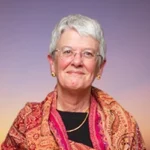
Kirsten Woodend is an Emeritus Professor of Nursing at Trent University and a Fellow of the Canadian Nurse Educators Institute. With a distinguished career spanning clinical practice, research, and academic leadership, she has shaped nursing education across Canada. As an End‑of‑Life Doula (EOLDAC), ACC Certified Peer Visitor, and Trainer, she brings a rare blend of clinical expertise and compassionate presence to her work. Woodend is recognized for her leadership in peer support for amputees, her commitment to community-centred care, and her lifelong dedication to advancing humane, relational healthcare.
Community Gardens: Cultivating Food and Neighbourhood Bonds
On a sunny Saturday morning in many Canadian neighbourhoods, a community garden is one of the liveliest places...

Indigenous Canoe Journeys: Healing Through Water and Tradition
Think of a river upon which no cedar canoe had set foot for more than a hundred years. Not due to any changes in the...
Breaking the Stigma: Community Initiatives for Youth Mental Health in Canada
There is a quiet crisis unfolding in communities across Canada — one that doesn't always make the front page but...
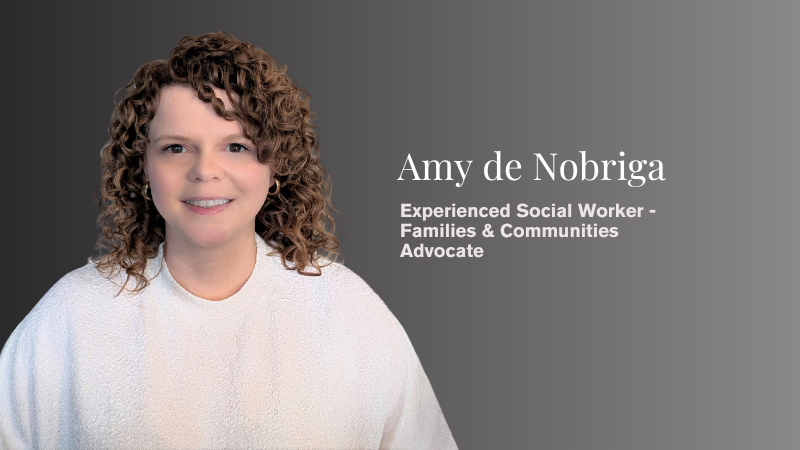
Walking Beside People: Amy de Nobriga on Trauma, Healing, and the Future of Social Work
Some people run toward the fire when others run away. Amy de Nobriga is one of them. For more than twenty years...
Canadian Indigenous Seed Saving: Preserving Culture and Food Security
For thousands of years, Indigenous peoples have been the original seed keepers of this land. Today, communities...
How Canada’s Health System Frames War-Affected Children: Understanding Complex Trauma in Young Newcomers
A child sits quietly in a clinic waiting room in Canada. The child arrived only a few months ago, having fled a...