
The Psychology of Play: Why Adults Need Summer Recess Too
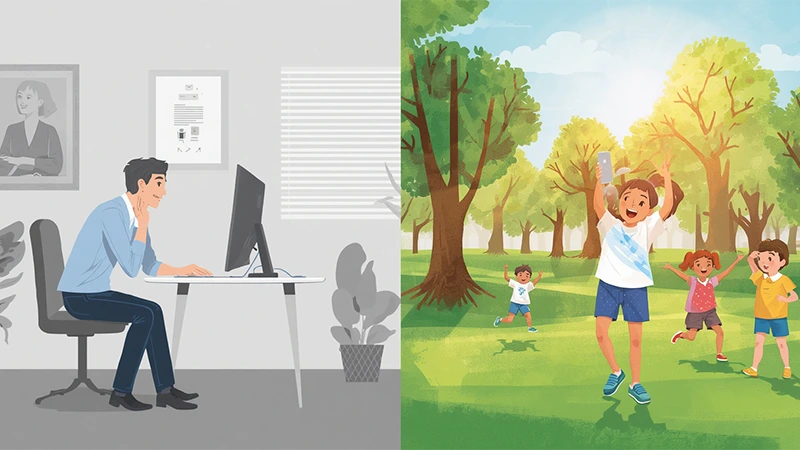
As the long days of summer stretch out, many Canadian adults watch children fill parks and playgrounds while they remain tethered to desks, deadlines, and the digital demands of modern life. The idea of a summer recess can feel like a distant, childish memory. Yet psychological research suggests that the impulse to play is not a frivolous desire to outgrow, but an important contributor to adult mental health, emotional recovery, and resilience.
The Ontario Psychological Association notes that in our productivity-driven culture, play is often misunderstood as a wasteful or immature activity. In reality, play is a powerful tool for regulating emotions, recovering from burnout, and reconnecting with creativity. It is any activity that feels joyful, spontaneous, and immersive state of being that is inherently “purposeless, fun, and pleasurable.” This freedom from productivity is exactly what makes play so mentally nourishing.
The Psychological Case for Play.
The need for play is rooted in our neurobiology. Dr. Gordon Neufeld, a Vancouver-based developmental psychologist, describes play as a sanctuary for our emotions. According to Neufeld, the primary purpose of play is to manage our feelings. It creates what he calls an “emotional playground”, a safe, not-for-real space where the brain can process emotions without them feeling like work. “Play turns out to be the only form of activated rest that’s available to us,” he notes, distinguishing it from passive activities like watching television.
This concept is supported by research from the University of Alberta, which explored how play contributes to holistic wellness across a lifespan. Participants in these studies consistently reported that play was central to their well-being, providing essential elements like joy and coping mechanisms. One participant from the study articulated a sentiment that resonates with many: “It just makes you feel good” was the “bottom line of why we play across our lifespans”. When life becomes stressful, play acts as a counterweight. As one study participant explained, while facing work pressure, the ability to engage in a playful activity creates a necessary disconnect: “it’s like something else did exist, and now I’m relaxed and now I can sit down”.
Play as a Buffer Against Burnout.
For many Canadians, the pressures of work and daily life can lead to severe burnout, characterized by emotional exhaustion and chronic stress. Play offers a preventative tool against this state. Positive psychology research shows that playful adults are more adaptable, less reactive, and more capable of handling uncertainty. Engaging in activities that promote joy can reduce symptoms of depression and anxiety, while building social bonds that are crucial for resilience.
However, the journey back to play is often blocked by stigma. A common misconception is that play is the opposite of work. In reality, “the opposite isn’t work, it’s depression” (Stuart Brown, as cited in a Concordia University study). When we lose our playful approach to life, we can become joyless and anhedonic. The stigma is particularly potent for adults; society often shames them for engaging in activities deemed “childish” outside of specific contexts like parenting or professional performances. This internalization makes it difficult for people to give themselves permission to be playful.
Making Space for Summer Recess.
The good news is that “play” does not require a return to organized sports or a trip to the playground (though it certainly can). It is about reclaiming a mindset. As one University of Alberta researcher emphasized, “It is not what you do, it is how you do it.” Play is a mental attitude, not a specific activity. It can be anything from painting without a purpose, to building with LEGO, to engaging in a spirited board game with friends.
For those feeling the call for a “summer recess,” experts suggest a few starting points:
- Reframe “Productivity”: Give yourself permission to engage in activities that are process-oriented, not outcome-oriented. The goal is the joy of the experience, not a finished product.
- Think Like a Child: Reflect on what you enjoyed doing as a child. Is there a way to revisit or reinvent that activity today?
- Schedule It: In a culture that values busyness, play must be intentional. Even ten minutes of unstructured, joyful activity a day can be a radical act of restoration.
Ultimately, reclaiming play in adulthood is not about escaping reality but about reconnecting with ourselves. As Dr. Neufeld notes, “play may be the active ingredient in therapy when it works. In play, play is a sanctuary for feeling our emotions”. This summer, consider giving yourself permission for a recess—it might just be the healthiest decision you make all year.
And if reclaiming play means asking, “Now where did I leave my lightsaber?”—all the better.
Sources.
- Ontario Psychological Association. (n.d.). The Importance of Play for Adults. Retrieved from https://www.psych.on.ca/
- Neufeld, G. (Vancouver-based developmental psychologist). (n.d.). Play and Emotional Development. Neufeld Institute. Retrieved from https://neufeldinstitute.org/
- University of Alberta. (2023). The Role of Play in Holistic Wellness Across the Lifespan. Faculty of Kinesiology, Sport, and Recreation. Retrieved from https://www.ualberta.ca/
- Concordia University. (2021). Adult Play and Its Impact on Mental Health and Well-Being. Department of Psychology. Retrieved from https://www.concordia.ca/
- Share

Magazica Editorial Team
Magazica is a dedicated platform for businesses, subject matter experts, health advocates, and various sectors within the health industry. At Magazica, we are committed to sharing the latest health information and developments with our audience. We serve as a gateway for health-related businesses to showcase their progress and advancements, demonstrating how they contribute to enhancing people's wellness.

Your Fall Reset: Simple Routines That Help Habits Stick
There's a reason September feels like a second January for so many Canadians. As kids head back to school...
The Overzealous Smoke Alarm: Why Back-to-School Anxiety Goes Off Before There Is a Fire
Back-to-school anxiety explained: what happens inside your child, what to watch for, what actually helps, and...

Managing Vacation Anxiety – How to Unplug from the Office Truly
Visualize this. It is the first day of what has been anticipated by you all the way since March. You made an...

Sleep Hygiene Reboot: Adjusting to Longer Daylight Hours
Let us imagine that it is a Tuesday in late March. After a night's work and the yearly ritual known as the...
The Power of Morning Light: Resetting Your Circadian Rhythm for Spring
Imagine this: It is a Tuesday morning in early April, and you have at last changed your parka for a jacket. But as you...

The Developing Brain Under Fire: How War Trauma Rewires a Generation
New research from Gaza, Ukraine, and beyond reveals the profound neurobiological and psychological toll...