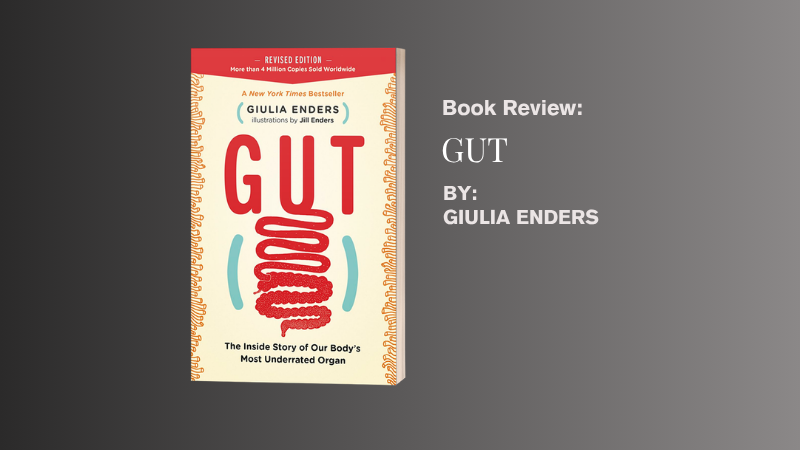
Why Your Microbiome is the Secret to Wellness: A Review of Giulia Enders’ “Gut”
To most of us, the gut is a “Quasimodo” in the body’s architecture – unappealing, uneven and disregarded until it erupts in “fumes” during some social occasion. While we marvel at the beating heart and brilliant mind of the brain, we overlook the intestinal tract with a combination of reticence and embarrassment.
In her acclaimed book entitled “Gut: The Inside Story of Our Body’s Most Underrated Organ”, German medical scientist Giulia Enders offers us the idea that this 20-foot-long, winding tube is indeed a marvel of organization requiring no more power to function than a 100-watt bulb.
As someone who can enlighten Canadians amid the recent onslaught of “gut health” advertising, Enders is certainly a humorous narrator. She does not simply teach biology; she makes the science accessible, bringing us through a tour of the “inner forest” of Grade XII science revisited.
The story starts off with the question which would forever change Enders’ life, “How does pooping work?” That is followed by an amazing explanation of a performance which consists of two nervous systems working together. Enders takes us through the introduction to the internal and external sphincters, “no nonsense little guy,” which represents our unconscious self and “faithful servant” of our conscious self, respectively. The area between them serves as a “taster” area where sensor cells determine whether what is coming is solid or gas and give a report to the brain.
A section which is interesting and provocative for contemporary health enthusiasts includes a discussion of the “porcelain thrones.” According to Enders, such common problems of Westerners as hemorrhoids and diverticulitis do not exist in 1.2 billion people who defecate while squatting. She states that the problem in the civilized world lies in the fact that the sitting posture of defecation forms a bend in the tube that prevents the hatch from opening fully. The advice that she gives to people who are not willing to use squat toilets is quite practical and easy: lean forward and rest your feet on a stool.
In addition to the mechanics of defecation, the book contains information about the importance of the gut as the largest sensory organ of the body. According to the author, the “housekeeper” – a migrating motor complex – starts a cleaning wave an hour after the process of digestion. It is this process that makes people feel that well-known rumbling in the abdomen that Enders says is not caused by the fact that we are hungry, but indicates that the gut has had enough time off from snacking to clean itself.
Being a health critic, however, it is necessary to admit that the most influential aspect of this book is connected with the discussion of the gut-brain axis. Enders explains that the gut is the only organ that has an autonomous nervous system; once disconnected from the brain, it continues to work happily. “Gut brain” produces more than twenty hormones and, probably, the most surprising fact, it creates 95 percent of serotonin in the body. Moreover, Enders suggests that an “unhappy gut can lead to an unhappy mind,” implying that irritating signals from the gut might affect the brain’s emotional centers, thus causing anxiety and depression.
The last third of the book is devoted to a discussion of the microbiome – 100 trillion bacteria that live in our body. Enders regards it as a kind of ecosystem that we have to “cultivate” instead of just cleaning. Thus, she describes the “bad guys,” who are “sombrero-wearing” Salmonellae and “good guys,” which form the main training camp for the immune system.
Enders gives us a more realistic approach to probiotics and prebiotics, not resorting to clichés surrounding a “miracle cure” for every single illness. She argues that whereas probiotics are like “temporary workers who are hired during stressful or antibiotic conditions,” prebiotics – that is, the indigestible fibres in onions, garlic, asparagus and cold potato salad – are the “meals hearty enough to give our good bacteria an edge.”
The text is written in a very understandable manner, thanks to the quirky illustrations done by the author’s sister, Jill Enders. Even though some might say that the “poop talk” goes beyond the necessary level of detail, it comes across as very professional, with the focus being put on providing the reader with accurate information. It even includes research done at Canada’s McMaster University, where gut bacteria were shown to trade behaviour characteristics of shy and outgoing mice.
“Gut” is a wonderful example of science communication that makes you feel “miraculous” instead of “gross”. The author successfully convinces his readers that they are not only the owners of their thoughts but also the protectors of a tiny universe inside them. This book is a must-read for people interested in learning the manual of their own vessel and, maybe, showing some sympathy towards their “inner forest”.
This review is intended for informative purposes only and does not serve as a source of medical advice. Always consult with your healthcare provider before making any changes in your health/wellness practice.
- Share

Suman Dhar
A qualified professional with extensive experience in education and human resources. As a HR Professional, Management Consultant, or Training Specialist, he is interested in cultivating intellect and curating insight.
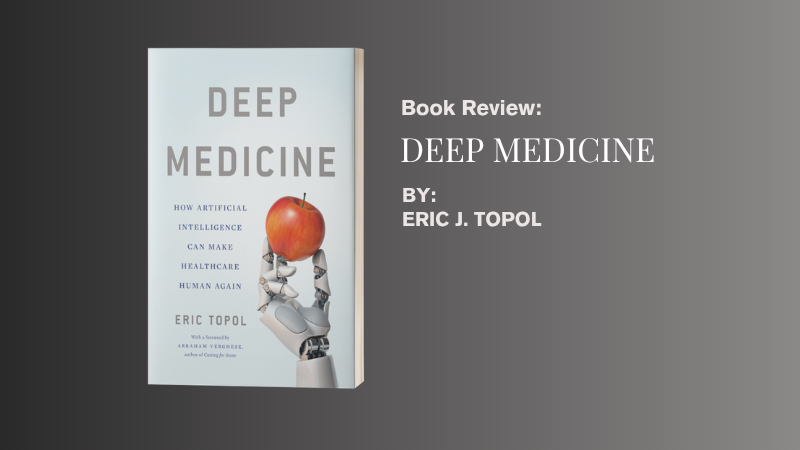
Can Artificial Intelligence Restore Empathy to Medicine? A Review of Eric J. Topol’s “Deep Medicine”
Past the Keyboard: How Deep Learning and the "Gift of Time" Can Heal Shallow Healthcare in Canada...

The Simple Device That Is Keeping People Alive During an Age of Excessive Complexity: An Analysis of Atul Gawande’s “The Checklist Manifesto”
From Surgical Safety to Money Management: How Expertise Is Not Sufficient To Stop Avoidable Mistakes...
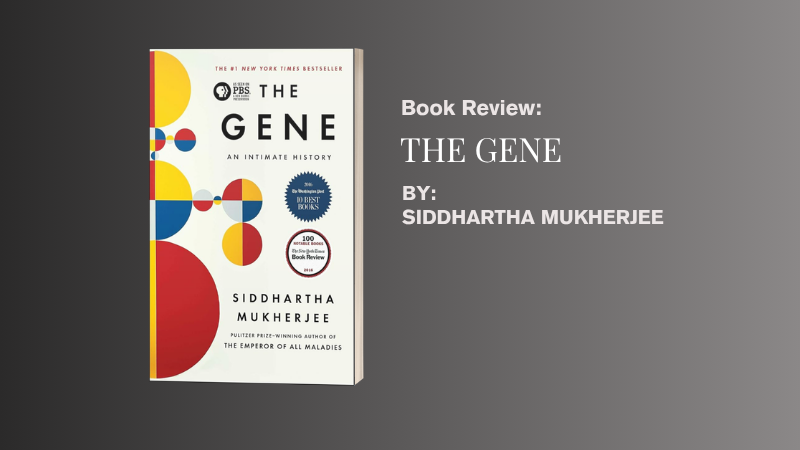
Is Your Destiny Written in DNA? A Review of Siddhartha Mukherjee’s “The Gene”
Whereas the twentieth century could be described as the age of the splitting of atoms and the creation of the digital bits...
Can You Eat Your Way to a Longer Life? A Review of Michael Greger’s “How Not to Die”
Should one be browsing the selection in the health and wellness department of a Canadian bookstore, "How Not to Die"...
Your Body Explained Like Never Before: A Fascinating Tour from Head to Toe
If you were to take your body to a hardware store in an attempt to price out the various elements within...
The Nightly Elixir: Why Sleep is the Billion-Dollar Secret to Living Longer
What if there was a tool, a biological tool, that was part of all of our makeup, which could improve your memory...