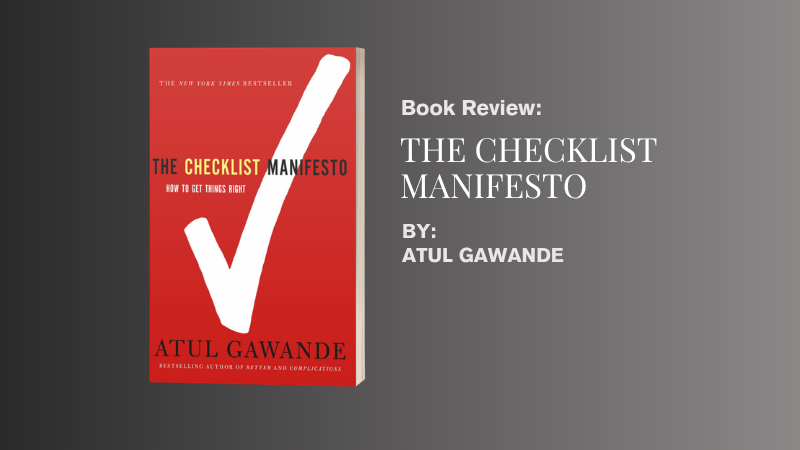
The Simple Device That Is Keeping People Alive During an Age of Excessive Complexity: An Analysis of Atul Gawande’s “The Checklist Manifesto”
From Surgical Safety to Money Management: How Expertise Is Not Sufficient To Stop Avoidable Mistakes
One Halloween night, a patient with a two-inch stab wound in his abdomen was brought to the operating room in San Francisco. The trauma team did all things by the book – measured his blood pressure, observed his respiration, and had the blood bank on stand-by. He appeared fine until suddenly his heart rate soared and his blood pressure dropped. As the surgeons cut him open, they witnessed an “ocean of blood” pouring from the incision site. The stab wound extended over a foot and pierced through the aorta. Everything had been done right, but there was just one small thing that they had forgotten – to inquire about the type of weapon used.
With such an opening by Atul Gawande in his book “The Checklist Manifesto: How to Get Things Right,” Atul Gawande raises a very compelling thesis that in the twenty-first century, the problem is not one of ignorance but of ineptitude. As a Harvard surgeon and writer at The New Yorker, Gawande argues that while science has equipped us with “stupendous know-how,” there is so much of it that we cannot use it safely and effectively.
Gawande’s book will be of interest to a Canadian audience trying to navigate the increasingly complicated healthcare landscape. Gawande notes that we are fixated on “great components”: great drugs, great technology, and great experts; yet there seems to be little attention paid to how all these pieces fit together. This means we live in a world where, even with all our brilliance, we forget the “stupid stuff.”
The book serves as an intense “infotainment” ride by constantly leaping between the cockpit of the Boeing planes and the construction site of the enormous skyscrapers. Gawande’s stories are at their most effective while dealing with the 1935 crash of the Model 299 plane, a plane so advanced that it was considered “too much airplane for one man to fly”. What came to the rescue of the nearly bankrupt Boeing company was not increased pilot training but just a simple index card with “dumb stuff” like releasing brakes.
From a wellness perspective, it becomes necessary to acknowledge the skill of Gawande in breaking down the “Right Stuff” syndrome prevalent in many professions. According to him, the traditional model of the hero, which involves being a renegade who manages to make it by virtue of his audacious and cunning nature, is in fact a weakness in an era where there is a great deal of complexity involved. This new professionalism has four components – selflessness, competence, integrity, and above all, discipline.
The heart of the book explains Gawande’s involvement with WHO in developing a “Safe Surgery Checklist.” The developed checklist with nineteen items seems very simple, with a focus on “killer items,” which can be fatal if forgotten, yet are easy to forget. It includes verification of whether the surgical team has the right patient and right surgical site, as well as administration of antibiotics up to sixty minutes before the cut.
Certainly, one would expect critics to find the checklist approach “ridiculously primitive,” and as Gawande himself reports, many surgeons were certainly upset at the idea that they needed one. But the results of the pilot study cannot be overlooked; in eight hospitals around the world, including Toronto General Hospital, the implementation of the checklist was linked to 36 percent fewer complications and 47 percent fewer deaths.
But more importantly than just checking off tasks, the evaluation of the book also takes into account the psychology of teamwork. Gawande points out the “activation effect”; the simple fact of introducing oneself by name and occupation increases the chances of speaking up when an issue arises. It is proposed to treat communication as the final “cognitive net” capturing the errors present in everyone’s minds.
Another interesting part is where the author enters the financial world to show how the “cocaine brain” – a primitive reward circuit activated by money-making opportunity – drives even talented investors to cut some corners. He gives examples of investors who started using checklists in order not to forget about the “basics” when analyzing financial statements, like reading footnotes for cash flow.
The prose is informal and urgent; however, the author is very careful to note that checklists are tools that help to remember the basic facts, rather than the “comprehensive how-to guides”. The purpose of the list is to support the expertise of the specialist, not to take its place. Gawande’s personal experience of having almost killed his patient on the table, as a result of the torn vena cava, is a perfect acknowledgment of human fallibility. As for the result, his patient survived, thanks to the extra blood stored in the blood bank thanks to the checklist.
In “The Checklist Manifesto”, Atul Gawande presents his work as a brilliant example of scientific writing which reveals the miraculous nature of the ordinary. The author asserts that it is essential for people to recognize their weaknesses and utilize an approach in order to compensate for their “inevitable human inadequacies”. For all those who want to know why something goes wrong, Gawande offers a practical manual for the vessel of life.
This review is for informational purposes only and does not constitute medical advice. Always consult with a qualified healthcare professional before making significant changes to your health or wellness routine.
- Share

Suman Dhar
A qualified professional with extensive experience in education and human resources. As a HR Professional, Management Consultant, or Training Specialist, he is interested in cultivating intellect and curating insight.
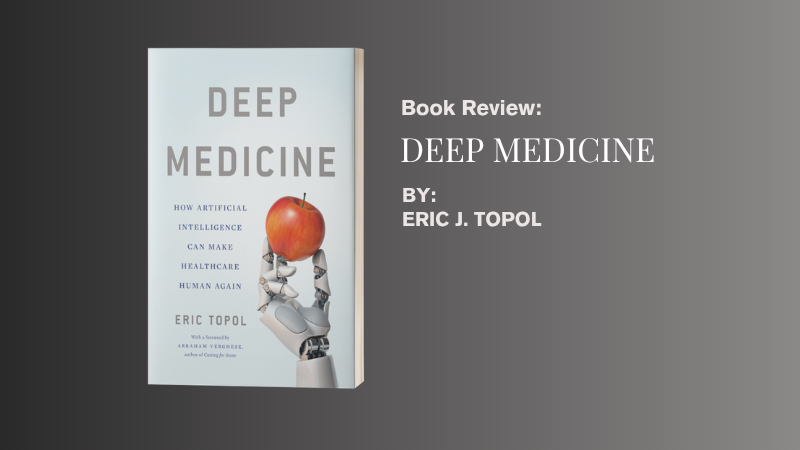
Can Artificial Intelligence Restore Empathy to Medicine? A Review of Eric J. Topol’s “Deep Medicine”
Past the Keyboard: How Deep Learning and the "Gift of Time" Can Heal Shallow Healthcare in Canada...
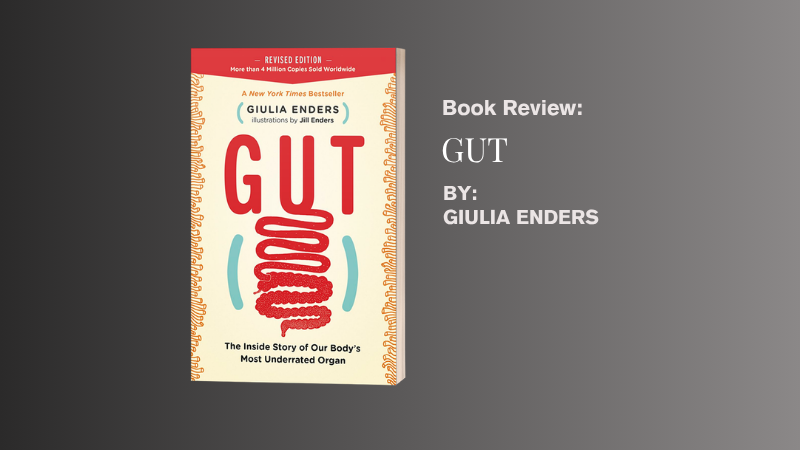
Why Your Microbiome is the Secret to Wellness: A Review of Giulia Enders’ “Gut”
To most of us, the gut is a "Quasimodo" in the body’s architecture – unappealing, uneven and disregarded until it...
Is Your Destiny Written in DNA? A Review of Siddhartha Mukherjee’s “The Gene”
Whereas the twentieth century could be described as the age of the splitting of atoms and the creation of the digital bits...
Can You Eat Your Way to a Longer Life? A Review of Michael Greger’s “How Not to Die”
Should one be browsing the selection in the health and wellness department of a Canadian bookstore, "How Not to Die"...
Your Body Explained Like Never Before: A Fascinating Tour from Head to Toe
If you were to take your body to a hardware store in an attempt to price out the various elements within...
The Nightly Elixir: Why Sleep is the Billion-Dollar Secret to Living Longer
What if there was a tool, a biological tool, that was part of all of our makeup, which could improve your memory...