
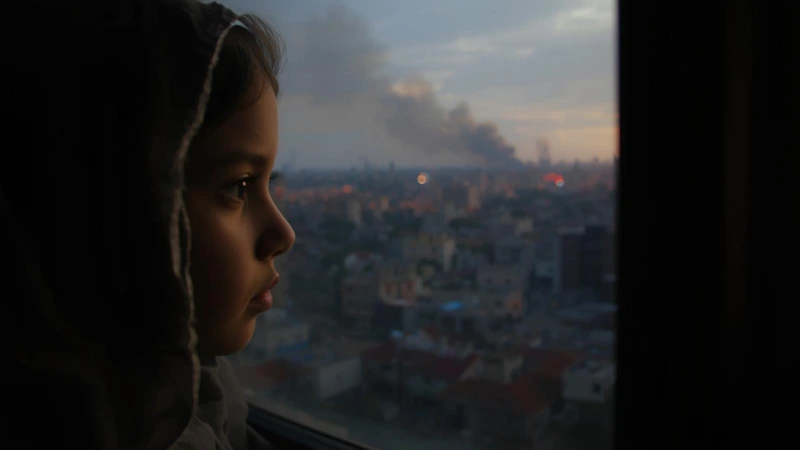
The Developing Brain Under Fire: How War Trauma Rewires a Generation
New research from Gaza, Ukraine, and beyond reveals the profound neurobiological and psychological toll of conflict on children—and what clinicians need to know.
As global conflicts escalate across Gaza, Ukraine, Sudan, and other regions, a silent pandemic is unfolding alongside the visible destruction. Children—the most vulnerable population in any war zone—are not merely transiently distressed. Their developing brains are being fundamentally reshaped by trauma, with consequences that will echo for decades.
For medical professionals accustomed to treating physical wounds, the emerging data on pediatric war trauma presents a critical challenge: how do we recognize, treat, and advocate for a generation whose scars are invisible to the naked eye but detectable in every functional MRI and stress hormone assay?
The Neurobiology of Fear: Brains Forged in Fire.
The parallel between combat soldiers and traumatized children is not metaphorical—it is neurobiological. Groundbreaking Functional Magnetic Resonance Imaging (fMRI) research has demonstrated that children exposed to violence show the same pattern of brain activity as soldiers exposed to combat.
When viewing angry faces, maltreated children exhibit heightened activation in two specific brain regions: the anterior insula and the amygdala. These areas form the brain’s threat-detection network, responsible for scanning the environment for danger and mobilizing the body’s stress response.
“Both maltreated children and soldiers may have adapted to being ‘hyper-aware’ of danger in their environment,” explains Dr. Eamon McCrory, the neuroscientist behind this research. However, this adaptation comes at a cost. The anterior insula and amygdala are also implicated in anxiety disorders, suggesting that neural changes initially designed for survival may later predispose children to psychopathology.
Crucially, these alterations appear before any psychiatric symptoms emerge. The children studied were healthy and not suffering from mental health problems—yet their brains already showed the functional signature of trauma. For clinicians, this means waiting for diagnostic thresholds to be met may mean waiting too long.
The Gaza Data: A Generation in Crisis.
Nowhere are these dynamics more starkly illustrated than in contemporary Gaza. A comprehensive cross-sectional study published in January 2026 surveyed 933 displaced children aged 3–12 living in shelters and tented communities.
The findings are nothing short of catastrophic:
Psychosocial functioning was equally impaired, with 46.3% of children scoring in the abnormal range on the Strengths and Difficulties Questionnaire. Emotional symptoms and peer relationship problems were the most prominent domains affected.
For adolescents aged 12–17 in Gaza, the situation is even more dire. A separate study published in February 2026 found that 78.4% met screening cutoffs for probable PTSD, with 48.5% meeting full DSM-5 diagnostic criteria. Peer relationship problems affected an astonishing 90.5% of adolescents, while 43.2% reported clinically significant emotional symptoms.
These figures represent not just statistical abstractions, but a generation’s developmental trajectory derailed.
Beyond PTSD: The Somatic and Intergenerational Burden.
The psychological wounds of war do not remain confined to the mind. Research from Ukraine, where 105 children affected by the Russian invasion were assessed, reveals a strong direct correlation (ρ=0.726) between traumatic stress and somatic symptoms.
Gastrointestinal complaints predominated, often presenting with no organic etiology. Among the Ukrainian sample, 83% of children showed moderate to high risk of post-traumatic stress reactions, while 44.8% reported somatic symptoms of high or moderate intensity. The message for clinicians is clear: when a child from a conflict zone presents with unexplained stomach pain, trauma should be high on the differential diagnosis.
Perhaps most alarming is emerging evidence that trauma’s reach extends across generations. Research on epigenetic changes following extreme stress has identified the FKBP5 gene—which regulates the body’s cortisol response—as particularly susceptible to trauma-related modification. These epigenetic markers can be passed from parents to offspring, meaning a child born after a conflict may still carry a dysregulated stress response because of maternal trauma during pregnancy.
As one recent review notes, “DNA methylation variations in stress-related genes such FKBP5, NR3C1, NR3C2, BDNF, and SLC6A4 have been seen in parents and/or their offspring in populations exposed to genocide, conflict, or combat.” While researchers caution that evidence for true transgenerational inheritance remains inconclusive, the possibility that trauma writes itself into biology demands urgent investigation.
The Malnutrition Multiplier.
In conflict zones like Gaza, psychological trauma does not operate in isolation. It converges with a second catastrophe: severe malnutrition.
The first 1000 days of life constitute a critical window for neurodevelopment. Nutrient deprivation—particularly of protein, iron, iodine, zinc, and essential fatty acids—impairs myelination, synaptogenesis, and neurotransmitter synthesis. These processes are time-sensitive; deficits during this period often lead to irreversible impairments in cognitive function.
In Gaza, the scale is staggering. By August 2025, over 12,800 children were identified as acutely malnourished, with 23% of those admitted for treatment suffering from severe acute malnutrition. More than 40% of pregnant and breastfeeding women are severely malnourished.
The interaction between malnutrition and trauma is synergistic, not additive. A brain starved of essential nutrients lacks the neuroplasticity required to recover from traumatic stress. As one recent analysis warns, “Without intervention, malnutrition in Gaza today foreshadows a future of diminished human resources and public-health crises spanning generations.”
Resilience and the Path Forward.
Amid this devastation, research also illuminates pathways to recovery. The same Gaza adolescent study that documented extraordinary rates of PTSD also found that prosocial behavior remained relatively preserved, with approximately three-quarters of adolescents scoring within the normal range.
Crucially, higher prosocial tendencies appeared to buffer the effect of trauma on PTSD severity, suggesting that empathy, cooperation, and helping behaviors can reduce the psychological impact of war exposure. This finding aligns with a growing consensus that effective interventions must be strengths-based and family-centered, not merely focused on deficit reduction.
A Ukrainian case report of a 14-year-old who sustained a mine-explosive injury and witnessed his father’s death demonstrates the value of comprehensive medical and psychological rehabilitation. Following an integrated approach addressing physical, psychological, and social domains, the adolescent showed improved psycho-emotional state, better awareness, increased control over thoughts and body, and normalization of physiological markers including blood pressure and glucose levels.
The authors emphasize that “rehabilitation measures require a family-oriented approach with the provision of necessary amount of rehabilitation assistance to all family members who have lost loved ones.”
Clinical Implications.
For practicing clinicians, the evidence suggests several actionable principles:
First, screen early and often. The absence of psychiatric symptoms does not indicate the absence of trauma-related neurobiological changes. Children from conflict zones warrant regular, developmentally appropriate mental health screening regardless of presenting complaints.
Second, attend to somatic presentations. Unexplained gastrointestinal symptoms, headaches, and other physical complaints in conflict-affected children should trigger trauma-informed assessment, not dismissal.
Third, recognize the malnutrition-trauma interface. Nutritional rehabilitation is not merely a matter of physical health—it is a prerequisite for neurocognitive recovery from trauma.
Fourth, leverage prosocial capacities. Interventions that foster empathy, cooperation, and helping behaviors may buffer against the worst effects of trauma exposure.
Fifth, treat the family, not just the child. Parental PTSD is strongly associated with child PTSD. Effective intervention requires addressing the entire family system.
Conclusion.
The children of Gaza, Ukraine, Sudan, and other conflict zones are not merely the casualties of today’s wars—they are the architects of tomorrow’s societies. The evidence is unequivocal: war trauma rewires developing brains, disrupts neurodevelopment, and leaves biological scars that may persist across generations.
For the medical community, the implications extend beyond clinical practice to advocacy. The malnutrition crisis in Gaza, as one analysis puts it, is “not inevitable but engineered through deliberate manmade orchestration.” Preventing childhood trauma and supporting trauma-informed interventions must be understood as medical imperatives, not political ones.
The brains of children in conflict zones are adapting to survive. Whether that adaptation becomes a lifelong liability or a testament to resilience depends on the interventions we provide—and the urgency with which we provide them.
Sidebar: Clinical Red Flags in Conflict-Exposed Children
Neurobehavioral Domain: Hypervigilance, exaggerated startle, difficulty concentrating
Emotional Domain: Irritability, emotional numbing, separation anxiety
Somatic Domain: Recurrent headaches, abdominal pain, sleep disturbances
Developmental Domain: Regression (loss of language, bedwetting in previously continent children)
Social Domain: Withdrawal from peers, aggressive play reenactment
Sources:.
Horino M, Al Najjar S, Tabaza A, et al. (2025). Assessment of malnutrition in preschool-aged children by mid-upper arm circumference in the Gaza Strip (January 2024-August 2025): A longitudinal, cross-sectional, surveillance study. The Lancet, 406, 1993-2002.
Starved futures in the Gaza Strip: long-term outcomes of childhood malnutrition as a humanitarian emergency | BMJ Global Health
Abu Jamei Y, Barbui C. (2024). Priority setting for mental health in Gaza. The Lancet Psychiatry, 11(12), 953-955.
Priority setting for mental health in Gaza – The Lancet Psychiatry
Spiegel PB, Abrahim O, Abbara A, et al. (2025). Stop the starvation: Restore civilian aid and protect health care in Gaza. The Lancet, 406, 1066-1068.
Starved futures in the Gaza Strip: long-term outcomes of childhood malnutrition as a humanitarian emergency | BMJ Global Health
Karazin VN, et al. (2025). Analysis of the impact of traumatic stress on the health of children and adolescents. Wiadomości Lekarskie, (6), 1059-1065.
Analysis of the impact of traumatic stress on the health of children and adolescents
Papakonstantinou E, Efthimiou V, Chrousos G, et al. (2024). Genetics and epigenetics of the war child (Review). International Journal of Epigenetics, 4(1).
https://www.mendeley.com/catalogue/e41f75bb-dd2e-3511-9187-6a8a0e902a74/
Society for Research in Child Development. (2024). Biological Embedding of Trauma in War and Displacement: Intergenerational Mechanisms and Innovations.
https://srcd.secure-platform.com/site/solicitations/102002/sessiongallery/94377
Banihashemi L, Wallace ML, Peng CW, et al. (2017). Childhood maltreatment moderates the effect of combat exposure on cingulum structural integrity. Development and Psychopathology, 29(5), 1735-1747.
https://pubmed.ncbi.nlm.nih.gov/29162178/
- Share

Magazica Editorial Team
Magazica is a dedicated platform for businesses, subject matter experts, health advocates, and various sectors within the health industry. At Magazica, we are committed to sharing the latest health information and developments with our audience. We serve as a gateway for health-related businesses to showcase their progress and advancements, demonstrating how they contribute to enhancing people's wellness.

The Overzealous Smoke Alarm: Why Back-to-School Anxiety Goes Off Before There Is a Fire
Back-to-school anxiety explained: what happens inside your child, what to watch for, what actually helps, and...
The Psychology of Play: Why Adults Need Summer Recess Too
As the long days of summer stretch out, many Canadian adults watch children fill parks and playgrounds while they...

Managing Vacation Anxiety – How to Unplug from the Office Truly
Visualize this. It is the first day of what has been anticipated by you all the way since March. You made an...

Sleep Hygiene Reboot: Adjusting to Longer Daylight Hours
Let us imagine that it is a Tuesday in late March. After a night's work and the yearly ritual known as the...

The Power of Morning Light: Resetting Your Circadian Rhythm for Spring
Imagine this: It is a Tuesday morning in early April, and you have at last changed your parka for a jacket. But as you...

Mental Health and Emotional Well Being: Loneliness, Stress and the Search for Connection
Two years into the mid-2020s, mental health remains a pressing public health issue, shaped as much by social...