The Power of Morning Light: Resetting Your Circadian Rhythm for Spring
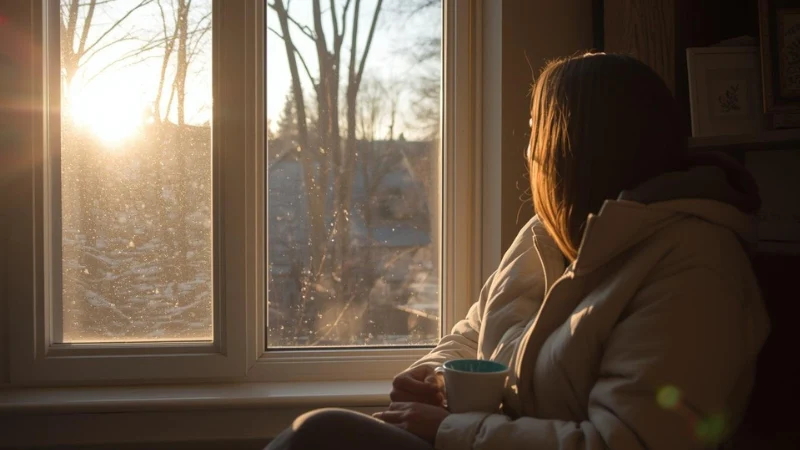
Imagine this: It is a Tuesday morning in early April, and you have at last changed your parka for a jacket. But as you gaze at your morning coffee, you feel like your brain is still stuck in a January blizzard. Waking up is a complete and total gong show, and you can’t help but wonder why your body hasn’t quite gotten the memo that spring is here.
The truth is, “you’re not a morning person.” Your body simply hasn’t quite adjusted its internal clock to match the sun. The good news is your brain has a reset button. All you have to do is learn how to press it by getting some morning sun.
The Tiny Conductor in Your Brain.
In each of us, there is a high-tech internal time-keeping system that ticks away with a regularity of about 24 hours. Not just a gut feeling, this is a physical command center deep in the brain, known as the suprachiasmatic nucleus, or SCN.
Imagine the SCN to be the conductor of an orchestra. The conductor must make sure that the different sections of the orchestra play the same music. This is true with our hormones, temperature, and metabolism. When light enters our eyes, it sends a signal directly to the SCN via the “retinohypothalamic tract,” telling the conductor to pick up the tempo or slow down.
The Nightclub Bouncer of the Body.
You might be wondering why the timing is important, whether or not your internal clock is off by an hour or two. The answer is that your immune system is much like the bouncer at the local nightclub, and they have very specific timing to follow.
Your daytime hours are the time when this “bouncer” is most vigilant and on high alert, keeping watch at the front door. In fact, studies have shown that the body actually heightens its inflammatory responses, such as leukocyte trafficking and proinflammatory cytokines, during the day because this is the time when you are most likely to be exposed to “troublemakers” such as bacteria and viruses. If your internal clock is off, the bouncer might be in the back taking a coffee break when the “troublemaker” comes through the front door.
The 30-Minute Efficiency Hack.
Most of us believe that in order to solve our sleeping problems, we have to spend our whole morning strolling outside. However, science has revealed that our minds are much more efficient than we think.
In a study carried out by the Biological Rhythms Research Laboratory, researchers compared different light patterns and determined what type of light “reset” our clocks most effectively. The researchers realized that a single 30-minute dose of bright light, especially after waking, was a powerful one. This short period of time was able to yield 75% of what we could obtain from two hours of light exposure. Therefore, if we can find a few minutes, say half an hour, to sit near a bright window or step outside onto our balcony, we can indulge ourselves with a majority of what we can obtain from this experience without missing our first meeting of the day.
Why “Blue” is the Magic Colour.
However, not all light is equal when it comes to your brain. Your SCN has a bit of a fussy streak and is most responsive to short-wavelength “blue” light.
You have special cells in your eyes called ipRGCs, and they use a photopigment called melanopsin to detect blue light. Although your regular photoreceptor cells, called your cones, play a part in getting the light signal started for the first few minutes, they don’t do the “heavy lifting” when it comes to keeping the signal going over time. This blue light signal sends a message to your brain to stop producing melatonin, your “vampire hormone” that makes you sleepy, and start producing cortisol to get you moving!
Phase-Advancing Your Life.
When you get light in the morning, you are doing what scientists call a “phase advance.” This effectively winds your internal clock forward, making it easier to fall asleep earlier that night and wake up refreshed the next day.
For Canadians trying to cope with the “spring forward” time change, light in the morning is the best tool we have to combat “circadian misalignment,” or that tired, out-of-sorts feeling that comes with seasonal changes. By aligning your internal clock with the solar day, you aren’t just fixing your sleep; you are supporting your heart, your metabolism, and your mood.
Key Takeaways.
Reference:.
Crowley, S. J., & Eastman, C. I. (2015). Phase advancing human circadian rhythms with morning bright light, afternoon melatonin, and gradually shifted sleep: can we reduce morning bright-light duration?. Sleep medicine, 16(2), 288-297.
Gooley, J. J. (2018). Light-induced resetting of circadian rhythms in humans. Journal of Science and Technology in Lighting, 41, 69-76.
Ruan, W., Yuan, X., & Eltzschig, H. K. (2021). Circadian rhythm as a therapeutic target. Nature Reviews Drug Discovery, 20(4), 287-307.
St Hilaire, M. A., Ámundadóttir, M. L., Rahman, S. A., Rajaratnam, S. M., Rüger, M., Brainard, G. C., … & Lockley, S. W. (2022). The spectral sensitivity of human circadian phase resetting and melatonin suppression to light changes dynamically with light duration. Proceedings of the National Academy of Sciences, 119(51), e2205301119.
Disclaimer:
This article is for informational and educational purposes only and does not constitute medical advice. It should not be taken as a medical diagnosis or treatment.
Always consult with a qualified healthcare professional for personalized medical guidance.
- Share

Magazica Editorial Team
Magazica is a dedicated platform for businesses, subject matter experts, health advocates, and various sectors within the health industry. At Magazica, we are committed to sharing the latest health information and developments with our audience. We serve as a gateway for health-related businesses to showcase their progress and advancements, demonstrating how they contribute to enhancing people's wellness.

The Overzealous Smoke Alarm: Why Back-to-School Anxiety Goes Off Before There Is a Fire
Back-to-school anxiety explained: what happens inside your child, what to watch for, what actually helps, and...
The Psychology of Play: Why Adults Need Summer Recess Too
As the long days of summer stretch out, many Canadian adults watch children fill parks and playgrounds while they...

Managing Vacation Anxiety – How to Unplug from the Office Truly
Visualize this. It is the first day of what has been anticipated by you all the way since March. You made an...
Sleep Hygiene Reboot: Adjusting to Longer Daylight Hours
Let us imagine that it is a Tuesday in late March. After a night's work and the yearly ritual known as the...

The Developing Brain Under Fire: How War Trauma Rewires a Generation
New research from Gaza, Ukraine, and beyond reveals the profound neurobiological and psychological toll...

Mental Health and Emotional Well Being: Loneliness, Stress and the Search for Connection
Two years into the mid-2020s, mental health remains a pressing public health issue, shaped as much by social...