Sleep Hygiene Reboot: Adjusting to Longer Daylight Hours
Let us imagine that it is a Tuesday in late March. After a night’s work and the yearly ritual known as the “spring forward,” despite the presence of sunlight, you feel that you are a complete gong show. Despite three cups of coffee in you, your brain is still having trouble functioning at normal speed. If you have ever felt your body in full-on battle with your alarm clock, it seems that your suspicions were right; there is more to it than just your personal feeling of confusion, as it turns out. As we move towards longer periods of daylight, our bodies need to work even harder to synchronize with social time.
Your Internal GPS is Still Calibrating: The Circadian Rhythm Shuffle.
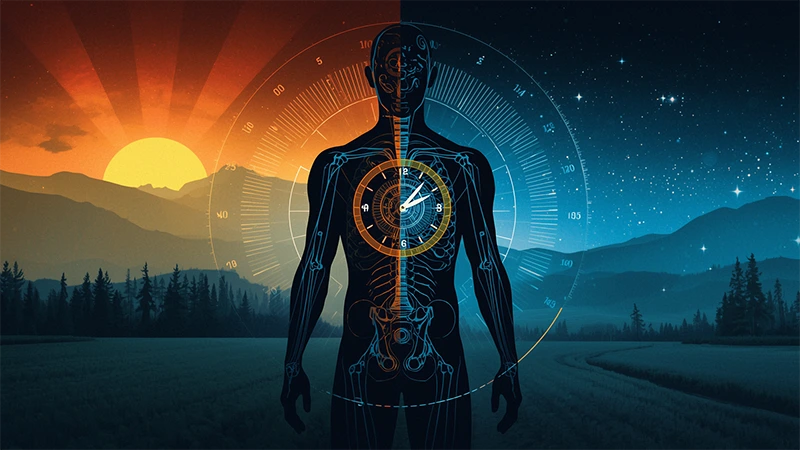
All of us possess an elaborate biological clock, and at the moment in Canada, this clock is experiencing a slight malfunction. The mechanism works according to circadian rhythms, which dictate that “standard time” should be kept similar to solar time, in which the peak of the sun occurs during noon. The problem arises from the fact that in the spring, we suddenly alter our relationship between natural sunlight and sleeping habits.
Imagine the circadian clock as the GPS that tells you it is still in the center of Lake Superior when you are at home on the couch. The reason why this change in March is so disruptive is that it creates an eight-month disconnection. As a resident of the “True North,” the northern latitude means there is no latitude left in the daylight hours; the body simply does not have any more give to adapt to this new time zone.
Northern Latitude Problems: Why Canada is the Final Boss of Sleep Habits.
First, being in Canada means playing a completely different game compared to our friends south of the border. As an example, on the shortest day of the year, Montreal will only see eight hours and forty minutes of daylight, whereas Miami will experience more than ten hours. The absence of a “light cushion” means that the spring change is an extra burden for our internal conducting orchestra. Were we to apply the same DST policy year-round, then most Canadian cities would have sunrise at 8:00 AM or later in winter, which would make us go to school and work in complete darkness without the necessary dose of sunlight to “reprogram” our brains.
In addition, there are some interesting time zones within Canada, which makes its borders pretty crazy when it comes to DST. For example, Thunder Bay, Ontario, is located nearly an hour away from its correct solar time zone. This situation creates something scientists call “social jetlag,” which is effectively similar to trying to play a game of shinny on an ice rink tilted at 45 degrees. You can do it, but you will get tired way quicker than your opponents.
Tick-Tock vs. Heart-Thump: The Cardiovascular Price of Losing an Hour.
It may seem like an insignificant loss of sixty minutes to you, but your heart may beg to differ. There have been recent findings in a Canadian study on hospitalizations of patients with acute myocardial infarction (AMI), which is another way of saying heart attack. Prior to the outbreak of the pandemic, the onset of Daylight Saving Time showed a 19% rise in the frequency of heart attacks among a Canadian population.
The trend got complicated with the onset of the virus; however, the findings show that those who are referred to as late chronotypes—i.e., “night owls”—may be at greater risk. These people require four weeks of adjustment for their biological clocks following the switch in spring. The one-hour time difference is not just a nuisance but also a significant challenge for their heart. It is as though your heart is a finely-tuned engine, which has suddenly had its oil replaced by maple syrup.
The Summer Sleep Slump: Why “Netlessphobia” Won’t Save Your Zzzs.
However, when summer arrives, the natural patterns of sleep change for most people. Indeed, according to research conducted by The Canadian Longitudinal Study on Aging, there exists a statistically noticeable difference between hours spent sleeping in the summer and winter seasons. While the difference itself is only nine minutes, its importance cannot be overlooked. Longer periods of daylight force people to prolong their bedtimes and make them even more vulnerable to social jet lag.
Strikingly enough, it was not the summer, but rather the fall transition to Standard Time that led to sleep disturbances and dissatisfaction in older adults. People who participated in interviews one week after the time shift experienced significantly more difficulties falling asleep. In other words, our body is extremely sensitive to every discrepancy between external light and internal time perception. Even though enjoying the warm weather is an excellent opportunity to have some fun, do not forget to respect the “conductor orchestra” in your brain.
Reclaiming Your Rhythm in the Great White North.
What, then, are some of the lessons we have learned? First, your chronotype makes a difference. If you happen to be an “owl,” expect to require more than a couple of days for your system to adapt to the change in the light–dark cycle. Second, the phenomenon known as the March misalignment effect does not go away overnight – it is a long-term process that impacts your physical well-being.
Canadian scientists and specialists believe that there is no better way to align one’s biological clock with environmental changes than by adopting permanent Standard Time across the country. However, until that happens, realize that your body has been through quite a tango, and give yourself some leeway to feel a little sleepy now and then. The one thing that will always remain constant in any time zone of Canada is the sun, which is your best guide in terms of timekeeping.
Key Takeaways.
Sources:
Al Samarraie, A., Godbout, R., Goupil, R., Suarasan, C. P., Kanj, S., Russo, M., … & Pichette, M. (2024). The association between daylight saving time and acute myocardial infarction in Canada. Hearts, 5(4), 575-583.
De Koninck, J., Nixon, A., & Godbout, R. (2024). The practice of Daylight Saving Time in Canada: Its suitability with respect to sleep and circadian rhythms. Canadian journal of public health = Revue canadienne de sante publique, 115(2), 276–281. https://doi.org/10.17269/s41997-024-00870-0
Zolfaghari, S., Cyr, M., Pelletier, A., & Postuma, R. B. (2023). Effects of season and daylight saving time shifts on sleep symptoms: Canadian Longitudinal Study on Aging. Neurology, 101(1), e74-e82.
Disclaimer:
This article is for informational and educational purposes only and does not constitute medical advice. It should not be taken as a medical diagnosis or treatment.
Always consult with a qualified healthcare professional for personalized medical guidance.
- Share

Magazica Editorial Team
Magazica is a dedicated platform for businesses, subject matter experts, health advocates, and various sectors within the health industry. At Magazica, we are committed to sharing the latest health information and developments with our audience. We serve as a gateway for health-related businesses to showcase their progress and advancements, demonstrating how they contribute to enhancing people's wellness.

The Overzealous Smoke Alarm: Why Back-to-School Anxiety Goes Off Before There Is a Fire
Back-to-school anxiety explained: what happens inside your child, what to watch for, what actually helps, and...
The Psychology of Play: Why Adults Need Summer Recess Too
As the long days of summer stretch out, many Canadian adults watch children fill parks and playgrounds while they...

Managing Vacation Anxiety – How to Unplug from the Office Truly
Visualize this. It is the first day of what has been anticipated by you all the way since March. You made an...
The Power of Morning Light: Resetting Your Circadian Rhythm for Spring
Imagine this: It is a Tuesday morning in early April, and you have at last changed your parka for a jacket. But as you...

The Developing Brain Under Fire: How War Trauma Rewires a Generation
New research from Gaza, Ukraine, and beyond reveals the profound neurobiological and psychological toll...

Mental Health and Emotional Well Being: Loneliness, Stress and the Search for Connection
Two years into the mid-2020s, mental health remains a pressing public health issue, shaped as much by social...