Turning Pain into Purpose: Angie Poirier’s Journey from Oncology Mom to Cancer Advocate
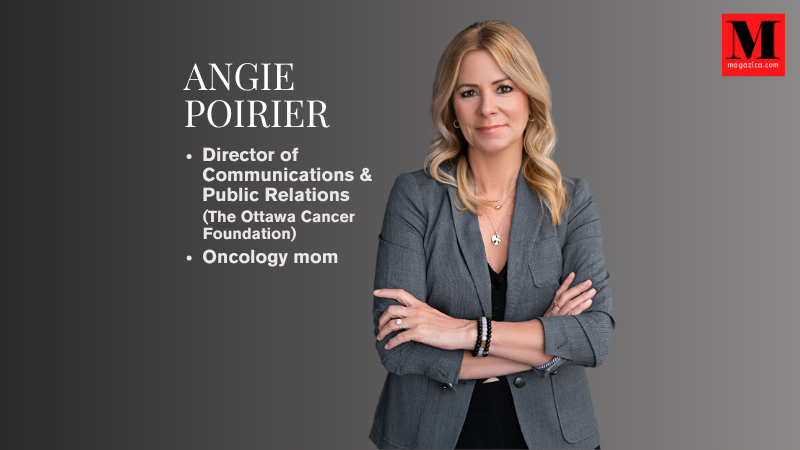
Angie Poirier didn’t ask for the cancer fight to arrive at her doorstep. But when it did, she met it head-on. What followed wasn’t just survival; it was transformation. A seasoned broadcaster and a driving force behind the Ottawa Cancer Foundation, Angie turned pain into purpose. Her son’s diagnosis upended everything familiar. Yet she responded with clarity and determination. She did not stop there. She drove an advocacy campaign with deep compassion. In this honest and stirring conversation, she opens up about how leaning into vulnerability gave her strength. She also identified how connection became her anchor. She is on a mission to share her truth and help others find theirs. If you’ve ever felt tested, this story will stay with you.
Magazica: Dear readers, few people turn personal adversity into a movement for change. We all face challenges, but the person with us today has transformed her experience into something powerful.
As a community ambassador for the Ottawa Cancer Foundation, she has become a voice for families navigating the realities of cancer. Her journey as an “oncology mom,” as she calls herself, began with the unimaginable – her son’s diagnosis – and has shaped her into an advocate, a storyteller, and a relentless force for awareness and support.
Beyond her advocacy, today’s guest is a veteran broadcaster, a relationship builder, and a champion for community-driven change. She understands the power of connection – whether through media, philanthropy, or simply showing up for those who need it most. Her work is a testament to resilience and compassion.
Today, we are honored to welcome Angie Poirier. Welcome, Angie.
Angie Poirier: Thank you very much for having me.
Magazica: Let’s start with that pivotal moment in your life. Your journey as an oncology mom began with a moment that changed everything. Can you take us back to that day and share how it shaped your perspective on life and advocacy?
Angie Poirier: The day we found out our nine-year-old son had cancer is etched in my mind with crystal clarity, yet it still feels like an overwhelming blur. Nothing prepares you for those words. In that moment, our lives split into two: the life before the diagnosis and the life after.
That day shifted everything – how we love, how we live, how we fight for each other. It marked the beginning of a deeper understanding of how critical outside support is for families like mine, who find themselves in a dark hole, trying to find the light and a way out.
Magazica: I can easily connect with that. I really appreciate the way you described your life splitting into two. The day doctors informed us that our only child was on the autism spectrum, my wife and I felt exactly the same way. From that moment on, everything changes.
Angie Poirier: Absolutely. You look back and think, “Life seemed so simple before.” The things we thought were big deals then are nothing now. Your threshold for what’s difficult rises. What I once considered overwhelming now feels manageable. It’s a shift in perspective.
Magazica: Completely agree.
Now, let’s go a layer deeper – into the emotional side of cancer. Many people see it as a medical battle, but it’s deeply emotional too. From personal experience, I know that. What were some of the hardest moments for you and your family, and how did you find strength in them? I think this part of your story will truly inspire our readers.
Angie Poirier: Most people think of cancer in terms of treatment – chemo, testing, procedures. But the emotional weight is what really floors you. Watching your child lose all their hair, their energy, their innocence… hearing them cry and ask, “Why did this happen to me?” – and knowing you can’t answer that, because they didn’t deserve it.
Some of the hardest moments were watching him try to be patient and polite with the doctors, being poked and prodded, yet still trying to smile through it. In those moments, our strength came from his bravery. People would say, “You’re so strong,” and I’d reply, “We’re just doing what he’s teaching us to do.” He was our guide. His resilience gave us no choice but to be strong.
People show up for you in big and small ways – family, friends, even perfect strangers. You quickly form emotional bonds – what some call trauma bonds – with other oncology families you meet in hospital corridors and medical rooms. These people, who you might never have met otherwise, become lifelines. They speak the same language. They know the terms. They understand exactly where you’re at because they’ve been there.
You celebrate each other’s wins and grieve each other’s losses. You learn to carry fear and hope side by side, navigating both paths at once – trying not to have too much hope, and not too much fear.
Magazica: I really love the term “trauma bond.” I’ve experienced this in so many moments. Perfect strangers – even the parents of other children on the spectrum. We meet, we talk, and suddenly we know each other so well because we’re going through the same thing. That’s for sure. For example, you’re probably waiting for your son to have a session with the doctor, and there are other parents with their children.
Angie Poirier: Yeah.
Magazica: And suddenly the conversation switches to a whole new level, and you can easily connect with each other. That’s so true. I can instantly relate to it.
Angie Poirier: It’s a deeper level, for sure.
Magazica: Yes, so much deeper. And certainly, the realities hit you in a totally different way.
Angie Poirier: Yeah.
Magazica: So now let’s shift to turning pain into purpose. You’ve become a powerful advocate for cancer awareness and support. What was the turning point? What was that moment that flipped the switch and made you decide, “I will use my voice to help my son, but also to help others”?
Angie Poirier: I was born and raised in Ottawa, and I had a very public-facing media job for almost 30 years in this community. I had already formed a strong relationship with the Ottawa community as a whole. But suddenly, people navigating a cancer diagnosis started reaching out to me to share their own stories and seek advice. Maybe it was because they felt like they knew me, or maybe because we were sharing our story and they felt comfortable sharing theirs.

I realized I had an opportunity to take the pain I was feeling and do something with it. That pain has to go somewhere – you have to direct it outward, so it doesn’t consume you. I couldn’t change the diagnosis, but I could change what came after. So I started speaking not just for my son, but for the thousands of families navigating this nightmare in silence.
Sharing your story becomes very healing. It’s hard to do because you can never find the words to sum up or crystallize the lowest point in your life. But it helps advocate for better support systems that, in the end, we all benefit from. You turn that pain into something good.
Magazica: That’s so true. You’ve articulated it so beautifully. Sometimes it’s very hard to express exactly what you’re feeling, but by sharing it, you’re helping hundreds of other families. What’s the reality of the support system for families facing a cancer diagnosis? What are some of the most overlooked challenges? What support systems do you wish more people knew about?
Angie Poirier: One of the most overlooked challenges is how isolating cancer can be. You’re in a bubble – hospital walls, treatments, overnight stays, IV lines, radiation, chemo. The focus is completely on the patient, as it should be, but the role of the family and caregiver is a huge piece of the puzzle.
You’re bearing the weight of being a therapist, a doctor, a support system. You’re handling medications, trying to keep everything straight, and learning medical terminology on the fly. You’re dropped into medical school without warning. What’s often overlooked is the support for caregivers and families. They can only be strong for the patient if they take care of themselves and find a way through the darkness too.
You’re expected to make incredibly hard decisions when your world has just been ripped out from under you. That’s why I always tell people to understand what supports are available – not just for the patient, but for the families and caregivers.
Outside the hospital walls, support is just as critical. The Ottawa Cancer Foundation’s Community Cancer Hub is the only one of its kind in Ottawa. They work with over 70 community partners to offer programs to patients, families, and caregivers at no cost.
These include therapeutic programs to support mental health, which is a huge part of the puzzle. Nutritional support is also vital – you have to fuel a cancer patient properly. There’s help accessing financial support, which is crucial because the financial side of a diagnosis can be absolutely devastating.
They walk with you through the diagnosis, recovery, and beyond. That kind of support is everything at every stage of the journey, because your needs change constantly.
I believe in this work so deeply supporting the whole patient and those around them. I was working in an ambassador role with the foundation, and now I’ll be joining them full-time as their Director of Communications and Public Relations this fall. I’m so excited because it feels so authentic. I believe in everything they’re doing. It’s a necessary part of the journey for so many families.
Magazica: Fantastic. I think a lot of our readers – especially those with cancer survivors in their families – will truly benefit from this conversation. And for those in Ottawa in particular, your insights are invaluable. When we’re struggling ourselves, we often don’t know what help is available or where to turn. Your guidance will definitely help them.
Angie Poirier: The key is knowing this before you’re in the moment. If you already know where to turn, it makes a huge difference. Knowing in advance that you can access these programs at no cost might save you weeks of trying to figure things out in the dark – wondering, “Where do I go? What do I do?” If you’ve heard about these resources, you’ll know where to start, and that’s how they can begin helping you right from the beginning.
Magazica: Thank you so much for sharing all this. It will be incredibly helpful. You often talk about the importance of community in the cancer journey. Can you share one story – without revealing personal details – that highlights how the Ottawa Cancer Foundation has made a difference in someone’s life?
Angie Poirier: Very recently, I attended the Ottawa Cancer Foundation’s Cancer Care Champions Breakfast. It’s their annual event, and they always feature a panel of guest speakers. This year, I was deeply moved listening to the speakers who now work for the foundation as cancer system navigators. These are the people I mentioned earlier – the ones who meet with patients and families from the day of diagnosis to help figure out what comes next.
All three of the speakers were diagnosed with cancer as young adults. They shared how stressful that stage of life was – some had just bought a home, others had rent to pay, or had just welcomed a new baby. They spoke about how someone helping them navigate the logistics – like how to pay the mortgage when you can’t work, how to get transportation to and from appointments, how to support a partner at home with children – was life-changing. When your mind is swirling with questions and you don’t know which way is up, having someone sit down with you and guide you through it is everything.
Hearing them speak about how that support became a beacon of light in a dark tunnel was incredibly powerful. And now, because of how meaningful that help was, they’ve come back to work for the Ottawa Cancer Foundation to help others navigate the same journey. That’s a full-circle moment – taking what your community gave you and paying it forward.
The bigger message here is that the foundation doesn’t just raise money. They raise spirits, raise awareness, and build a community that lifts up every patient, no matter what stage they’re at.
Magazica: That’s such a full-circle story. It’s how people turn their own pain into a bigger purpose.
Angie Poirier: Yes, it’s similar to what I’m choosing to do.
Magazica: From your journey with your son, your work, and your experiences – without labeling anything as positive or negative, because after a certain point everything becomes experience – what is one life lesson that applies universally, something you’d like to share?
Angie Poirier: I think if cancer – or any major challenge – teaches you anything, it’s that you quickly learn how little control you truly have. But you also learn how much power lies in how you respond. The “what next” is what defines you in those tough moments you never expected to face.
I’ve learned to be present. To celebrate the wins, even the small ones – because small wins are big wins. And never take life for granted. The things you once thought were simple become monumental.
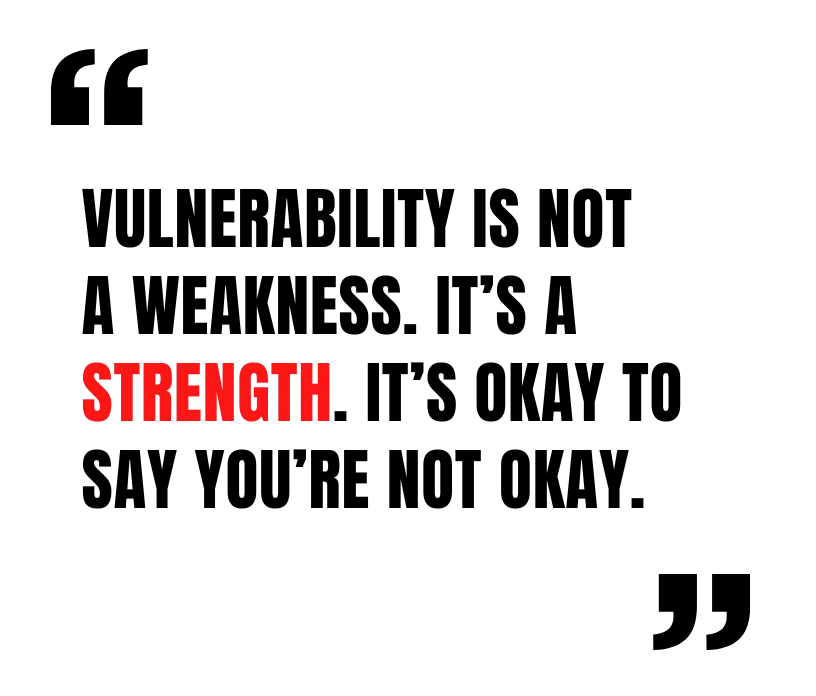
I’ve also learned that vulnerability is not a weakness. It’s a strength. It’s okay to say you’re not okay. It’s okay to admit you don’t have it all figured out, that you’re struggling, that you’re in pain. Vulnerability connects and heals in ways that resilience alone cannot. People see you as resilient and assume you’ve got it all together. But when you show vulnerability, people show up for you – even if you weren’t asking for help. So yes, it’s okay to say you’re not okay.
Magazica: It’s a paradigm shift. Thank you for sharing that. Seriously, thank you. So many times we associate vulnerability with weakness, thinking it means we’re failing. But it’s not. It’s okay to say, “I’m not okay,” and to ask for help. Help is out there.
Angie Poirier: You don’t always have to be tough.
Magazica: Exactly. Sharing and caring can go together. So you’ve worked with incredible organizations and initiatives. What are some ways people can get involved in supporting cancer patients and their families?
Angie Poirier: There are so many ways. It can be as simple as volunteering at fundraising events – either individually or as a family. You can even get your kids involved at a young age so they understand the importance of community and rallying around each other.
You can donate to support programs. Or just show up to events. Share messages online – someone’s story, a fundraising initiative. Even if you can’t afford to donate, passing it on helps.
And sometimes, just listening is enough. It’s not always about grand gestures. It’s about consistent compassion. Every small act counts. If we all perform small acts, they become a powerful collective force – a big conglomerate of support that people can draw from.
Magazica: So true. Sometimes even simply showing up means so much to so many people.
Angie Poirier: Absolutely.
Magazica: As a veteran broadcaster, you understand the impact of powerful storytelling. How has sharing your family’s journey helped others? And what advice would you give to someone like me who wants to share their own story?
Angie Poirier: I’ve always believed in the power of stories. But sharing our own story was something else entirely. I found it difficult in the beginning. As I saw the ripple effect – how it was helping others – it gave me the confidence to share more. It connected us to people we never would have met, people I now can’t imagine life without.
It gave others permission to share their pain too. When you tell your truth, you shine a light for others walking the same path – or those who might, unfortunately, find themselves on that path one day. Being honest and real helps others simply by being vulnerable. That ripple effect of sharing your story gives strength to others to share theirs.
It creates a roadmap for families who might read it, not knowing that a month, a year, or two years down the line, they’ll be in the same position. But they’ll remember it. They’ll find strength in it. It’s a long-lasting effect that continues to pay forward.
Magazica: People look up to certain stories. One of my favorite books is Man’s Search for Meaning by Viktor Frankl. He was a prisoner in a German concentration camp during World War II. Despite being a prisoner, he inspired other prisoners – and even the guards. He became a light for everyone. I’ve never met him, but through his book, he inspires me. That’s the power of story – just like yours and others who share their journeys.
We don’t know when this interview will be published, and we may never meet the person who reads it. But that person or family could be hugely impacted by what you’ve shared. A powerful story is a powerful inspiration. If you could sit down with a parent who just received their child’s cancer diagnosis, what is the one piece of advice you’d want them to hear from you?
Angie Poirier: I’d take their hand and say, “You’re not alone.” That’s what was done for me very early on. So many oncology families reached out to me from day one, and I’ll never forget it. Instantly, I found my people – those who understand you at a deeper level because they’ve lived it and felt it.
If I could offer one piece of advice, it’s this: focus on what’s right in front of you. Focus on today. If you start thinking about next week, next month, or a year from now, it becomes suffocating and overwhelming. Today is your only focus.
Accept help. That’s hard to do. You think, “I’ve got this. I’m fine.” You feel like accepting help is a weakness. It can feel awkward and uncomfortable. But take the help. Let people love you through this. Don’t shut them out. It’s easy to feel isolated and like nobody understands – but they do. Let them be there for you. You need it more than you’ll admit.
Know that there’s a whole community of people like me who have been where you are and who are rooting for you. That support can come from perfect strangers, and that’s okay. Sometimes, that’s exactly what you need. Just be open.
Magazica: Totally true. Whenever I meet other parents during therapy sessions or parent meetings, I always call them “my tribe.”
Angie Poirier: Yes – your tribe, your people.
Magazica: It’s so inspiring to hear their strategies. And just like you said, focusing on today and what’s available right now is so powerful. You don’t have to project three-year or one-year plans like corporations do. That’s fine for them, but when facing human crises or challenges, focusing on what’s right in front of you is incredibly powerful.
We’re almost at the end of our conversation. So let’s talk about the future. You’ve seen the landscape, the communities, the sectors you work in. Looking ahead, what gives you hope – whether it’s advancements in cancer care, better community support, or personal resilience? What keeps you moving forward?
Angie Poirier: When I think about hope, I remember that at one point we weren’t sure our son would have a future. So right now, hope for my family is watching him reclaim his childhood. He’s laughing again. He’s being a kid again. He’s returning to the sports and activities he loved. He’s planning for his future. That gives me hope.
For the broader community, hope comes from being part of a larger movement – people determined to fight this disease. It has touched almost everyone in some way. There’s a strong community, not just here but globally, that wants to see cancer gone.
There’s hope in the work being done – medical advances, innovations in treatment and care, improvements in hospitals. But the sad reality is that the numbers keep rising. It’s daunting when you’re waiting to go up to the cancer floor for treatment and there are no open beds. You walk the floor and see no open spaces. It’s scary to see how big this has become and how much it continues to grow.
But for all the advancements being thrown at this disease, that gives me hope. And every survivor story we get to tell gives people hope. There are many of those stories. They’re empowering. They show that new care and new treatments are working. Thirty years ago, we didn’t have what we have now. So yes, the numbers may be rising, but so are the survivor stories. That gives me hope.
Magazica: Thank you so very much for sharing all this. It’s truly inspiring to have such a lovely and candid conversation with you. Thank you for your time.
Angie Poirier: Thank you for asking. It was a pleasure to speak with you.
- Share

Angie Poirier
Angie Poirier is a seasoned media professional with over 25 years in broadcasting, known for her dynamic presence as a morning show host and community advocate. Currently serving as Director of Communications & Public Relations at the Ottawa Cancer Foundation, she blends storytelling with purpose, championing support for families facing cancer. Angie’s work reflects her passion for connection, resilience, and meaningful change across Ottawa and beyond.
Unstoppable Tracy Schmitt: The Leadership Mindset That Turns Barriers into Breakthroughs with Resilience, Reinvention, and Real Leadership
Tracy Schmitt doesn’t just talk about resilience — she embodies it. Known globally as Unstoppable Tracy, she has...
Living Without Limits: Judy Mitri on Type 1 Diabetes, Resilience, and Redefining Strength
Some people build careers. Others build momentum. Judy Mitri does both. Her life reads like a masterclass in...
Stu Schwartz: Life Lessons acquired from Beating Cancer Twice, Surviving a Heart Attack, and Inspiring Ottawa’s Community
Stu Schwartz’s story reads like a blockbuster script - radio fame, life-threatening battles...
A Disease to Be Believed: Canadian Tarlov cyst patients demand acknowledgment of their pain by healthcare professionals
Tarlov cyst disease found its way into Tara Matthews’ vocabulary in the...

Early Battles: The Promising Advances in Childhood Cancer Care Across Canada
Every September, golden leaves begin to fall—and with them, an urgent reminder...

From Diagnosis to Empowerment and Resilience: Ardra Shephard’s Inspiring Journey of Living with Multiple Sclerosis, Challenging Stigma, and Finding Joy
Imagine a life suddenly altered, a path redirected by an unexpected diagnosis....