Living Without Limits: Judy Mitri on Type 1 Diabetes, Resilience, and Redefining Strength
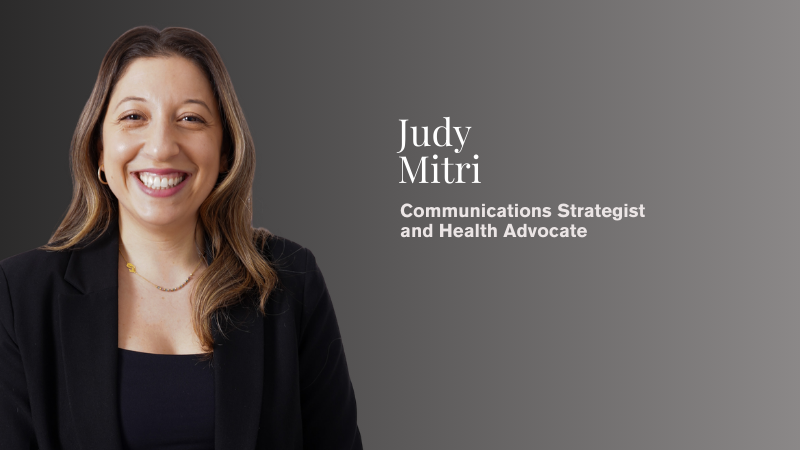
Some people build careers. Others build momentum. Judy Mitri does both. Her life reads like a masterclass in resilience—diagnosed with type 1 diabetes at seven, she learned early that discipline isn’t a restriction but a form of freedom. Today, she blends strategy, storytelling, and lived experience to help others navigate the emotional and practical realities of chronic illness. Judy’s voice—bilingual, bold, and deeply human—cuts through noise and replaces fear with clarity. Whether she’s advocating for better healthcare tools, mentoring newly diagnosed patients, or traveling the world solo, Judy shows what happens when courage becomes a daily habit..
Magazica: Dear readers, viewers and listeners, Judy Mitri has built her career at the crossroads of strategy, storytelling, and impact.
With over seven years of experience leading marketing and communication across healthcare, nonprofit, and sustainability sectors, she has shown how clear ideas and authentic messages can drive meaningful growth.
But most importantly, Judy has consistently used her bilingual voice to connect with diverse audiences about type 1 diabetes – how she manages it, how she survives it, and how she flourishes with it over the years.
She’s also taken the entrepreneurial leap, founding a niche health focused business that reflects her passion for understanding people deeply and creating meaningful solutions for others. We are happy to have Judy with us.
Judy, welcome to Magazica.
Judy Mitri: Thank you for having me.
Magazica: Okay, so just as a start of a personal journey – when you first began your career, you were not identified as someone living with type 1 diabetes. So how did it all start? Your career, just like everyone else, had a nice start. How did the career start? Let’s start with the career point first.
Judy Mitri: So yeah, I’m 33 right now, and I got diagnosed at the age of 7. That was a while back. At first, I started getting very hungry. I got all the typical symptoms that type 1 diabetics can get at first – very, very hungry. My mom would feed me a plate of rice and proteins and all, and then I would still be hungry, and I’d get a second plate. So, my mom realized that… well, both of my parents realized that something was clearly wrong, and despite eating more, I was losing a ton of weight. I was going to the washroom a lot, drinking water way more than usual.
They got me to see a doctor, and she told us first that she thought it was something that had to do with my gut, like I had some digestive problems. So, I started taking medication for that. Turns out that medication was not doing anything, so we went to see another doctor, and he’s still my family doctor until this day. And yeah, he just saw me, and he told my parents to rush me to the hospital. He knew right away. He just looked at me, they described my symptoms, and he said, its acute diabetes, take her to the hospital. And then this is where I got my first actual diagnosis. I stayed at the hospital for a couple of days.
I remember I was very little – I was 7 – so I didn’t quite comprehend what was happening. In my head, I was just sick, and I went to the hospital, and I got out, and I was fine. And then I remember we were at the restaurant, and I was hungry, and I was eating, and my mom told me, be careful, Judy, you need to calculate what you’re eating, you can’t eat all of that. And that’s when it hit me. I’m like, okay, this is for life. This is going to stay with me forever. So yeah, it really hit me hard that time, and from this day, I started taking injections.
I had fewer injections when I was little. For example, I didn’t have one at lunchtime – not for every meal. But my mom would inject me because I was so little. I was still a kid.
And then eventually I learned to give myself injections, and here I am today, advocating for the illness and trying to help others as much as I can.
Magazica: So, at the age of 7, you were in grade… 2?
Judy Mitri: It’s the same system here in Quebec, right? Yeah, let’s say grade 3, I would say, yes.
Magazica: And you were diagnosed, and you were such a small kid back then. It’s very hard even for your parents and your doctor to explain the situation to you.
Judy Mitri: Yeah, yeah.
Magazica: So, you first realized when the doctor said, or your parents said, that no, you cannot eat everything. Then you came to realize that something is wrong.
Judy Mitri: Something is wrong, exactly, because I remember, like I said, I was at the hospital. I was also limiting my food. I remember I was starving all day because I needed to control my glucose level, and I remember I would hope that my blood sugar was fine at nighttime, because I was allowed two cookies if my blood sugar was okay before bed.
So, I was always thinking and hoping, let me be able to eat my cookies. And I remember it was so calculated. So, I thought this was only for the hospital, and then I would go back home and be fine. And then I realized, oh no, it’s still outside of the hospital – I still must do this.
Magazica: And then almost the whole school life and high school were ahead of you, then college and others. So, when your peers came to know, how did they react to it?
Judy Mitri: I remember when I was little, I didn’t really have to say it – it was my parents who were taking care of that. In high school, I was not telling everyone, maybe only my close friends who I was eating lunch with. I would not tell people. If my blood sugar went low, I was hiding and eating my granola bar because I didn’t want people to know.
And even with my closest friends, at one point the doctors asked me to check my blood sugar on my finger at lunchtime, and I would not always do it because I was shy. I was also hiding when checking my glucose level. Later, I started opening up about it at university – again, even then, only with my closest friends.
But after that, I had a dark period with my diabetes. We could talk about it later, but I started not to feel my lows anymore, and it was just very bad.
And it opened my eyes. I realized I needed to take care of this illness, and this is when I got into the community, etc., and here I am today. I’m the complete opposite right now.
Magazica: So, from the conversation we had so far, you had a protective, well-wishing network around you. From the very school years, you had a very close-knit circle who would protect you, who would guard you. And who tried their best to make you comfortable?
Judy Mitri: So, if I was not feeling well, my closest friends – even outside of high school – I had… I was a Girl Scout, so I had a big group of friends.
I was a Girl Scout for, I don’t know, maybe 10 years, something like that. So again, I had another community there, and all of them knew. I was not really scared to share it there, also because we had camps over the weekend, and I had to. I had to say it, because they were with me from morning till night, so they had to know.

But yeah, if I was not feeling well, they would be there for me. Every adult knew also. My mom would come with me to these camps when I was younger, just to make sure that I was okay.
Judy Mitri: So, if I was not feeling well, my closest friends – even outside of high school – I had… I was a Girl Scout, so I had a big group of friends.
I was a Girl Scout for, I don’t know, maybe 10 years, something like that. So again, I had another community there, and all of them knew. I was not really scared to share it there, also because we had camps over the weekend, and I had to. I had to say it, because they were with me from morning till night, so they had to know.
But yeah, if I was not feeling well, they would be there for me. Every adult knew also. My mom would come with me to these camps when I was younger, just to make sure that I was okay.
Honestly, I’ve never had any issues with my surroundings not understanding my illness. Every time I say, for example, I need to sit down, I need to slow down, or I need to cancel plans because I’m not feeling well, people really understand. And they’re even overprotective – asking me after, how is my blood glucose? If we leave a restaurant and I come back home, they will text me, “How are you now?” So yeah, I’m lucky for that.
Magazica: And in the university, what did you study?
Judy Mitri: I started in marketing, so I did a bachelor’s degree in business administration, specialized in marketing.
Magazica: From which university?
Judy Mitri: HEC Montreal.
Magazica: So, after university, you did the master’s, or you joined a job?
Judy Mitri: Oh no, I didn’t do a master’s after. I started working. I had a couple of experiences here and there, but I really started my official marketing journey back in 2018. I was in Toronto. First summer, and then I came back, and it all started from there.
Magazica: So, you get the vibe of the busy Toronto.
Judy Mitri: I was more in Mississauga, but it’s the same thing.
Magazica: I have been to Montreal – really nice, a sorted city. Every turn is so meticulously designed. And I really love the city. I really love the vibe of the city.
Judy Mitri: Yeah, it’s charming.
Magazica: And I found it very culturally rich.
Judy Mitri: It is.
Magazica: I’m very fond of French thinking, and all the French philosophers – Derrida, Foucault, and all. I found it… how it would feel to live in a French academy or everything. And specifically, Montreal University. I found it very fascinating. And then, let’s talk about the dark phase – when it started.
Judy Mitri: So, I would say I was… I finished university with my bachelor’s degree, and I still wanted to study, so I went to another city called Sherbrooke – I don’t know if you know it.
Magazica: Sherbrooke, yeah.
Judy Mitri: And I started a law degree. I ended up not finishing it for multiple reasons, but all that to say that I was outside of Montreal. I didn’t really like being outside of the city. I love nature and all, but I also love Montreal. So, it was already hard to go back and forth, starting a new degree. And this is when, for some reason – well, actually, there is a reason – I started not feeling my lows anymore.
I talked to my doctor about it, and he basically told me that because my brain got so used to the signal that low blood sugar was sending, it was not alerting me as much as before. So I could have been at 2.5, which is very, very low, and not feel it. So, I became super anxious because I would be in class not knowing if I’m low or high. I would start checking my blood glucose obsessively because I didn’t know what was going on. I was scared to go to sleep because it can drop during the night, and I wouldn’t know.
So, I would say this was the worst period of my type 1 diabetes journey, because I didn’t know what to do. I was away from home, away from my friends.
And I went to see the diabetes team that I had in Sherbrooke, and they were helpful, but only as much as they could be. They told me to adjust my insulin and all, but I still didn’t have any understanding of what was going on.
Sometimes I would be at 8, and then an hour later I’m at 4. I’m like, how did it…?
I was not doing too good. And then I realized that I needed to get information from another source, and that’s when I dived into social media.
I discovered a whole new world, and the importance of communication and resources.
And I would say it’s a major, major thing. It’s super important, because this is how I found out about continuous glucose monitors (CGMs). I didn’t even know that CGMs were a thing. And then when I looked at this and I saw CGM, I’m like, this is what I need. It’s like a thing sent from heaven. I’m like, oh my God, this is exactly what I need.
Slowly, I learned about insulin pumps, etc., and I got into this healing journey with my type 1 diabetes, including technologies involved. Because before, I feared technologies because of judgment from others – like, oh, they’re going to see that I’m sick.
Magazica: Having machines and… we call them robot parts on us. But yeah, it was an awakening in a way, but it was very difficult to go through because…
Judy Mitri: Of not understanding, not knowing when your body’s going to give up on you, or when…
Magazica: How long did that period last?
Judy Mitri: Oh, I would say… at least a year. I would say the worst part – like, not understanding my blood sugar – lasted at least three months. But really getting out of it, and really accepting… I had to go through a couple of phases to accept my diabetes. Accept, then not accept, then accept again.
Magazica: You also have to remember that you were fighting this for a very long time already back then, so sometimes it is also about, like, yes, I am doing everything right, so now why is this happening?
Judy Mitri: Yeah, exactly. And that’s the thing. I always say that you can do the same – and a lot of diabetics say the same thing – you can do the same thing every single day. You can do the same exercise, eat the same thing, put the same amount of insulin, and the next day it’s going to be completely different.
Magazica: What is the social media you first got into?
Judy Mitri: Oh, Instagram.
Magazica: And then you found a whole new world open unto you.
Judy Mitri: Yes, it’s where I found a continuous glucose monitor. The famous brands are Dexcom and Freestyle Libre. There are others, but these are the most famous ones. It’s a little machine that you put on your body. You can put it on your stomach, your arms, whatever, and it goes on your phone.
Magazica: Mobile app?
Judy Mitri: Yeah, so there’s an app. It goes on your phone, and you can know your blood sugar. It updates every five minutes.
Every five minutes you get an update, and it’s amazing because you can set alerts also. You decide what is considered low and what is considered high. And if it goes below the low, it’s going to alert you. If it goes above the high, it’s also going to alert you so you can make adjustments.
And it’s also great for nighttime, because you go to sleep and it’s just going to alert you. It can be annoying sometimes because you have to wake up and…
Also, with the new Omnipod 5 that I started using last summer, it’s working even better. It links to my Dexcom, and using the SmartAdjustTM technology, it continuously calculates the dose of insulin required to manage blood glucose. Every 5 minutes, it receives a CGM value from my Dexcom and predicts what future glucose levels will be 60 minutes. Then, the algorithm automatically adjusts insulin delivery, increasing, decreasing, or pausing it. And since I started, honestly, I’ve had full nights of sleep, and I haven’t experienced that in years. So now I feel better, I feel like a new person. I feel like I’m healed – not 100%, but I have way more energy.
Magazica: And when the first thing opened unto you on Instagram – that okay, there is a whole community out there, and I need the help and everything – yeah, it’s good. Then when did you start to motivate others, share your story? When did that flip happen?
Judy Mitri: Yeah… I don’t know if there was one flip, but I started seeing what others were doing, posting out there. And I said to myself, that really helped me. I want to do that too. I want to be a part of this. If someone is going through the same thing or something completely different with their type 1 diabetes, then if they go to my page, they’re going to get some help, or just some tips, or just not feel alone.
Sometimes I would just share my day, and it would be a crappy day – ups and downs – and I would post it. And not everyone does that. Some people post just the good days, and it’s good to share also the bad days. I feel like it’s important to do so.
Sometimes I’m just having a bad day. As much as you want your surroundings to understand, they’re never going to fully understand. They don’t live with the disease – and that’s totally fine. But sometimes you don’t know what to do, and you just feel like… like crap, sorry for the word.
So, opening Instagram has helped me a lot. I wanted to do the same. I realized that I love writing, I love saying a lot of things. I started back then a blog for this. I started sharing some stories. I love to travel – I did a lot of solo traveling before also.
Solo traveling with type 1 diabetes. That was a big step for me, because it’s hard traveling with diabetes and traveling alone. If you’re not feeling well, you’re by yourself. I started writing about this, and hopefully inspiring people who were not sure if they could do this alone. They read my article – oh, okay, I can do this, here’s how I can get prepared.
Magazica: And in your blog, you have some interesting posts – stigma around diabetes remains, and solo traveling. Those articles are there. When did you start your blog?
Judy Mitri: It was in 2018, I believe, or 2017.
Magazica: That’s a long time. And you’re continuing it?
Judy Mitri: Not for now, no. I paused it a little bit. To be quite transparent with you, I would continue it, but I feel like communication and marketing trends are changing. Everything is fast-paced. I feel like right now people watch videos. And this is why I’m trying to focus more on that.
I’m not against writing. If an idea comes up, I can write it. But I feel I’m not going to reach a lot of people with that way of communicating because of everything that is changing right now.
Magazica: The way people consume content has completely changed, so it’s changing fast. When you start advocating, when you start reaching out to people, when you start sharing your stories – what did you find the most prevalent, most common misconceptions about type 1 diabetes?
Judy Mitri: I was getting from people who do not have diabetes?
Magazica: People without diabetes or those who just identified themselves – “Oh, I have type 1 diabetes too.” What are the misconceptions they have?
Judy Mitri: I think the one thing that really struck me was people thought that taking insulin was the only thing diabetes was associated with – meaning they thought it was just like when you’re sick, you take Tylenol, and then you go on with your day. They thought it was the same thing: okay, I need to eat this, and I need to take insulin. They also thought it was just the same amount of insulin you must take for every meal, and that’s it. Like, you just take one medication, eat, and go on with your day. But it’s so much more than that. You need to calculate everything, and as I said, it can react positively, it can react negatively, going up and down. If you’re stressed, you didn’t sleep well, you exercised – all of that. If you’re a woman and you have your periods, again, all this hormonal change can affect your blood sugar.
So, I would say, yeah, they don’t see how big or how difficult it is. I would say that’s a top misconception that I would get. And the second one is, they think that it magically disappears at night. Every time I tell them, “Oh yeah, I wake up at night,” they’re like, “Oh, really?” I’m like, “yeah, I can’t get a break.” It’s not going to stop – “Oh, she’s sleeping, let me pause what’s going on in her body.” And the third one would be because I have my Omnipod on me, and people are very intrigued by it. People were really surprised – not shocked, but surprised – by the fact that we keep these devices on us when we go to sleep, or when we’re showering, or doing everyday tasks. They think we can take a break, but there is no break. Not even one second.
Magazica: And when you reach out to people – when they just found out that they’re identified with type 1 diabetes, or they have type 1 diabetes – what are the first few things you tell them?
Judy Mitri: My friend’s brother – he’s in his early 20s – got diagnosed last year, and his mom called me, his sister called me, then I talked to him. It’s as cliché as it is, but everything is going to be okay. I know it’s very cliché, but it’s true. It’s just going to be more challenging. I would use the word challenging, I wouldn’t use the word limitation, because I don’t see diabetes as a limitation. But yeah, everything’s going to be okay, you’re just going to have to adjust. I always say – my parents told me this – it’s like being on a diet your whole life. You have to be careful.
And this brings me to another misconception: people think that when you have type 1 diabetes, you can’t eat this and that. And I reminded him that you can eat everything you want, but you just have to be careful. That’s it. You just must be careful about your portions.
Because it is overwhelming. I’ve had this conversation with many people – “Is it worse to get diagnosed when you’re young or when you’re 20?” And I have someone in my family who is also a type 1 diabetic, and she was diagnosed at 20 years old. We were talking about this, and she said, “I think it’s worse when you’re 20, because you lived life without diabetes, so you know what it’s like.” And when you’re younger, this is your life.
But yeah, it’s going to take a lot of resilience, but you’re going to live a long and normal life, like everyone else.
Magazica: I really like what your parents said. It’s an adjustment, and it’s like a diet your whole life. You’re maintaining a specific diet. So, I heard that Omnipod is an adjustment of lifestyle. It’s an adjustment of lifestyle. You know everything day in and day out – what is going on. So, you can appreciate more what life and physical systems she has.
Judy Mitri: I completely agree. And it is true – you become very mindful of what’s going on with your body. We have a life, we go on our day-to-day things, we have plans, etc., and we don’t really take the time to sit down and think, “Okay, this is what’s happening. This hurts,” or “I’m feeling this,” or “This is feeling good,” also – the positive things.
But with diabetes, you have no choice. Like, okay, this is happening, how can I make this better for myself? You also see – well, for me personally – you see a lot of healthcare professionals: nutritionists, endocrinologists, physical therapy, etc., and it really helps you understand the body more, because you need to be aware of what’s going on. I completely agree with what she said.
Magazica: And that’s where your awareness activities become more enriched, because you know yourself.
Judy Mitri: Yeah.
Magazica: So, you’re… and what are the things you do? Okay, before that, let’s finish the fun part. When did the solo traveling start?
Judy Mitri: In 2019.
Magazica: Before COVID or during COVID?
Judy Mitri: No, it was right before. I was very lucky for that. I left summer of 2019, and then COVID happened in March.
Magazica: Do you remember your first destination?

Judy Mitri: It started because I went to Italy for a month, and I lived with a host family. And I lived in their house. It was in northern Italy, close to the Alps.
I met another person with type 1 diabetes there. She was a young girl from a family friend, and they were so welcoming. I really, really recommend it if you love adventure and the mountains and all.
Magazica: Yeah, yeah. And so first it was then, and then it continued, and… but during COVID, there is a stop for that.
Judy Mitri: It started because I went to Italy for a month, and I lived with a host family. And I lived in their house. It was in northern Italy, close to the Alps.
I met another person with type 1 diabetes there. She was a young girl from a family friend, and they were so welcoming. I really, really recommend it if you love adventure and the mountains and all.
Magazica: Yeah, yeah. And so first it was then, and then it continued, and… but during COVID, there is a stop for that.
Judy Mitri: So, after Italy, I went to a couple of countries. I went to Switzerland, Scotland, and Portugal. Then it stopped, and I started back in 2022. I went to Croatia Costa Rica, Mexico…
Magazica: So, whenever you are advocating people, being bilingual gives you an extra benefit?
Judy Mitri: I would say so, because I’ve attended a couple of events. It was mostly for kids. I was asked by Omnipod to attend booths at either fundraising walks or… there was – I don’t remember – there was a kids’ activity, or even at hospitals also, St. Justine, which is the main kids’ hospital in Montreal.
And people would come to the booth. I was there just to share my experience with the insulin pump. I was not there to sell it per se – I was not a salesperson – but just to share my experience as a type 1 diabetic.
And of course, we live in Montreal, so it is… we call it Franglais. People speak French and English all the time, in the same sentence. So yeah, when people approached me, knowing French and English, I would not redirect them to someone else because I didn’t know the language. I was able to help them.
Also, last spring, I was invited again by Omnipod to Amsterdam. There was this exclusive event – it’s called All For One – for Podders (people who use Omnipod). And I arrived there, and I didn’t know anybody, so it was a bit overwhelming. But someone from Omnipod presented me to her colleague – the first one she introduced me to – she said, “Oh, you speak French, let me introduce you to him.” And he was – I don’t recall if he was French living in Switzerland or vice versa – but we started speaking in French, and I just felt at ease from the beginning.
And then there were a lot of people from the UK, from the States, so again, I was able to talk to them. I could have talked to him in English, but it’s different when you speak in your native language. There’s a small… it’s a little bit different, yeah.
Magazica: What do you think we could do better? We’re almost at the end of the conversation. What do you think we could do better, or we can do better, to support the people who are living with type 1 diabetes – people who are surviving type 1 diabetes? What can we do better?
Judy Mitri: Okay, there’s a lot, but I don’t know how to…
Magazica: Let’s figure it like this. From the family members? From the workplace? And from the medical side. Let’s do it this way.
Judy Mitri: Okay, perfect. Yeah, I like that, because I like when everything is organized – even in my thoughts.
Magazica: That is very evident from your blog posts. You write in a very organized way. Your paragraphs are so organized. And your paragraph is, like – in one paragraph, you give one theme. You don’t mix two themes in the same paragraph.
Judy Mitri: You’re right, exactly.
Magazica: So that is why I immediately said family, workplace… you can say it.
Judy Mitri: Thank you for that, seriously, I appreciate it. It’s just so funny that you also realized my writing style.
Magazica: Thank you. Now, what can family members do?
Judy Mitri: Yeah, so again, I’m lucky because my family really understands this. I would just say that, again, I used to be a little bit frustrated before, because as much as I would try to explain my condition, they wouldn’t understand it. And I would really get mad sometimes, because as much as you say, “I’m not feeling well,” or “I need to put insulin,” they were never going to understand. And knock on wood, they won’t understand it, because they don’t have the illness.
All that to say that I really think it’s important… I don’t know how to phrase this, let me…
So, for example, my parents would sometimes ask me, “Why is it going low? Oh, you didn’t eat a lot.” They were asking me why my blood sugar is acting a certain way. And it’s not that they shouldn’t ask questions, but when someone is having a moment, it’s not really the time to try to explain why something is happening. Just giving someone a little bit of space…
It is contradictory, because I’m telling people, “Get your family to understand the disease,” but also, when a situation is arising – you’re having a really bad day – and my parents or family members ask me, “Oh, how come it’s low? But you just ate a cake.” No, it’s not the time to explain that I put too much insulin. You know what I mean?
So, when we say, “I don’t know, let me just deal with it,” try to understand that we need space. I don’t know if a lot of type 1 diabetics will agree with me, but for me personally, it’s good to not try to be in every step of the way. Just let us be. Sometimes it takes time for us to recover. Sometimes it takes me a full day to recover from a high or low blood sugar.
So, I would say that. For friends, workplace…I feel like we need some sensitivity about the topic. I’m very lucky again that I have a workplace that asks me questions. We work virtually, but when we’re in person and my blood sugar beeps – “Oh, what’s happening? Oh, you have type 1 diabetes? Are you okay? What do you need?”
And I’m really lucky because I don’t have any discrimination. A lot of times when I tell them I’m not feeling well, they say, “Okay, take the time to recover.” I’ve missed a couple of meetings and they would understand that.
And not to talk about one or another, but a lot of people confuse type 1 and type 2 still. So, people think at work, “Oh, she’s not feeling well, she’s going to eat her candies and join the meeting and continue working.” But we need time to recover. It takes about an hour to fully recover from a low blood sugar. So really understanding what’s going on in the person’s life.
For me personally – and I think if I bring it to my company, they would agree – having a session about what type 1 diabetes is, would help. Someone might be type 1 diabetic at work, and some people don’t want to say it because they’re scared. You don’t have to point fingers but just have a general presentation of what happens when people live with type 1 diabetes.
And on the medical side – talking about Quebec, because I know each province is different – resources are um… the health system is bad. Resources are bad.
I think it’s about being aware of the advancement of technologies. I feel like we’re always stuck behind – meaning, “You need to control your insulin and that’s it.” But we have Omnipod 5, we have different insulin pumps, we have CGMs. And personally, when I go see my doctor, it takes a bunch of time just for them to figure out how to plug this in and get my data on the computer. The advancement is there, but it takes so much time.
And again, all the information I get is from social media and blogs and videos. So, I think it would help if the medical system stayed aware of what’s happening in the present moment and what’s helping us, so we can work with our team.
Magazica: Any last message for our readers – for the people who are hearing this, who have type 1 diabetes themselves, or maybe a family member? Any message to them?
Judy Mitri: I used to think – I used to be this person who’s always positive about her diabetes, like, “Hey, diabetes is not a limitation.” And it’s not. But I really want to remind people that I’ve had bad days with diabetes.
And I feel like it’s important to remember that you need to stay positive —you need to continue your life. You can still go on with your life, do what you want, do the job you want, and the travels that you want. But if you’re having a really bad period, it’s okay to cry and to let it out, and to know that it sucks. It sucks— someone else can eat a donut and go on with their day. If we eat a donut it’s going to screw up our day.
And if it does, I used to be like, “It’s okay, I’m still healthy, I can walk…” But it’s also okay to feel like, “Hey, I’m not like everyone else, and this is a bad day.” And I always say tomorrow is a new day – and it’s true with diabetes. It usually comes back down, or up, and it’s going to stabilize, and you can start a new day. And if it’s bad again, well, it’s bad, and you can cry about it again. And eventually it’s going to bring itself back up.
Magazica: Be conscious, be careful, be compassionate.
Judy Mitri: Yeah, exactly, exactly, yeah.
Magazica: Thank you very much for speaking with us. It was such an inspiring conversation, and I think our readers will love it. Thank you very much.
Judy Mitri: Oh, thank you. Thank you for taking the time to hear my story, I appreciate it.
Magazica: Thank you.
Judy Mitri: Also, have a good day.
- Share

Judy Mitri
Judy Mitri is a communications strategist and health advocate whose work sits at the intersection of storytelling, community impact, and lived experience. With a background in marketing and a lifelong journey with type 1 diabetes, she brings a rare blend of professional clarity and personal insight to every conversation she leads. Judy has built a reputation for transforming complex health realities into accessible, empowering narratives that resonate across audiences. Her advocacy—rooted in resilience, empathy, and practical wisdom—continues to inspire individuals navigating chronic illness and encourages a more informed, compassionate understanding of life with type 1 diabetes.
Unstoppable Tracy Schmitt: The Leadership Mindset That Turns Barriers into Breakthroughs with Resilience, Reinvention, and Real Leadership
Tracy Schmitt doesn’t just talk about resilience — she embodies it. Known globally as Unstoppable Tracy, she has...
Stu Schwartz: Life Lessons acquired from Beating Cancer Twice, Surviving a Heart Attack, and Inspiring Ottawa’s Community
Stu Schwartz’s story reads like a blockbuster script - radio fame, life-threatening battles...
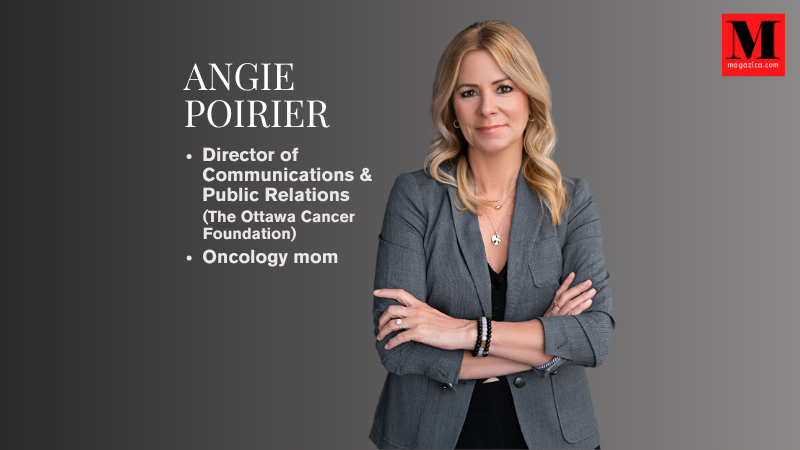
Turning Pain into Purpose: Angie Poirier’s Journey from Oncology Mom to Cancer Advocate
Angie Poirier didn’t ask for the cancer fight to arrive at her doorstep. But when...

A Disease to Be Believed: Canadian Tarlov cyst patients demand acknowledgment of their pain by healthcare professionals
Tarlov cyst disease found its way into Tara Matthews’ vocabulary in the...

Early Battles: The Promising Advances in Childhood Cancer Care Across Canada
Every September, golden leaves begin to fall—and with them, an urgent reminder...

From Diagnosis to Empowerment and Resilience: Ardra Shephard’s Inspiring Journey of Living with Multiple Sclerosis, Challenging Stigma, and Finding Joy
Imagine a life suddenly altered, a path redirected by an unexpected diagnosis....