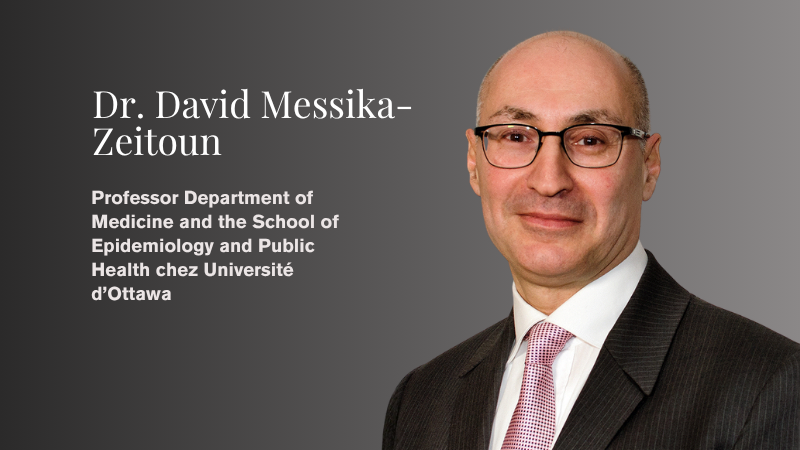
Saving Lives Before Symptoms Strike: How Dr. David Messika‑Zeitoun Is Transforming Heart Valve Care in Canada
Dr. David Messika-Zeitoun is a global leader in valvular heart disease, combining scientific precision with deeply human care. Through early detection, mobile screening, and innovative treatment, he is helping bring life-saving heart care closer to the people who need it most. In this conversation, he shares a vision for cardiology that is more accessible, proactive, and personal.
Magazica: Hello, everyone. Welcome, and welcome back. Today, we are having a conversation with Dr. David Messika-Zeitoun.
Dr. David has spent his career helping people protect the one thing we all depend on every second of our lives: our heart. As a cardiologist at the University of Ottawa Heart Institute and Director of the Center for Valvular Heart Disease, he has dedicated decades to understanding how heart valves work, why they fail, and how early detection can save lives. His work has shaped new ways of diagnosing heart disease, expanded access to care through mobile screening, and inspired teams across Canada and beyond.
David Messika-Zeitoun: Good afternoon. Thank you for having me.
Magazica: To begin, let’s go back to the start of your journey. Was there a moment early in your life or training that made you realize that cardiology—and especially heart valve disease—was where you were meant to be?
David Messika-Zeitoun: It’s exactly as you said. It was a staged career process. I was quite sure, since I high school, that I wanted to do medicine. Health, research, and science were my passion.
After high school, I did my medical school, and my career was shaped mostly by the people I met. When I was a medical student, I loved every specialty I was exposed to. After that, you meet a few people who influence your choices and guide you in one direction instead of another. That’s why mentoring is so important.
The first mentor I met was Alec Vahanian. I should mention that I’m originally from France. I was born and trained in Paris until 2018, when I joined Ottawa thanks to Dr Thierry Mesana. I met Alec Vahanian in Paris as a young resident. He taught me a lot about clinical work, empathy, and how to take care of patients. He also passed on his passion for valvular heart disease. He is one of the worldwide experts in the field.
That was the clinical aspect of my training. And in 1999, I was at my first big international conference. I went to listen to someone speaking about mitral regurgitation, one of the valvular heart diseases. His name is Maurice Enriquez-Sarano. When I saw him talking, I said, “I have to go and work with that guy.”
He’s originally from France, was working at Mayo Clinic, and was also a close friend of Alec Vahanian. I gave up security —I had a position in Paris—and I said, “I need to go.” I spent two years at Mayo with him.
Both shaped my career. Alec was more clinical, Maurice more research-focused. I’m indebted to them, and I’m still in very close contact with both; they are my friends now. That path led me from medicine to cardiology, to valvular heart disease, and to research.
Magazica: Fantastic. Let’s continue with a very holistic angle: what the heart teaches us about life. Most of us think the heart is simply a pump—a biological pump. You have spent decades studying its subtleties. What has the heart taught you about resilience, fragility, or even human nature?
David Messika-Zeitoun: After decades of research, I haven’t found a soul in the heart—not yet. If you take a step back, all organs are critical. You may think that without the heart as a pump you will die, but the same is true for the brain, the kidneys or the lungs. If you remove certain organs, you’re in trouble.
What I’ve learned from medicine is that life is short. Something can happen in one minute and change your life forever. It could be the heart; it could be your brain. It gives you humility and perspective on the fact that we should enjoy what we have. Easy to say, more complex to do—and I’m certainly not doing that, I can guarantee you—but when you face difficulties, it could be worse, and if you’re in good health, you can fix it.
Magazica: Cardiology can feel intimidating to everyday people who are not from the medical field. When you meet someone scared—for example, a patient who feels overwhelmed—how do you explain heart valve disease in a way that brings clarity, or maybe even comfort?
David Messika-Zeitoun: First, what is valvular heart disease? It’s very simple. The heart is a pump even if It has many more functions than just being a pump, and inside the heart you have doors that direct the flow. Valves are those doors. They open when needed and close when needed. They can malfunction as a defect of opening, which we call stenosis, or a defect of closing, which we call regurgitation.
I tell patients that yes, the valves are malfunctioning, and yes, they may need an intervention. It could be surgery or a less invasive option that we have now. But we can fix it.
What is very encouraging—and I hope reassuring for patients—is that even though an intervention may be needed, in most cases we can fix the problem at relatively low risk. It’s different from some other diseases where the cure is very limited. If you think about Alzheimer’s, when you make that kind of diagnosis, you have nothing significant to offer for now. For heart valve disease, we have options. It is indeed an intervention, but we can fix it.
Magazica: So, in fixing, as you say, we have options to repair heart valves. What is the power or leverage we have with early detection? And in this regard, I want to draw your attention to the mobile screening program you started, which brings heart health directly to communities. What inspired this idea? First, let’s talk about the leverage we, as everyday people, have by being conscious of early detection. Then we will go to the mobile clinic.
David Messika-Zeitoun: The preamble is that heart valve disease can cause symptoms, but they are very vague. It could be shortness of breath, chest pain, dizziness—very vague, nonspecific symptoms. And especially shortness of breath is often attributed to aging. People think, “I’m short of breath because I am old.”
So, the symptoms that can lead to diagnosis of valvular heart disease are nonspecific, which makes the diagnosis complicated. The second part is that awareness of the disease among the population is very low. Everybody is aware of heart attacks, strokes, cancer—but valvular heart disease, nobody knows what that is, despite it being very frequent.
The third component is that too many patients with valvular heart disease are diagnosed very late in the course of the disease, already with heart failure or serious consequences. As a result, when an intervention is needed, the risk is higher, and patients may live with long-term consequences.
The fact that patients with valvular heart disease are underdiagnosed, undertreated, and referred late made us ask: how can we improve detection and provide better outcomes?
We decided to go into the community and do a small point-of-care echocardiogram (POCUS). It’s an ultrasound of the heart that gives you a diagnosis of whether you have significant valvular heart disease or not. It doesn’t provide quantification; it’s very basic. But it’s a very good screening tool, to tell if someone has valvular heart disease.
We went to community places and started in 2023, screening participants—people over 65 who were interested in having their heart screened for valvular heart disease. We do other things as well, but the focus is valvular heart disease.
The good thing is that when we detect a valvular abnormality, we take care of it. When a valvular heart disease is detected, participants are automatically referred to the Ottawa Heart Institute’s Center for Valvular Heart Disease. They are seen by one of our cardiologists and receive a formal echocardiogram. We then have a formal diagnosis and can tell the patient what stage of valvular heart disease they have.
If they need an intervention, we refer them. But most do not need an immediate intervention—that’s the purpose of screening. They are closely monitored so we don’t miss the moment when intervention is needed, and we perform it at exactly the best timing.
Magazica: Fantastic. Now, let’s come to the mobile clinic concept. For every concept, as I am from HR, I believe there is the idea and then the execution. Execution comes later. First, please give us the backstory. How did you come up with the idea that we need a mobile clinic for heart valve detection or monitoring? How was the idea conceived? What was the motivation and the drive behind it?
David Messika-Zeitoun: The thought process was based on the rationale I already explained earlier: under-treatment, under-diagnosis, late referrals. We told ourselves; we have to do something to pick up patients with valvular heart disease earlier. My first thought was to go to family physicians.
So, I wondered if family physicians could screen for valvular heart disease. The issue is that they are not trained to do ultrasounds. Doing an ultrasound takes five -ten minutes of their time, and they already have very busy clinics. Also, many people also have limited access to primary care—it’s a challenge everywhere. So, it might not be the right solution.
I thought, let’s do it ourselves. So, we did the first pilot test. We went to community centers, booked a room, did some advertising, and started screening people coming to these centers. The idea was that we must do it ourselves, because if we don’t do it, nobody will.
Magazica: For the execution part, did you start on your own, or did you build a team? Did you propose to your hospital or to the authorities that you needed a certain number of people or specific areas to cover? Just give us a glimpse of how the execution unfolded.
David Messika-Zeitoun: I went to our CEO, Dr Mesana at that time, and he responded that it was a great idea. He told me, “I cannot give you resources now, but if you show me that it works, I will help.”
So, we did our pilot test without asking for any resources. We were fortunate to obtaine a small grant from Ontario Health and Boehringer to start with, but we mostly used the resources we already had at the Center for Valvular Disease —our nurses, our team, and my time to go outside and begin screening.
It went very well. At the beginning, we went to easy places one day a week. After that, we went two days a week, then three days a week, and to more complex places. We went to retirement homes, reserves, churches, mosques, underserved communities, ethnic groups —any place you can think of. I think we have been to more than 100 places in the region.
Everybody was enthusiastic. The concept is simple: we screen for cancer; we screen for many things—why not screening for heart and cardiovascular disease?
Magazica: In my childhood, I heard a story about a farmer who used to go to the mountain for water from the spring. Eventually, he dug a canal so the water could reach his community. In the same way, if a person willing to detect their heart valve problems cannot come to you, you have to go to them.
David Messika-Zeitoun: There’s a famous French quote: « Si tu ne viens pas à Lagardère, Lagardère ira à toi » “If you don’t come to Largardere, Largardere will come to you.” We haven’t discussed money. I think it’s important for the audience to know that the program has been funded by research money and later by the Heart Institute, but we are not charging anyone. We are paying for the screening, and we are not making any money or billing. It is a completely philanthropic program designed to help the community.
It is so rewarding to see the impact we can have on people’s lives. Last month, we detected one lady who was just in Carlingwood Mall, stopping by to have her heart checked. We found a very large aneurysm (enlargement of the aorta). She was admitted right away, had surgery the next day, and is now out of the hospital. She could have died without that kind of screening.
Another benefit is that in addition to point-of-care echocardiograms to look at the valves, we also screen for cardiovascular risk factors. We check blood pressure, diabetes, cholesterol, weight, and smoking.
We also check for arrhythmia. Many people have heard about atrial fibrillation. It is very common, especially in the elderly, and is one of the major causes of stroke. We screen for atrial fibrillation with a simple device—you put your fingers on it, and we can see if you have atrial fibrillation. If an atrial fibrillation is detected, we start blood thinners and refer the person to one of our cardiologists for management.
Magazica: Hearing this, you are working in very innovative and accessible ways to detect disease early. We have analyzed your bio and contributions, and you have been at the forefront of new imaging tools and transcatheter therapies. What recent innovation makes you feel genuinely hopeful about the future of heart care?
David Messika-Zeitoun: Transcatheter therapy has been a real revolution in the care we provide. Traditionally, fixing valvular heart disease meant open-heart surgery. Nobody wants that if it can be avoided. It is efficient but invasive. Now, for most types of valvular disease, we have options to go through the groin and replace or repair the valve without opening the chest. This has completely changed the way we understand valvular heart disease and how we fix it.
Magazica: That is the transcatheter therapy.
David Messika-Zeitoun: Exactly. It has completely changed how we think about valvular heart disease because now we have less invasive options to treat patients.
Magazica: Let us open our hearts not on the operation table, but to our beloved ones.
David Messika-Zeitoun: Exactly. And I forgot to answer one part of your question. You don’t do this alone. It has truly been teamwork—with my team, my nurses, my manager, the sonographers. Everyone believed in the project, and because everyone was on board, we could succeed. You cannot do things like this alone. I was very fortunate to have a fantastic team believing in the project and making it work. It is a lot of dedication from the team.
Magazica: Teamwork makes dream work possible. Truly. Let’s go to the human side of medicine now. Behind every diagnosis, there is a person with fears, dreams, suspicion, less confidence, and of course, a family. Is there any patient story—without sharing private details—that has stayed with you and shaped how you practice medicine today?
David Messika-Zeitoun: Some of them, sure. Successes or failures—we remember them. There are some patients from my medical training who I still remember. You remember the moments when you hope you are right. Sometimes we make wrong decisions, and unfortunately that is sometimes the way how you learn. Sometimes it is hard, but you remember it. And when you make the right decision, and the patient has a good outcome and is very happy, it is very rewarding.
Magazica: You have worked around the world—trained and worked in France, then the US, and now Canada. All these countries have different cultural settings. They have common threads and their own differences. How have these cultures shaped your approach to care, teamwork, and leadership?
David Messika-Zeitoun: France and Canada are not that different in terms of healthcare systems. They are both public. There are some differences regarding out-of-pocket costs, but both have very good public healthcare systems. What I like in Canada is the equity. Everyone can be admitted and doesn’t have to sell their house to pay for an intervention.
Compared to the US, where in some specialties your treatment plan is based on the patient’s insurance, it is hard to believe for someone trained in France and working in Canada. Managing based on what insurance a patient has is very frustrating for a physician. We want to provide the best care we can, with the best device and the best intervention, irrespective of insurance.
Magazica: When work gets heavy—because cardiology is emotionally demanding and physically challenging—how do you stay grounded and protect your own well-being while carrying the weight of cardiology operations and services, where the stakes are usually very high? How do you manage your own self-care?
David Messika-Zeitoun: You learn progressively with time how to protect yourself, because you’re facing hard situations. You’re exposed to very sad social and personal stories of patients, and when you have bad outcomes, it’s also very challenging. But you learn to protect yourself.
I’m fortunate to have an outstanding team with me. Family is also very important. It’s important to have support outside of work, and when you’re at home, you can think about something different. You learn how to protect yourself, but from time to time, it can still be hard.
Magazica: We are almost at the end of the conversation. Last two talking points. First: building a healthier future. What are one or two habits you would suggest to our readers, listeners, and viewers?
David Messika-Zeitoun: Prevention is key. I think in Chinese medicine when you go to a physician, you only pay if you are healthy, and when you get sick, you don’t pay. The philosophy is that prevention is what gives society the best impact on outcomes.
Prevention is simple: eat well, exercise, have a social life, don’t be isolated, sleep. Everything you read in every health interview—but they are true. Again, easy to say, more complex to do.
Magazica: And loneliness is kind of a kill switch these days.
David Messika-Zeitoun: Loneliness is one of the diseases of our century. With the aging population, you see people 80, 90, even 100 years old relatively commonly. Our education and way of life mean that this generation is often left alone. Fifty years ago, families lived together. It doesn’t happen anymore. Many are left in retirement homes, alone. Loneliness is one of the main causes of depression and dementia.
And it’s so sad, because we can learn so much from the older generation. I tell my kids: how you behave with your parents—don’t forget, your kids will behave the same way with you.
Magazica: Nature is a fantastic accountant in that regard. Lastly, what’s your vision for the upcoming times? What do you want to do? How do you want to evolve your mobile clinic? What is the dream that keeps you going?
David Messika-Zeitoun: Regarding the mobile program, my hope is to have the opportunity to screen even more patients, one million now that our program has matured and is called 1 Milion Canadian Heart. More participants, and different things that we can screen. For now, we screen for cardiovascular risk factors, the heart, and arrhythmia, but we can add many other things. I’m very interested in adding the kidney function as a screening tool.
I’m also interested in assessing the real impact we have—what kind of impact the screening has on mid- and long-term outcomes.
For now, we go into the community with our nurses and sonographers, carrying everything in the back of their car. It’s challenging, especially in winter, carrying equipment in the snow. Thanks to a generous donor family, Kathleen Grimes and her husband Ersin Ozerdinc.
We are in the process of having our own transportation vehicle. My hope is that it will be the first one, running around the region screening for cardiovascular disease. My dream is to have hundreds of vehicles like that across Canada, providing screening, making early diagnosis, and improving outcomes.
Magazica: And your take on AI? How are you going to incorporate artificial intelligence into your work?
David Messika-Zeitoun: AI can help in a lot of different ways. For example, interpretation of echo images can be done by AI. But I think you still need people on the bus—connecting with patients, explaining why we’re doing the program, explaining the findings. We can have robots, but I prefer to keep humans for now. AI can also help us find the best locations to have the most impact on screening. There’s a lot AI can do for us, but I still like human connections.
Magazica: Thank you very much, Dr. David. Thank you for your time and for sharing your wisdom and experience with our readers and viewers.
David Messika-Zeitoun: Thank you.
- Share
Dr. David Messika-Zeitoun
Dr. Messika-Zeitoun is a non-invasive cardiologist specialized in echocardiography and valvular heart disease. He has a special interest in imaging and new transcatheter therapies. Dr. Messika-Zeitoun is leading the Centre for Valvular Heart Disease.
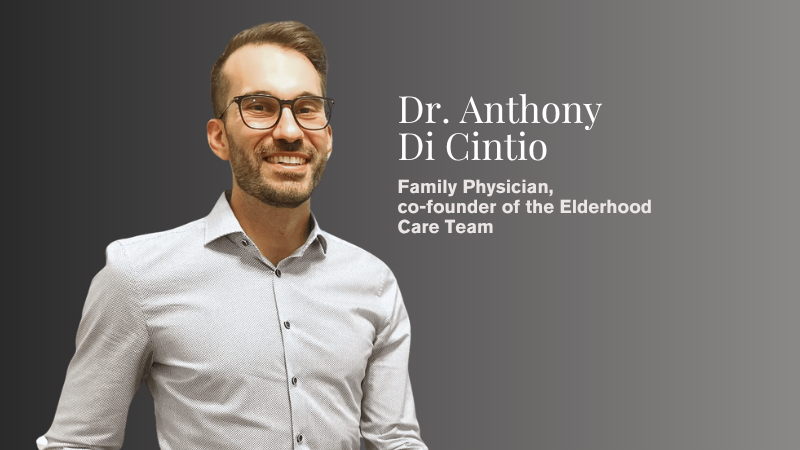
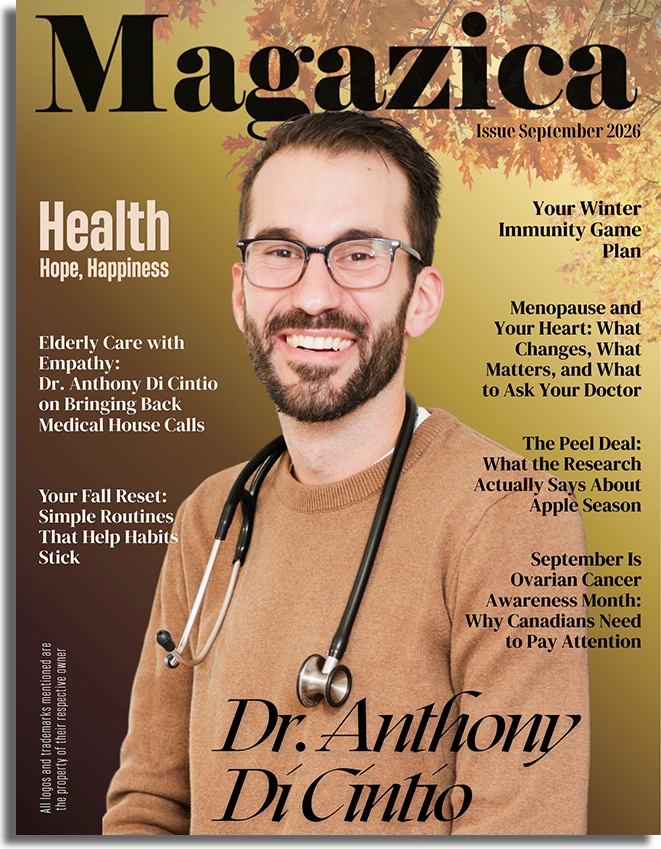
Elderly Care with Empathy: Dr. Anthony Di Cintio on Bringing Back Medical House Calls
An eighty-eight-year-old man stands in his living room. Tired, near the end of his life. He asks his wife for one....
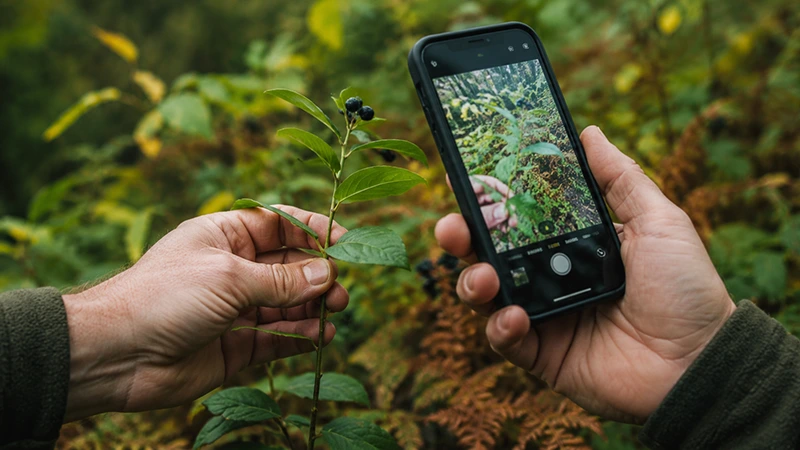
Nature’s Unlabelled Aisle: What Late-Summer Foraging Asks of You Before You Eat Anything
Late-summer foraging explained: why there is no shortcut test, what apps get wrong, how the knowledge is really learned...

Community Gardens: Cultivating Food and Neighbourhood Bonds
On a sunny Saturday morning in many Canadian neighbourhoods, a community garden is one of the liveliest places...

Indigenous Canoe Journeys: Healing Through Water and Tradition
Think of a river upon which no cedar canoe had set foot for more than a hundred years. Not due to any changes in the...
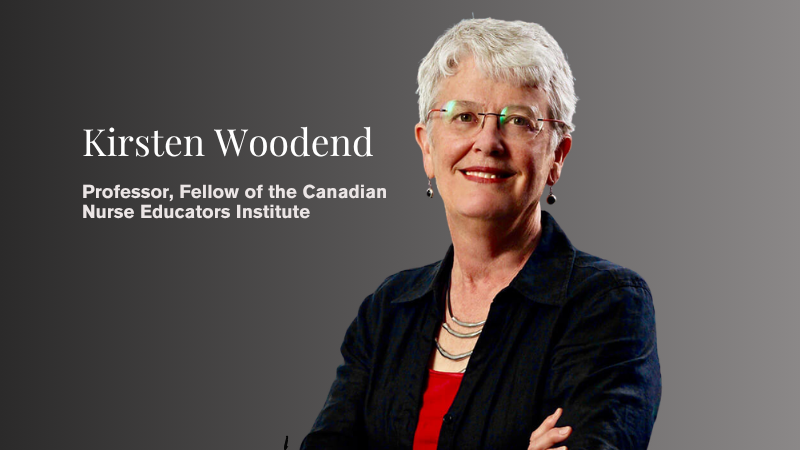
Living Fully, Caring Deeply: Kirsten Woodend on Nursing, Loss, Resilience, and the Power of Human Connection
Some people spend a lifetime mastering a craft. Others spend a lifetime mastering what it means to be human...

Breaking the Stigma: Community Initiatives for Youth Mental Health in Canada
There is a quiet crisis unfolding in communities across Canada — one that doesn't always make the front page but...