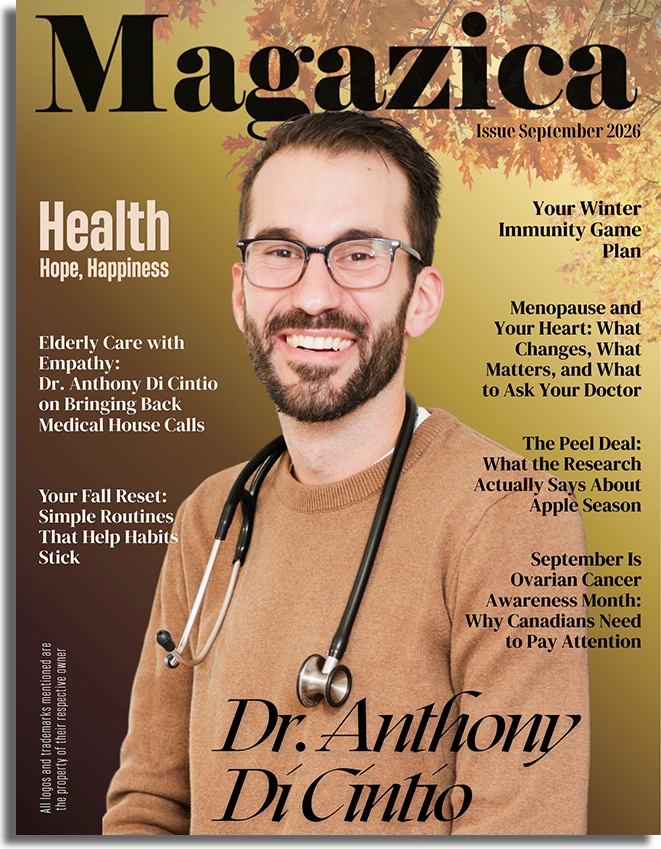
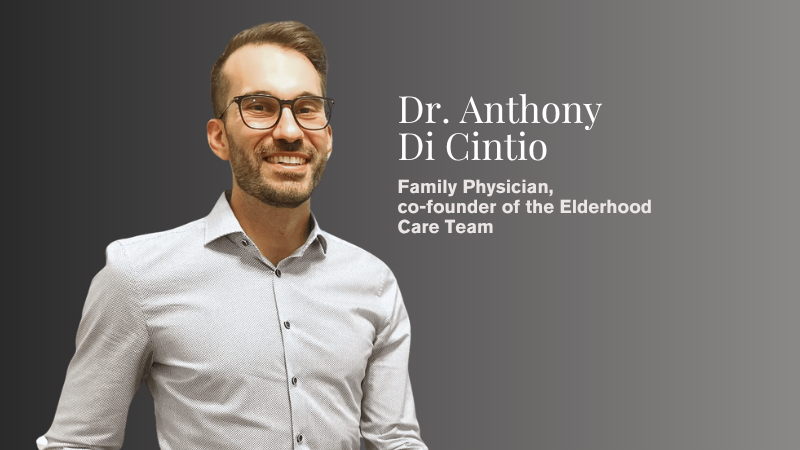
Elderly Care with Empathy: Dr. Anthony Di Cintio on Bringing Back Medical House Calls
An eighty-eight-year-old man stands in his living room. Tired, near the end of his life. He asks his wife for one last dance. Their wedding song lasts for four minutes. This is not a scene from a movie. It is a medical house call.
Dr. Anthony Di Cintio co-founded the Elderhood Care Team to bring medicine back to kitchen tables — to the true bedside. In a system that often treats seniors as a burden, Dr. Di Cintio, with his portable folding bench, strategically shorter than his patients’ level, listens.
This is a conversation about connection, dignity, and what it truly means to age.
Magazica: The first question is about your passion, your spark. You trained in family medicine at McGill and had many comfortable job options after graduating. Instead, you chose to bring back the old practice of medical house calls. Take us back to the moment you realized you had to step outside the clinic walls and go to patients’ homes. What sparked this?
Dr. Anthony Di Cintio: Thank you so much. From day one, I always connected with advanced end-of-life care, predominantly palliative care. I have been involved in many different settings — from long-term care homes and retirement homes to running my own clinic and working in the hospital.
It was surprising to see not only the broader gaps in community healthcare access, but also the massive barriers elders faced in receiving adequate care.
While working in a long-term care facility — caring for elders in their eighties and nineties with advanced or terminal dementia and other debilitating conditions — I thought: surely the best our system can offer isn’t waiting until someone becomes so frail and unsupported that they end up in a nursing home.
Everything that happens before they leave their homes and reach that point becomes a game of hot potato between home and the emergency room. Eventually, they become too frail to return home and may spend six months to a year waiting in an Alternate Level of Care (ALC) bed before being placed in a nursing home.
So, my closest colleague, Nurse Natalie Hickman, who was working with me in the nursing home at the time, and I decided to leave the corporate setting of medical care, step away from routine clinical services to start Elderhood Care in July 2023
Our vision and goal were to provide care and dignity—the kind they deserve, for my own loved ones, grandparents, and my future senior self.
Elderhood care in homes reduces the stress and burden, while being seen in the comfort of their homes.
We have currently served 3,000 patients who needed this level of care.
The main vision was to bring a service that elders can feel proud of, listened to and be heard.
We needed to change the way elders are treated — all too often dismissed as already fading, not worth the effort. Who cares about providing the care they deserve? Let’s just manage them out the door. It is a reality in healthcare.
Especially as a culture in general, we live in a society where our respect for elders has been diminished. Historically small villages in Italy, in India, and in many parts of the world, the concept of community care — from childcare to elder care — is the norm. In North America, the expectation and the norm are that as you get older, you are forced into institutions, assisted living, long-term care, followed by back-and-forth hospitalizations until you die.
There is no true sense of community. Elderhood could create something special. We have grown that team to provide very robust, efficient care for many elders— to ensure that their chances of hospitalization are minimized to the best of our ability, and that we can support and guide them all the way through.
Magazica: That gives us a very clear idea of the bigger picture that motivated you. Starting a mobile medical practice from scratch is incredibly difficult. You had to navigate licensing, logistics, building a new kind of team, and a new approach. What was the most challenging day or factor you faced when trying to get the Elderhood Care Team off the ground?
Dr. Anthony Di Cintio: Believe it or not, all the elements you mentioned, the administrative paperwork were the easiest. The hardest part, and the one I was unprepared for, came when we started the practice. We had incredible support and responses from the community, from retirement homes, from our hospital and from many allied care workers, including nurses who make house calls.
But I was surprised to see just how little support we found from our fellow community physicians.
Just shy of four months after our launch, we faced resistance from community physicians. I think, sadly, it was more due to the fear of them losing elder patients and the financial business loss — as opposed to recognizing the sheer value of what this service was providing. That made for a very unexpected, politically sensitive knot that had to be navigated so that this project could move forward and do what needed to be done for our community.
Magazica: That was a very challenging journey to go through, and you have done it beautifully and professionally. Otherwise, you could not have touched those 3,000 lives. Let’s go into the heart of the process. Inside a house call — many people think a doctor’s visit requires a sterile clinic with heavy equipment and lighting. You think differently. You might be sitting at kitchen tables or having a real, close-to-the-ground conversation. Can you walk us through what a typical visit looks like once you walk through an elder’s front door?
Dr. Anthony Di Cintio: Well said. My greatest tool — and it has been my number one tool since I finished my medical training — is my handheld bench. I have a portable handheld bench that comes with me to every patient I visit. It is more important than my stethoscope, my oximeter, thermometer, or any physical exam tool I can bring. Many of the elderly people we look after are housebound, couch-bound, or, often, bed-bound.
This morning, I met a 91-year-old woman with advanced lung disease who could barely walk a few feet. My bench let me sit at her level — I adjusted it slightly lower, so that even without realizing it, she felt she was above me, not the other way around. It’s a small adjustment but an important subconscious dynamic.
Now we can have a conversation that feels safe for them to navigate. Too many elders moving through our healthcare system feel unheard, made to feel like a burden, and rushed out the door. Left with a grocery list of unanswered medical questions, too many medications and the feeling that they no longer matter.
The patient’s home is a special place; it is not my territory anymore. It’s their territory. I always remind patients that I am a guest in their home. I am not there to tell them what to do or oblige them to do anything. I listen and I give them my sound advice, as if I were treating my own grandmother. If they disagree, they tell me, and we find a more suitable plan that resonates with them. I am not here to be their boss or to tell them what to do, as long as it is safe.
There are certain legal obligations if things are unsafe, but outside of those rare circumstances, I always thank them for allowing me to be a guest in their home and provide care with the limited resources available to me. Many of my patients are eighty, ninety, or even a hundred years old, and they tell me,
“I haven’t experienced this since I was a little kid,” when house calls were the norm eighty or ninety years ago.
Magazica: That is absolutely insightful. Listening to your answers, the underlying concept that pops up in my mind is connection. People often assume that elderly care is just about managing multiple prescriptions or specialized diet plans. You have talked about how elders face challenges that go far beyond physical health, like social isolation. What is most misunderstood by the general public about what it actually takes to care for an aging person?
Dr. Anthony Di Cintio: Have you ever heard of the Blue Zones? These are key areas— like Sardinia, Italy, or Okinawa, Japan — that have the highest concentration of centenarians per capita. There is a wealth of study data across these different areas.
Outside of eating a healthy diet and being physically active, the biggest factor that enables healthy aging is sociability. In a place like Italy, you have the piazzas — the town squares. In almost every Italian city, these are areas where you can people-watch. Even if you are alone, you sit down, have a coffee or a glass of water, and watch people of all ages walk by. Being among people has a positive psychological effect.
In Canada, our lifestyle — though we are a socialist country — is built on individualism and hyper-consumption, resulting in a lack of walkability. Simply put, we depend on our cars to get around. As we grow older, especially after losing a driver’s license or becoming physically frail, home can start to feel like a prison. If you cannot manage a single stair without the risk of falling, you are effectively trapped.
Social isolation kicks in, the consequences of dementia, anxiety, depression, and other comorbidities like heart disease, lung disease, and kidney disease rise exponentially. Instead of spending your advanced years enjoying life, you spend them feeling like a prisoner.
This is a massive challenge we must recognize.
In modern day, childcare in our society is predominantly by parents alone, and the concept of a village raising a child no longer exists. The concept of a village taking care of the elderly is also nonexistent. This isolates our elders and places a tremendous burden on usually one adult child who takes on the demanding and overbearing responsibilities. The elder, too often feels like a burden to the one family member trying to care for them. It is a taboo subject that we do not talk about in our society that affects almost everyone directly or indirectly. And if not now, it 100% will in everyone’s lifetime.
Magazica: You pointed out exactly what is happening. Our cultural baseline is individualism and hyper-consumerism. We can assume that in your work, you do not just treat illness or physical symptoms. You try to understand who these seniors once were and who they are now. What is a moment with a patient — without disclosing any name or location — that made you realize how powerful it is to see them as a whole person rather than just a medical chart?
Dr. Anthony Di Cintio: That is an incredible question. To answer it, let’s take a step back and address something very important. Those of us who are not old experience elders as “us versus them.” We distance ourselves, subconsciously. It is a self-protection mechanism, because we are terrified of getting old.
When I teach medical students at the University of Ottawa, I remind them of this statistic: one in five people will need a cardiologist in their lifetime; one in three will need an oncologist; but one in one will need someone who understands geriatric elderhood care. All of us are going to get old. If you do not recognize that truth, caring for the elders in our community is impossible.
When you look at an advanced, frail 92-year-old, you can see the physical markings of high blood pressure, kidney disease, and heart disease. We fail to see the person who had children, grandchildren, lived a life of joys, struggles, and mistakes. Yet so many of us choose to switch our brains off and think, “They are about to exit anyway, so who cares?”
One of my favorite stories happened not too long ago. I met an 88-year-old gentleman living in low-income housing. I always try to understand the person beyond their medical charts. This man had physical ailments, but ultimately, he just needed to talk. I learned that he was a professional tennis coach. He was so obsessed with tennis that in his early fifties, his wife left with their children and moved to the western part of the country. He had been exiled from his family.
A few years later, in a dark place, he wanted to end his life. He shared this, in confidence, with his physician, who reported it to the police. When he went home, police officers escorted him like a criminal to the hospital, where he was seen by a psychiatrist and discharged 24 hours later. When I met him, he could not let go of the fact that the label of “suicidal ideation” remained in his medical chart for decades. Every time he entered the healthcare system, that label carried over.
I took the time during our visit to focus entirely on that experience, which weighed so heavily on him. I spoke about the normalcy of crisis. I shared that even among medical students and physicians, many consider suicide during their careers, and that he went through a terrible crisis but healed and pursued his passion for tennis. His eyes met mine. He started crying, and said,
“I’ve never had anyone take the time to remove that label off my head.”
He passed a few months later—I will never forget how he hugged me at the end of our meeting. Removing that psychological weight of three decades was incredibly powerful for him. That only happens when you see the person beyond the frail body — as a human being. The only difference between him and me is time.
Magazica: Listening to you, it feels like the concept of human care is missing from our highly advanced medical system. A staggering 65 per cent of people locally have no primary care doctor. This leaves many vulnerable seniors with nowhere to turn for basic care. Can you talk about the scale of this shortage and how it is affecting our community?
Dr. Anthony Di Cintio: That shortage goes far beyond our community; it’s an across-Canada issue. We could talk about why this very preventable issue was completely ignored and snowballed. Even with governmental changes, those on the front line will not see the benefits for probably fifteen years. Meanwhile, the baby boomers are entering advanced age — what some call the “silver hair pandemic” and we don’t have the care services in place.
If we wait on the government for change, it will take too long. We need something bold. Our team realized that the gap was so large in primary care accessibility that we expanded our scope. We launched a parallel service called the McConnell Family Health Center.
Over the past twelve months, we have recruited five confirmed staff members, with two more pending and others in progress, bringing us closer to our goal of eight positions. We plan to take on another four to eight positions over the next twenty-four months. That did not come from any government support. It came from an idea to invest personal savings and debt to make it a reality. This will enable ten to fifteen thousand more people to have access to sustainable, long-term primary care. We have gone from a two-person operation in July 2023 to approaching twenty people by the end of this year.
Magazica: That is fantastic. It takes deep compassion and empathy to make this possible. Many of us have aging parents or grandparents we want to support, but we might not know how to assess their safety or well-being at home. What are two or three simple things we should be mindful of when we visit our elderly relatives this weekend, to help make sure they are safe, comfortable, and healthy? Can you share a brief checklist through which we can show our compassion?
Dr. Anthony Di Cintio: Let’s explore that question. Imagine your elder loved one driving a car. Would you feel safe as a passenger? If the answer is no, then when you ask whether they are safe living independently at home, the answer is likely no.
But what do you do about it?
Let’s focus on simple actions. Online ordering can deliver groceries and household products directly to your door. Adult children should take advantage of these delivery services to minimize the chore of outings.
If you question their safety with a stove or oven — most elders should not be using them — look into affordable meal delivery programs, which average five to seven dollars a meal. Transition their cooking to a microwave or toaster oven. Eliminate the use of heavy pots, frying pans, and boiling water, which increase the risk of burns and fires. You can also hire affordable services for basic laundry and cleaning.
Look at mobility. You can easily tell if someone needs a walker by asking them to stand up and sit back down from a chair. It reveals how strong their core, glutes, and thighs are, and immediately shows their fall risk. When telling an elder they need a walker, the most common reaction is resistance. They feel like they are being treated like a toddler.
The issue is that younger family members are often too assertive and commanding, rather than collaborative. We need to ask ourselves: how would I feel at ninety-five being told I need a walker, a chairlift, a toilet seat lift, or grab bars in the shower? Shower tiles are the most common place to fall and break a hip. I probably wouldn’t feel good.
So, outside of these practical tips, find the humility to recognize that safety changes do not have to happen overnight. Work toward them collaboratively over weeks and months. Frame safety equipment not as a loss of independence, but as a tool to preserve their autonomy and keep them out of a nursing home.
Magazica: That framing is empowering, because presenting lifestyle changes that way truly resonates. For our last talking point — it is clear that your patients are very open with you. They share their problems, their challenges, and their lives. After touching 3,000 elderly lives, what is the single message you want to share with us, and what practical step can we take to advocate for better care of the elders in our neighborhoods?
Dr. Anthony Di Cintio: I would like to share two. First, the great majority of us are going to grow old. The probability of experiencing this is roughly nine in ten. If you cannot find humility for the elder in front of you, or for your own future self, you will not enjoy your aging experience. If you dismiss the older people in your life, don’t be surprised when one day you experience that same distance or isolation in your own old age. The old person in front of you had the same joys, goals, and dreams as you. The only difference is time.
My second message is a story of an eighty-eight-year-old man on his deathbed. He wished to die at home. During our house call, he had an old cassette player with a handwritten tape of his wedding song from the early 1950s. With all the strength he had left, he stood up, asked his wife for ‘one last dance’ and slow-danced with his her for four and a half minutes. He sat back down, gave her a long kiss, told her he loved her, and died soon after.
There is so much beauty and wisdom in our elders. Unfortunately, our hyper-consumer society has lost sight of this.
Spend time with your grandmother, your grandfather, or your aging parents. Talk through their experiences and take advantage of their wisdom while they are still here.
In my career, I have signed over 900 death certificates in six years. I have held the hands of many people at the end of life. I have never had a person, rich or poor, tell me on their deathbed that they wished they had made more money, paid less taxes, or had more material goods. They almost always say: “I wish I loved. I hope I was loved. I wish I had forgiven. I hope I was forgiven.”
We are in a rinse-and-repeat cycle of working, spending, and running, only to find ourselves on our deathbeds wondering what we did with our lives. We need to put down our phones, stop doomscrolling, and look outside. Get off the screens and enjoy life.
In our practice, our staff put up photos of their families on our office walls to remind us why we do what we do. You can’t care for strangers’ day in and day out if you don’t have love in your life. When I teach medical students, I tell them to focus on how they would want their own loved ones to be cared for. In the words of Dr. Patch Adams, whom I spent three weeks with a decade ago: “If you treat the disease, you win, or you lose. If you treat the person, I guarantee you, you will always win.”
Magazica: Thank you so much, Doctor, for your time and for those incredible parting words.
Dr. Anthony Di Cintio: I appreciate you both. I look forward to reading the piece. Have a beautiful day, everyone.
Keywords: medical house calls; elderly care; social isolation; primary care shortage; home safety checklist
- Share
Dr. Anthony Di Cintio
Dr. Anthony Di Cintio is a family physician and co-founder of the Elderhood Care Team. Launched in July 2023 alongside Nurse Natalie Hickman, the mobile service has supported nearly 3,000 elderly patients in their homes. Dr. Di Cintio also established the McConnell Family Health Center to address his community’s severe primary care shortage. In this interview, he shares practical home safety guidance for families, explains the psychological impact of social isolation on seniors, and discusses why relationship-centred care must be the future of Canadian medicine.
Nature’s Unlabelled Aisle: What Late-Summer Foraging Asks of You Before You Eat Anything
Late-summer foraging explained: why there is no shortcut test, what apps get wrong, how the knowledge is really learned...
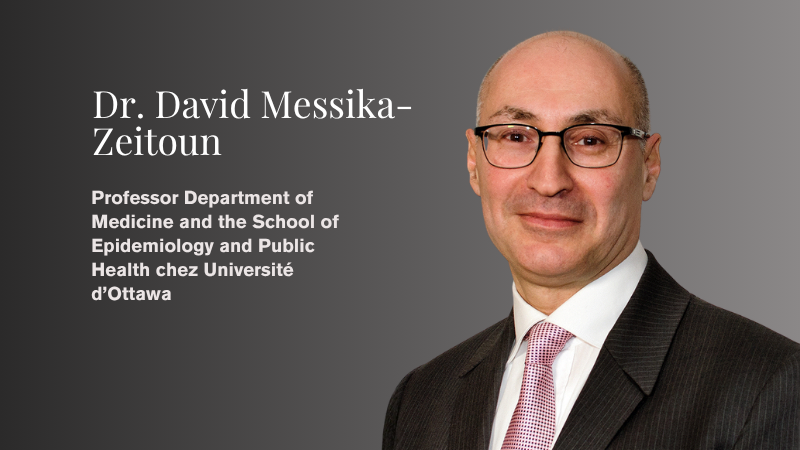
Saving Lives Before Symptoms Strike: How Dr. David Messika‑Zeitoun Is Transforming Heart Valve Care in Canada
Dr. David Messika-Zeitoun is a global leader in valvular heart disease, combining scientific precision with deeply...
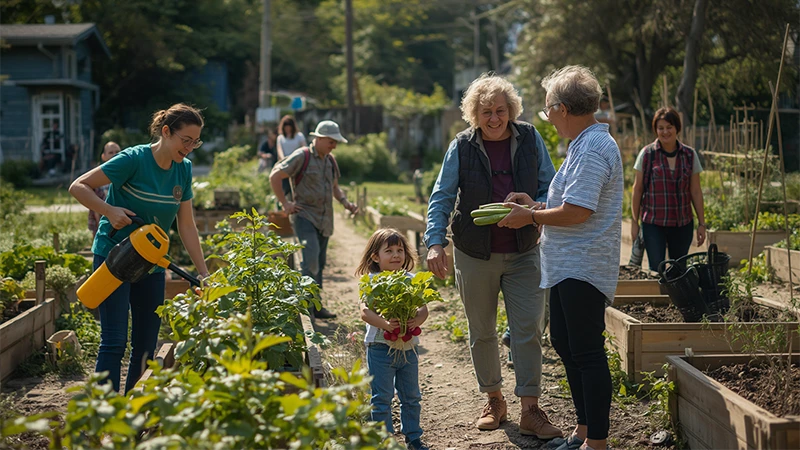
Community Gardens: Cultivating Food and Neighbourhood Bonds
On a sunny Saturday morning in many Canadian neighbourhoods, a community garden is one of the liveliest places...

Indigenous Canoe Journeys: Healing Through Water and Tradition
Think of a river upon which no cedar canoe had set foot for more than a hundred years. Not due to any changes in the...
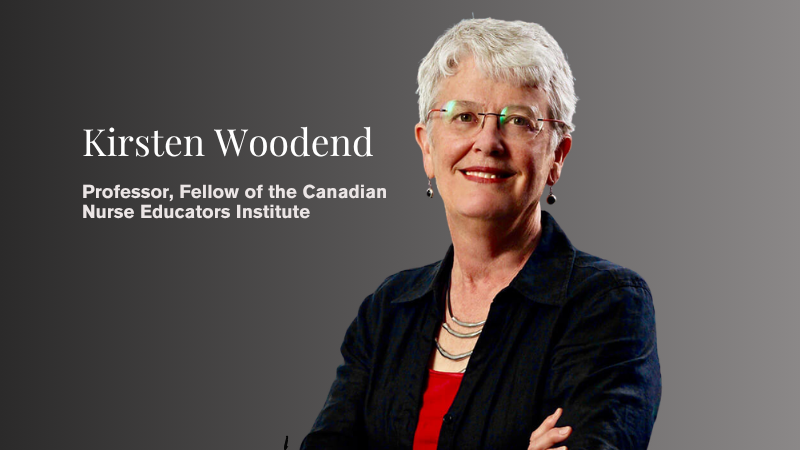
Living Fully, Caring Deeply: Kirsten Woodend on Nursing, Loss, Resilience, and the Power of Human Connection
Some people spend a lifetime mastering a craft. Others spend a lifetime mastering what it means to be human...

Breaking the Stigma: Community Initiatives for Youth Mental Health in Canada
There is a quiet crisis unfolding in communities across Canada — one that doesn't always make the front page but...