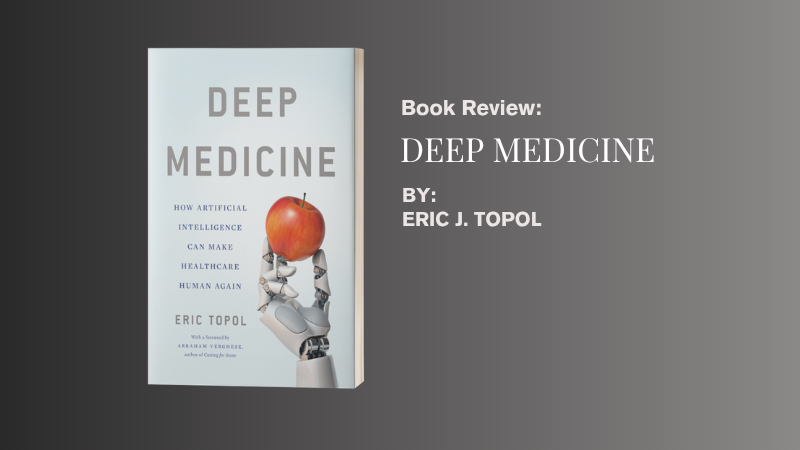
Can Artificial Intelligence Restore Empathy to Medicine? A Review of Eric J. Topol’s “Deep Medicine”
Past the Keyboard: How Deep Learning and the “Gift of Time” Can Heal Shallow Healthcare in Canada
At sixty-two, Dr. Eric Topol, an internationally acclaimed cardiologist and Director of the Scripps Research Translational Institute, underwent knee replacement surgery. He chose an orthopedist who himself had been referred to by him to other patients. The procedure itself was flawless, but the post-operative experience was one big nightmare. Topol’s knee turned blue and swelled up and became painfully stiff. On visiting his surgeon, Topol was greeted with a very cold answer, which was “you need to get yourself prescribed some depression medicines by your internist”.
This painful episode is the emotional focus of Topol’s 2019 book “Deep Medicine: How Artificial Intelligence Can Make Healthcare Human Again.” The surgeon’s inhumanity was glaringly evident; in reality, Topol himself was suffering from arthrofibrosis, which is a very rare inflammatory joint condition associated with scarring in two to three per cent of cases of knee replacements. Topol owes his recovery not to medications but to the gentle, personalized physical rehabilitation regimen offered by a sympathetic therapist.
Topol argues that an artificial intelligence algorithm could have identified Topol’s high predisposition to arthrofibrosis through digestion of his teenage case of osteochondritis dissecans along with matching this condition against the medical literature. Such a scenario where doctors fail to pay attention to their patients, Topol terms “shallow medicine,” or “an age when patients are living in a world of inadequate data, inadequate context, and inadequate time.” In Canada and throughout North America, the clinic visit time has shrunk to single digits, and the introduction of the electronic medical record system turned doctors into “data entry technicians” with a computer screen in front of them.
The core brilliance of the book lies in its paradox: the development of smart machines is our best chance to regain this lost human factor. By delegating to algorithms the performance of mundane tasks such as clerical work, diagnostic pattern recognition, and administrative “grunt work”, we can ensure the “gift of time”, which can be used to look patients in the eye, listen to their story, and truly empathize with them.
For the realization of the described future, Topol outlines the triple combination: “deep phenotyping”, “deep learning”, and “deep empathy”. Deep phenotyping implies defining every individual molecule-by-molecule, environmentally and behaviorally – collecting continuous, multilevel data “from prewomb to tomb”, including their DNA genome, RNA, proteins, gut microbiome, and biosensors.
Topol describes incredible applications of deep learning neural networks in working with big data. For example, if you give a retinal image to the world’s top specialists in eye diseases and ask them to find out the gender of the patient, their accuracy will be a coin toss of 50 percent. The deep learning algorithm, however, will be able to recognize the gender with more than 97 percent accuracy.
The book discusses the rapid sequencing of the genome of a baby boy at the Rady Children’s Hospital. The baby was undergoing status epilepticus, a condition involving continuous and life-threatening seizures. It took only twenty seconds for the algorithm, using natural language processing technology, to process the medical record of the baby and correlate it with nearly five million genetic variants to identify the metabolic deficiency in the ALDH7A1 gene. The seizures were stopped instantly by simply providing vitamin B6 and arginine to the baby.
However, the author doesn’t subscribe to technological optimism. He tells us the story of a cantankerous septuagenarian patient with severe idiopathic pulmonary fibrosis who suddenly felt very fatigued. Topol identified an 80% blockage in his right coronary artery, but if there had been an algorithm in place, it would not have allowed a stent operation since no scientific literature suggests the fact that opening a right coronary artery solves the problem of systemic fatigue.
But Topol stuck to his clinical instincts and inserted the stent into the artery. And the patient recovered miraculously. The complicated interplay between the stiff lungs of the patient and the blood circulation system of his heart had never been documented in any medical literature before. The right ventricle was functioning under high pressure, and the stent released the stress. It’s a great reminder of how unique and complicated each patient is and will always remain so.
There is an additional issue that Topol talks about – “the black box problem”. We may create unsupervised machine-learning algorithms capable of predicting the moment of developing schizophrenia or diagnosing skin cancer like a dermatologist, but we don’t understand how they do what they do. Topol believes that medicine involving such high risks as healthcare cannot have “black boxes”, which may be tampered with and have their calibration shift.
However, Topol’s chapters devoted to mental health stand out for being especially convincing. For instance, he mentions a virtual human experiment conducted by Jonathan Gratch, where participants from Craigslist shared their intimate secrets with the “Ellie” on-screen avatar. What is notable is that patients felt much less inhibited when sharing their secrets, believing that they communicated with a machine, not a human-controlled avatar, because of the fear of being judged. Moreover, according to Topol, the process of digital phenotyping – monitoring smartphone typing latency, scrolling speed, voice inflections, Instagram filters, etc. – can predict depression.
It is important for the Canadian audience to emphasize the issue of data ownership raised by Topol. He speaks about a “digital republic” of Estonia using blockchain and ensuring that its citizens legally own their personal medical data, something that does not happen in North America.
At the end of the day, Deep Medicine is a superb, funny, and compelling manifesto. It cautions that if we do not resist the attempts by the administrators of our health systems to turn artificial intelligence into nothing but an excuse for seeing more patients in the clinic, we will merely speed up the process of dehumanizing the practice of medicine. If we succeed, we will have managed to break down the “keyboard barrier.”
This review is for informational purposes only and does not constitute medical advice. Always consult with a qualified healthcare professional before making significant changes to your health or wellness routine.
- Share

Suman Dhar
A qualified professional with extensive experience in education and human resources. As a HR Professional, Management Consultant, or Training Specialist, he is interested in cultivating intellect and curating insight.
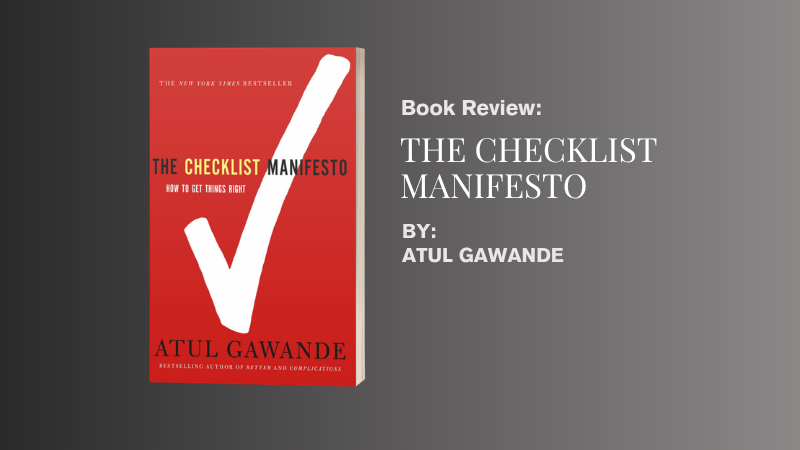
The Simple Device That Is Keeping People Alive During an Age of Excessive Complexity: An Analysis of Atul Gawande’s “The Checklist Manifesto”
From Surgical Safety to Money Management: How Expertise Is Not Sufficient To Stop Avoidable Mistakes...
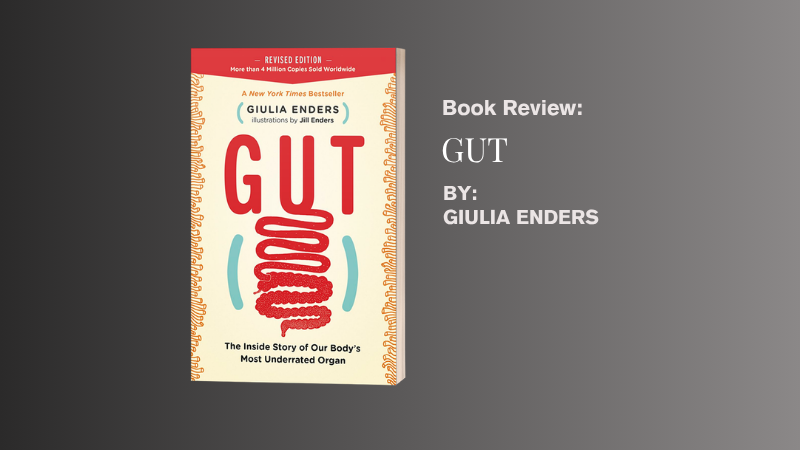
Why Your Microbiome is the Secret to Wellness: A Review of Giulia Enders’ “Gut”
To most of us, the gut is a "Quasimodo" in the body’s architecture – unappealing, uneven and disregarded until it...
Is Your Destiny Written in DNA? A Review of Siddhartha Mukherjee’s “The Gene”
Whereas the twentieth century could be described as the age of the splitting of atoms and the creation of the digital bits...
Can You Eat Your Way to a Longer Life? A Review of Michael Greger’s “How Not to Die”
Should one be browsing the selection in the health and wellness department of a Canadian bookstore, "How Not to Die"...
Your Body Explained Like Never Before: A Fascinating Tour from Head to Toe
If you were to take your body to a hardware store in an attempt to price out the various elements within...
The Nightly Elixir: Why Sleep is the Billion-Dollar Secret to Living Longer
What if there was a tool, a biological tool, that was part of all of our makeup, which could improve your memory...