
Healthy Aging: Why Strength Training Is a Cornerstone of Bone Density
As Canadians live longer, the conversation around healthy aging is shifting away from simply adding years to life and toward preserving the strength, mobility, and independence that make those years worth living. One of the most powerful tools for that goal is also one of the most overlooked: strength training. For older adults concerned about bone health, resistance exercise isn’t just helpful — it’s foundational.
The Bone Loss Problem.
Bone density naturally declines with age, and for many Canadians, that decline eventually crosses into osteoporosis, a condition marked by weakened bones and a higher risk of fracture. The Government of Canada notes that basic bone health for all individuals includes regular weight-bearing and resistance-type exercise, alongside adequate vitamin and mineral intake, and that this kind of exercise is beneficial to bone development and maintenance throughout life.
The stakes are real. A fracture in later life — particularly at the hip or spine — can trigger a cascade of complications, from loss of mobility to loss of independence. That’s why Canadian clinical guidelines have increasingly emphasized exercise as a frontline strategy, not just a supplementary one.
What Canadian Research Actually Recommends.
In 2023, Osteoporosis Canada updated its clinical practice guidelines for osteoporosis care, and the update carried a clear message: balance and functional training should be performed at least twice weekly, and resistance exercise should target the muscle groups that support the spine and hips — the sites most vulnerable to fragility fractures. The guidelines describe functional training as exercises that improve everyday movement, such as repeated sit-to-stand exercises that build the strength needed to get out of a chair safely.
This wasn’t the first time Canadian researchers pushed the exercise-first message. Years earlier, University of Waterloo professor Lora Giangregorio led the development of Too Fit to Fracture, a set of national exercise recommendations released through Osteoporosis Canada. The guidelines explicitly moved away from aerobic-only routines, recommending instead a combination of strength training and balance work. As Giangregorio put it in describing the research, strength training exercises are key to maintaining strong bones and increasing muscle strength, and performing challenging balance exercises most days of the week can meaningfully reduce falls.
That shift matters because it reframes how Canadians should think about exercise for bone health. It isn’t only about slowing bone loss — it’s about preventing the falls that actually cause most fractures in the first place.
Building the Right Routine.
According to Ontario’s Osteoporosis Strategy, which translates national clinical guidelines into practical direction for patients and clinicians, adults are advised to pursue progressive resistance training at least twice a week, incorporating exercises that target the abdominal and back extensor muscles. Resistance training — whether with free weights, resistance bands, or bodyweight movements — is described as improving quality of life, physical function, and bone density, while potentially reducing the risk of mortality. Combined with balance training, it also lowers the risk of falling.
Not all exercise delivers the same bone benefit. Popular low-impact activities like swimming and cycling are excellent for cardiovascular health, but because they don’t load the skeleton against gravity or resistance, they don’t meaningfully build bone density. That’s a message echoed by Canadian bone health resources, which point out that resistance training builds bone by pulling on it through forceful muscle contraction — a mechanical stimulus that swimming and cycling simply don’t provide.
For those specifically managing osteoporosis, Canadian programs have translated the science into accessible, community-based options. The STRONG program, developed and researched at the University of British Columbia, is a supervised group exercise initiative focused on progressive resistance training, balance, and posture, and has been delivered through community fitness centres and hospital outpatient programs across British Columbia. Programs like this reflect a broader Canadian push to move bone-health exercise out of the research lab and into everyday community spaces.
The Takeaway for Canadians.
Strength training isn’t a niche pursuit for gym enthusiasts — for older Canadians, it’s increasingly framed by researchers and clinicians as essential preventive medicine. The consistent thread running through Canadian guidelines is this: resistance exercise, done regularly and combined with balance training, protects bone density and reduces fall risk at the same time, addressing both sides of the fracture equation. For anyone looking to age well, the message from Canada’s own research community is refreshingly direct — pick up the weights and keep at it.
Sources.
- Government of Canada — “Osteoporosis” (Canada.ca) https://www.canada.ca/en/public-health/services/chronic-diseases/osteoporosis.html
- College of Family Physicians of Canada — “2023 guidelines for osteoporosis care in older female patients” https://www.cfp.ca/content/72/1/39
- University of Waterloo — “Osteoporosis Canada launches new Exercise recommendations” https://uwaterloo.ca/news/news/osteoporosis-canada-launches-new-exercise-recommendations
- Ontario Osteoporosis Strategy — “Exercise Guidelines” https://osteostrategy.on.ca/exercise-guidelines/
- Share

Magazica Editorial Team
Magazica is a dedicated platform for businesses, subject matter experts, health advocates, and various sectors within the health industry. At Magazica, we are committed to sharing the latest health information and developments with our audience. We serve as a gateway for health-related businesses to showcase their progress and advancements, demonstrating how they contribute to enhancing people's wellness.

The Importance of Rest Days in Your Summer Fitness Routine
As summer arrives with its long daylight hours and inviting outdoor conditions, the temptation to ramp up your fitness...
Trailblazing: The Best Accessible Hiking Trails Across Canada
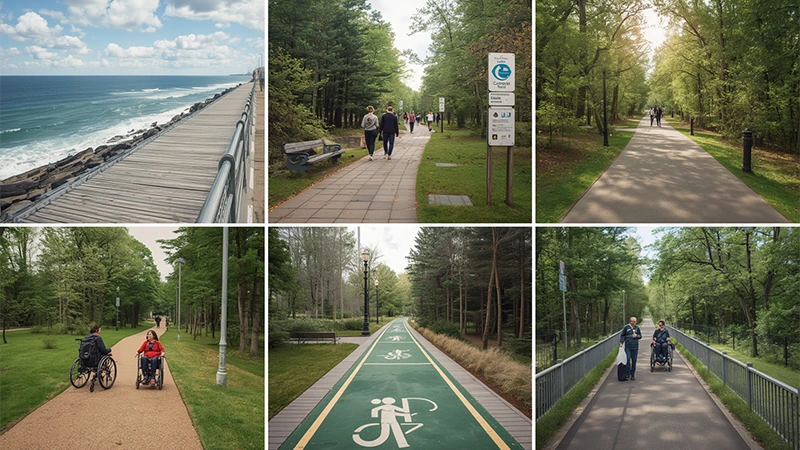
salty boardwalks on the Atlantic coast to city-side green spaces in Ottawa–Gatineau and coast-to-coast mapping on the...

Outdoor Yoga: Canada’s Most Beautiful Studio Is Outside
Fresh air, birdsong, a mat beneath your feet, and the scent of pine or saltwater in the breeze—outdoor yoga is...

Shine in Sun: Train Safely for Summer Runs
You've finally tossed out the treadmill, spring is upon us, and that Canadian sun is starting to do some real work...

Puddle-Jumping Workouts: Embracing the Rain for Outdoor Cardio
Remember when you couldn’t resist jumping into a puddle right after it rained? Let's be honest...

Winter Hair Care: Nourish Your Locks When the Mercury Drops
Winter’s dry air and indoor heating can make hair brittle, frizzy and prone to breakage. Dermatologists...