Can You Eat Your Way to a Longer Life? A Review of Michael Greger’s “How Not to Die”
Beyond Genetics: How Evidence-Based Nutrition and the “Daily Dozen” Put Health Back in Your Hands
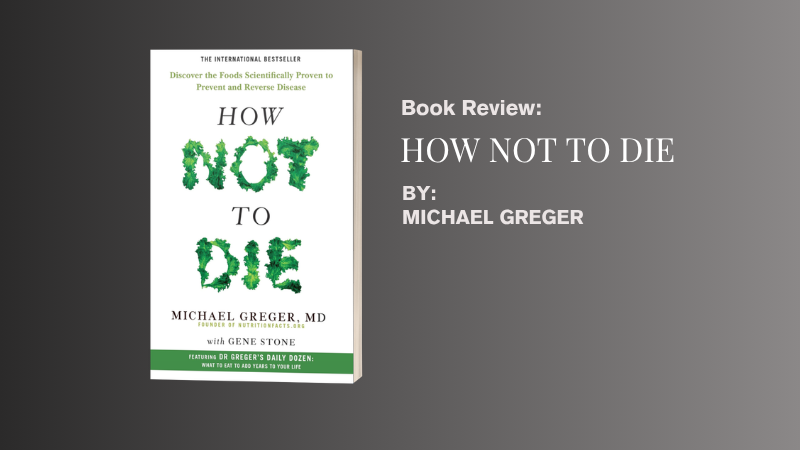
Should one be browsing the selection in the health and wellness department of a Canadian bookstore, “How Not to Die” written by Michael Greger, M.D., could either be seen as an optimistic read about beating mortality or an insult to reality. The author who created ‘NutritionFacts.org’ has not promised immortality in any of his works; in fact, in this bestseller from 2015, he presents a revolutionary method based on scientific evidence that allows evading the early deaths that take place each day around the world. Unlike other authors writing about superfoods and diet trends, Greger offers a guide that was developed through thorough analysis by a team of researchers and volunteers studying tens of thousands of medical articles on the subject matter.
The book has been divided into two sections titled “Why” and “How”. In the former part of the book, the reader will be presented with information about the fifteen leading causes of mortality in America (and Canada alike), such as heart diseases, high blood pressure, mental illness (depression), and cancer. The latter part describes the “Daily Dozen” plan that the author has developed from all his knowledge of health matters.
The first main point of Greger is that we have a lot more control over our biology than may seem from the point of view of our genetics. The author states that the scientific evidence has proven that genetics contributes not more than 10% to 20% of risk in most of the leading causes of death in humans. The author claims that there should be a need to stop thinking that genetics makes us ill and calls “the Standard American Diet” an acronym of SAD.
From the viewpoint of wellness, the tone of the author is very persuasive. He notices that medicine can be compared to mopping the floor around an overflowing sink, instead of just turning off the water. For Greger, this “tap” is our own behaviour, particularly our diet. There is one shocking study where he states that only 1 percent of people received a high “Healthy Eating Score.”
Another noteworthy “infotainment” feature of the book is Greger’s “Traffic Light” system. In this scheme, green light foods (fresh plant products) need to be consumed in abundance, yellow light foods (processed plant foods or fresh animal foods) need to be limited, and red light foods (processed junk or meats) are virtually excluded. The Traffic Light concept is easy to memorize, although Greger is realistic enough to admit that perfection shouldn’t become an obstacle to improvement. Even though he admits having had a “grease tooth” for pepperoni pizzas and bacon cheeseburgers, the scientist manages to bring his high science down to the level of a common person’s experience.
Nevertheless, the book isn’t completely devoid of controversial topics. As regards the food industry, Greger doesn’t show much respect to the medical establishment or governmental bodies involved in promoting dietary guidelines. In particular, the author criticizes the U.S. healthcare system that emphasizes the number of procedures rather than their quality, often ignoring the necessity of nutrition education, as “no one profits from lifestyle medicine”. Besides, he mentions the help he got from a wealthy Canadian philanthropist named Jesse Rasch, who supported the transfer of his research activities to a non-profit basis.
However, Greger’s discussion of particular foods brings life to the reader’s shopping cart. He believes there are foods that have special characteristics and cannot be substituted. For example, he advocates the “Hack and Hold” method of preparation for broccoli, explaining that the process of producing sulforaphane, a chemical responsible for fighting cancer, necessitates an enzyme that is destroyed in heat. Thus, the broccoli needs to be chopped and then left for forty minutes before cooking. Additionally, he advocates amla fruit (Indian gooseberry), which he claims can be the most antioxidant-loaded food on the planet, and ground flaxseeds for their miraculous effects on reducing blood pressure in laboratory experiments.
It is important to note that some readers might see Greger’s long and extensive citation list, taking up more than one hundred pages, as a benefit, while others will perceive it as unnecessary. The writing style of the author flows in an unstoppable flow of data, making the reading experience similar to being lectured by a very concerned scientist. Even though the work is highly readable, the quantity of “Daily Dozen” (beans, berries, greens, turmeric, etc.) is probably too much for a typical suburban household trying to survive another hectic Tuesday evening.
According to the author, heart disease is a matter of choice, supported by historical evidence that in rural Africa and China, people did not suffer from such problems due to their low-sodium, plant-based diet. But most importantly, the author encourages the audience not to give up. In fact, there have been cases in which pioneers, including Dean Ornish and Nathan Pritikin, managed to open up arteries and reverse the process of disease through lifestyle changes.
In the case of Canada, with a constantly overloaded healthcare system due to chronic diseases, Greger’s speech is quite relevant. The author does not encourage people to eat better; instead, he asks them to reconsider their view on aging. According to the author, modern society has become so proficient in adding years to the period of its decline (“sicklier”).
“How Not to Die” can be regarded as an outstanding work in terms of popularizing science. This book is a terrifying alarm as well as a hope for the future. Even if one does not consider switching from coffee to hibiscus tea and amla powder in his breakfast porridge, he will find many reasons to change his views on health in Greger’s work.
Disclaimer:
This review is for informational purposes only and does not constitute medical advice. Always consult with a qualified healthcare professional before making significant changes to your health or wellness routine.
- Share

Suman Dhar
A qualified professional with extensive experience in education and human resources. As a HR Professional, Management Consultant, or Training Specialist, he is interested in cultivating intellect and curating insight.

The Simple Device That Is Keeping People Alive During an Age of Excessive Complexity: An Analysis of Atul Gawande’s “The Checklist Manifesto”
From Surgical Safety to Money Management: How Expertise Is Not Sufficient To Stop Avoidable Mistakes...
Why Your Microbiome is the Secret to Wellness: A Review of Giulia Enders’ “Gut”
To most of us, the gut is a "Quasimodo" in the body’s architecture – unappealing, uneven and disregarded until it...
Is Your Destiny Written in DNA? A Review of Siddhartha Mukherjee’s “The Gene”
Whereas the twentieth century could be described as the age of the splitting of atoms and the creation of the digital bits...
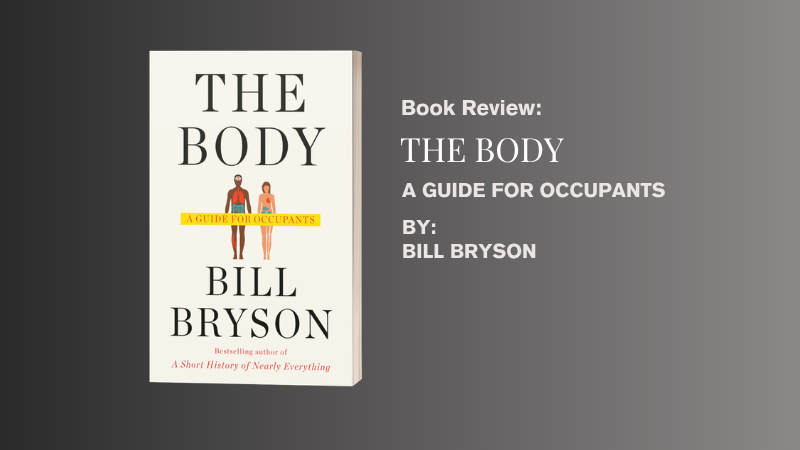
Your Body Explained Like Never Before: A Fascinating Tour from Head to Toe
If you were to take your body to a hardware store in an attempt to price out the various elements within...
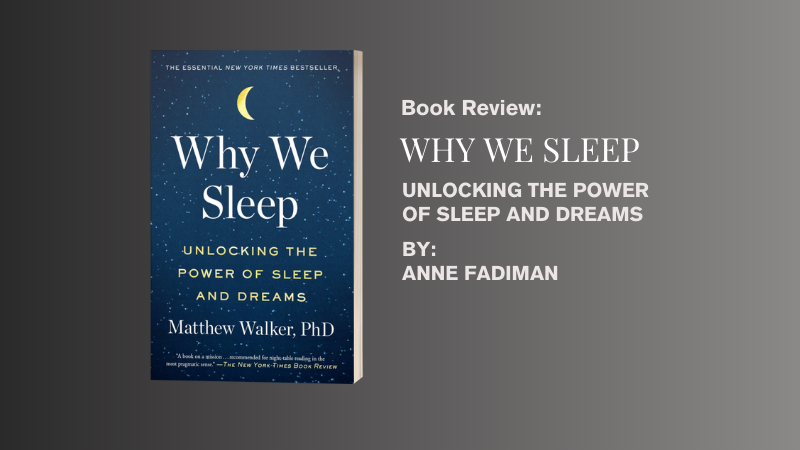
The Nightly Elixir: Why Sleep is the Billion-Dollar Secret to Living Longer
What if there was a tool, a biological tool, that was part of all of our makeup, which could improve your memory...
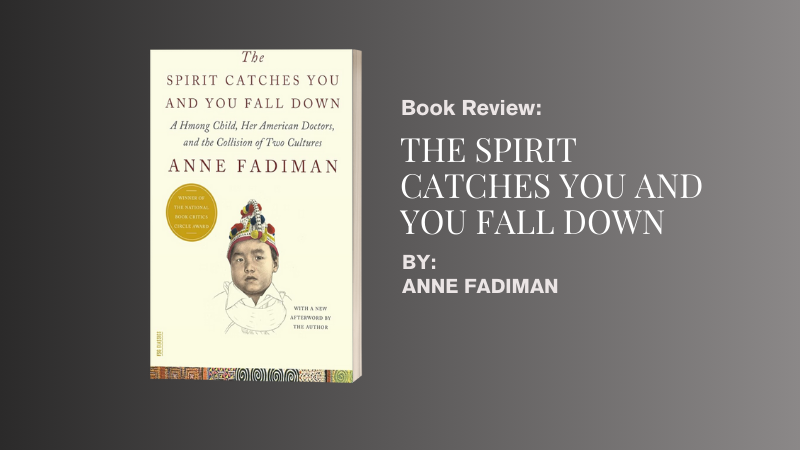
The Spirit Catches You and You Fall Down By Anne Fadiman
Midnight lights buzz at a pitch found only in hospitals. Inside Merced Community Medical Center’s ER...