The Nightly Elixir: Why Sleep is the Billion-Dollar Secret to Living Longer
What if there was a tool, a biological tool, that was part of all of our makeup, which could improve your memory, strengthen your immune system, and give you more vitality? This ‘elixir of life,’ while not needing a prescription, has become a hard-won luxury in the lives of many Canadians, juggling multiple shifts or the cost of living, but it is only by understanding its true value that we can begin to reclaim it.
The Cave of Constant Darkness.
In 1938, two men took hospital beds into Mammoth Cave, Kentucky, which is one of the deepest caves on Earth, where no sunlight penetrates. Professor Nathaniel Kleitman and Bruce Richardson stayed in total darkness for thirty-two days to find out if our bodies would ever forget how to measure time. They learned that our bodies have an internal, “endogenous” clock that ticks away regardless of whether we have sunlight or not, and it has a rhythm of about twenty-four hours.
We have been biologically programmed with an internal, rhythmic clock that controls our very survival, despite all the artificial lights that surround us.
The internal clock, which is located in the suprachiasmatic nucleus, is a small group of 20,000 nerve cells that orchestrates all the events of our lives, from our core temperature to our metabolism and hormonal secretions. When we do not heed our internal clock, we are not simply “tired”; we are out of synchronization with our bodies.
Being mindful of our internal clock is the first step towards regaining our health.
The Collision of Efficiency and Biology.
We are currently existing in a 24/7 society, which values productivity over physiology. This approach, which can be called an ‘industrialized’ approach, has led to the sleep loss epidemic that the World Health Organization refers to.
For Canadians who are feeling the ‘grind’ of the new economy, sleep deprivation is sometimes not the issue of lacking the strength to make better choices, but rather the result of the way that we have organized our communities.
By becoming supporters of chronodiversity, we can unleash massive amounts of human potential.
The Architect of the Night.
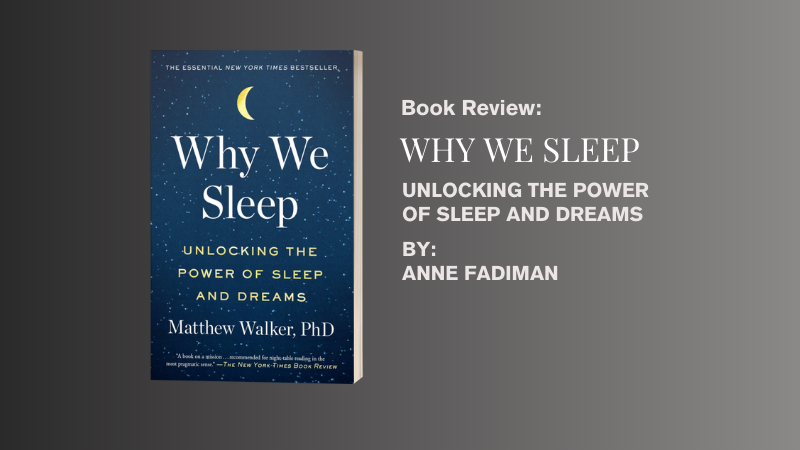
Matthew Walker, a neuroscientist with twenty years of research on the mysteries of the mind, has written Why We Sleep as a scientific intervention. He wants us to know that sleep is not the absence of wakefulness; it is an exquisitely complex, metabolically active process. His work proves that every single organ in the body, and every single process in the brain, is enhanced when we sleep and diminished when we don’t.
Sleep is the single most effective way to reset our brain and body health each day.
Walker’s work has also shown us that sleep has two different masters, or functions: one is called NREM (Non-Rapid Eye Movement) sleep, and the other is called REM (Rapid Eye Movement) sleep. “NREM sleep is like a master gardener, clearing out the weeds of unnecessary neural connections, whereas REM sleep is like a master pruner, strengthening the remaining connections.”
We need these two types of sleep to be smart and emotionally well-functioning.
A National Emergency for the Body.
The effects of this kind of chronic short-sleeping, however, are not limited to the grogginess one feels in the morning. In fact, research has shown that the effects of short sleep are a “significant tax on our physical well-being.” Walker also points out studies that show that sleeping fewer than six or seven hours per night is “strongly linked to a weakened immune system and the onset of various other serious and chronic diseases, including some types of cancer and Alzheimer’s.”
In fact, sleep is not just ‘rest,’ but the brain’s ‘nightly power cleanse,’ helping to process metabolic waste products that have built up in the body during the day.
The Canadian Context: Safety Comes First.
As Canadians face the challenges of our troubled healthcare system, the importance of the role that sleep plays in preventative healthcare has never been more salient. Although it is not possible to ‘sleep our way’ out of the problems that plague our system, recognizing sleep as a basic building block of health, similar to diet or exercise, allows us to begin to advocate for a stronger Canada. In making small changes where we can, we are not simply resting; we are working towards a more caring, better-rested world.
A well-slept Canada is a stronger, more productive, and more compassionate Canada.
Closing Reflection.
We must reclaim our right to a full night’s sleep without being judged as lazy. Sleep is our “chief nourisher in life’s feast,” something that evolution has granted us, which we have foolishly discarded so quickly. Tonight, as you go to bed, remember that sleep is the bridge between despair and hope. By choosing your pillow over your device, you are choosing life, and by extension, all its vibrancy.
The best version of yourself is only one good night’s sleep away.
- Share

Suman Dhar
A qualified professional with extensive experience in education and human resources. As a HR Professional, Management Consultant, or Training Specialist, he is interested in cultivating intellect and curating insight.

The Simple Device That Is Keeping People Alive During an Age of Excessive Complexity: An Analysis of Atul Gawande’s “The Checklist Manifesto”
From Surgical Safety to Money Management: How Expertise Is Not Sufficient To Stop Avoidable Mistakes...
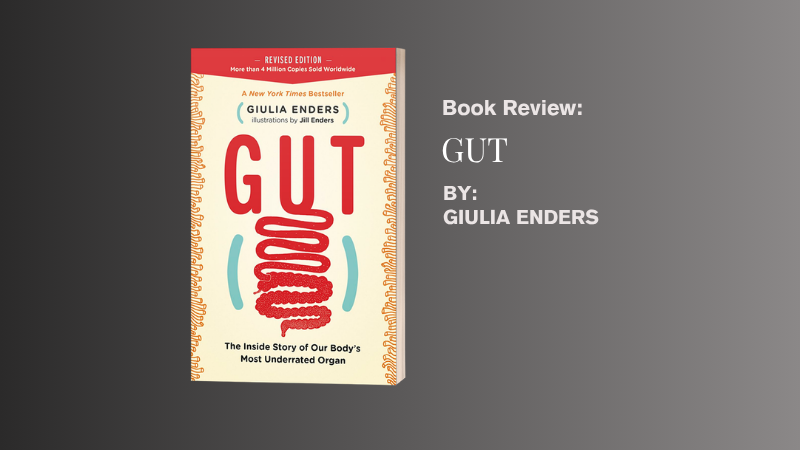
Why Your Microbiome is the Secret to Wellness: A Review of Giulia Enders’ “Gut”
To most of us, the gut is a "Quasimodo" in the body’s architecture – unappealing, uneven and disregarded until it...
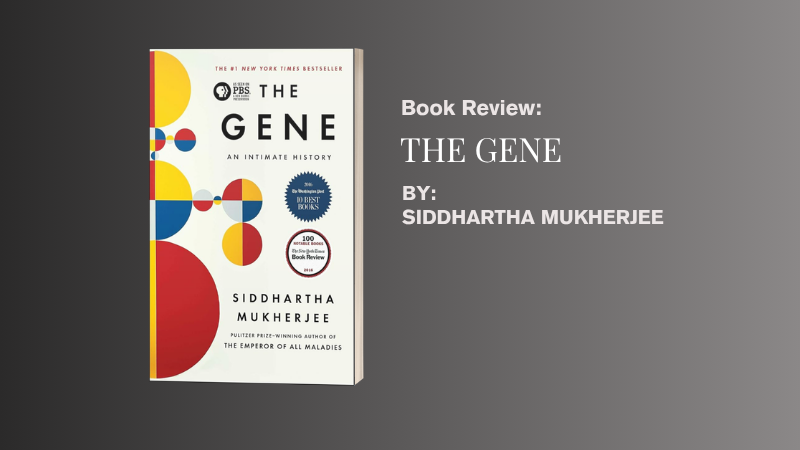
Is Your Destiny Written in DNA? A Review of Siddhartha Mukherjee’s “The Gene”
Whereas the twentieth century could be described as the age of the splitting of atoms and the creation of the digital bits...
Can You Eat Your Way to a Longer Life? A Review of Michael Greger’s “How Not to Die”
Should one be browsing the selection in the health and wellness department of a Canadian bookstore, "How Not to Die"...
Your Body Explained Like Never Before: A Fascinating Tour from Head to Toe
If you were to take your body to a hardware store in an attempt to price out the various elements within...
The Spirit Catches You and You Fall Down By Anne Fadiman
Midnight lights buzz at a pitch found only in hospitals. Inside Merced Community Medical Center’s ER...