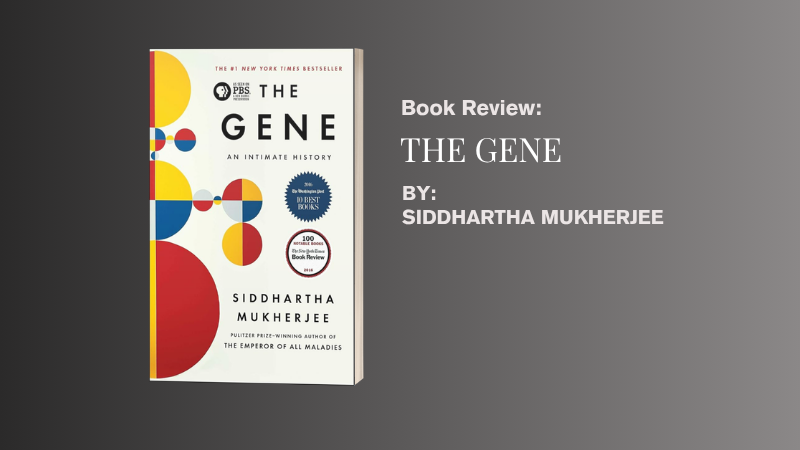
Is Your Destiny Written in DNA? A Review of Siddhartha Mukherjee’s “The Gene”
From Mendel’s Garden to CRISPR: How Our Genetic Code Defines Health, Identity, and the Future of Wellness
Whereas the twentieth century could be described as the age of the splitting of atoms and the creation of the digital bits, the twenty-first century will forever be marked by the study of genes. In “The Gene: An Intimate History”, a poetic and expansive novel by the Pulitzer Prize-winning oncologist Siddhartha Mukherjee, the author states that we do not simply study the “master-code” of life anymore; we have learned how to rewrite it. And for Canadians who are preoccupied with health and longevity, this novel provides a shocking insight into the realization that we already have the power to alter our genome, one that is “perilously, tantalizingly near”.
Mukherjee resists the academic style of a textbook by introducing what he refers to as a “red line” that cuts across the scientific narrative with a personal account of his own family’s battle against mental illness. His two uncles, Rajesh and Jagu, and his cousin Moni are presented as characters with “splintered minds.” Mukherjee introduces this element as a means of setting stakes for the narrative and elevates the historical account of biology into an intriguing investigation into the definition of identity. Should there be a kernel of illness within the family line, how does one separate this from their own sense of self? His father calls the gene Abhed, which translates into “indivisible” or “identity.”
The value of infotainment of the historical segments lies in its magnitude. First and foremost, Mukherjee displays the qualities of a novelist by providing us with a picture of Gregor Mendel as an obsessive, dim-witted yet highly intelligent gardener who had the habit of counting several thousand peas to discover the “alphabet of the code.” Next comes the mention of James Watson and Francis Crick, who have been referred to as the “self-appointed jesters in a court of fools” who discovered the structure of DNA and established the “central dogma” of biology.
Nevertheless, as a critic of the concept of wellness, it is necessary to point out that the book is really provocative if it takes the discussion from laboratory practice to clinical practice. According to Mukherjee, modern medicine has for a long time functioned in the mode of “mirror writing,” when we understand wellness through the prism of its opposite – the lack of abnormality. As a result of the Human Genome Project, however, we now know how to address genetics in terms of “normalcy.” However, it is a double-edged sword because, according to the author, we are now approaching the era of “previvors.”
One of the major criticisms by the book about “nature vs. nurture” is especially apt for today’s health-conscious individuals. According to Mukherjee, genes do not represent “blueprints,” which mean one outcome, but “recipes.” Just like quadrupling the quantity of butter does not only make the cake tastier but may ruin its structural integrity altogether, genetics combined with environmental factors and sheer luck may yield unexpected results. The author describes it as the “last mile” issue, since genetics may show a possibility of having a particular nose or personality but fails to cover the last mile to define a person’s concrete individuality. This point is emphasized through the eerily similar twins who raised separately smoke the same cigarette brand and marry women with the same name due to their “idiosyncratic and serendipitous events.”
The criticism of “newgenics” in Mukherjee’s writing marks one of the strongest examples of his journalistic integrity. While the horrors of state-endorsed eugenics have been left behind by history, today we have entered into what Mukherjee calls a “regime of gene management,” motivated by individual autonomy. With the ability to “read” the fetal genome and “write” away any mutations thanks to techniques like CRISPR, the line between “extraordinary suffering” becomes ever-changing. The question becomes, will the eradication of the genes that cause schizophrenia end our suffering, or will it erase the creativity too?
The language used by the author can be considered heavy at times, although it is never so oppressive as to overwhelm the reader; however, the huge size of the human genome (consisting of 3 billion base pairs), mentioned by Mukherjee (which would occupy 1.5 million pages if put into print), poses a threat to become an obstacle on occasion. Nevertheless, the writer succeeds in driving the plot by going back to the “triangle of considerations.”
“Gene” is a work of scientific journalism that perfectly achieves the difficult task of being both a “terrifying wake-up call and a hopeful roadmap.” This book is one reminder that even as we have come from a certain script, we are not automatons created out of it. According to Mukherjee, the “imperfect” is our paradise, and the need to make humans homogeneous and “normalize” them must necessarily take into consideration the necessity of sustaining diversity. The book is essential reading for everyone who seeks a manual for their body, which is currently involved in the “intercontinental arms race” to rewrite it.
Book Title: The Gene: An Intimate History.
Author: Siddhartha Mukherjee
Year: 2016
Disclaimer:
This review is for informational purposes only and does not constitute medical advice. Always consult with a qualified healthcare professional before making significant changes to your health or wellness routine.
- Share

Suman Dhar
A qualified professional with extensive experience in education and human resources. As a HR Professional, Management Consultant, or Training Specialist, he is interested in cultivating intellect and curating insight.
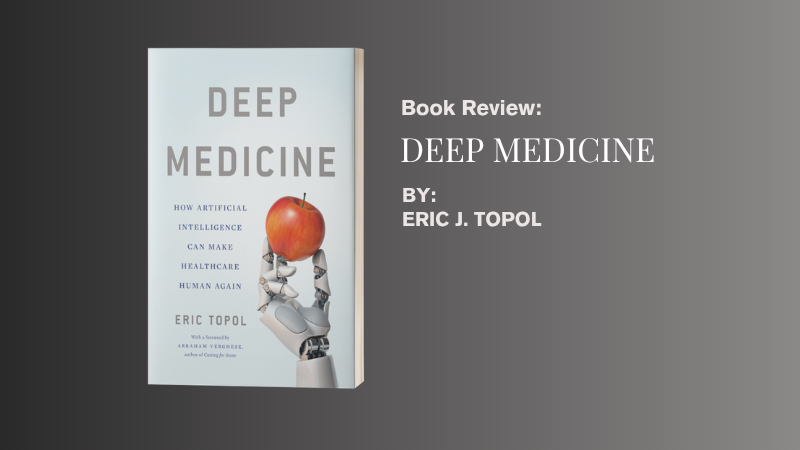
Can Artificial Intelligence Restore Empathy to Medicine? A Review of Eric J. Topol’s “Deep Medicine”
Past the Keyboard: How Deep Learning and the "Gift of Time" Can Heal Shallow Healthcare in Canada...

The Simple Device That Is Keeping People Alive During an Age of Excessive Complexity: An Analysis of Atul Gawande’s “The Checklist Manifesto”
From Surgical Safety to Money Management: How Expertise Is Not Sufficient To Stop Avoidable Mistakes...

Why Your Microbiome is the Secret to Wellness: A Review of Giulia Enders’ “Gut”
To most of us, the gut is a "Quasimodo" in the body’s architecture – unappealing, uneven and disregarded until it...
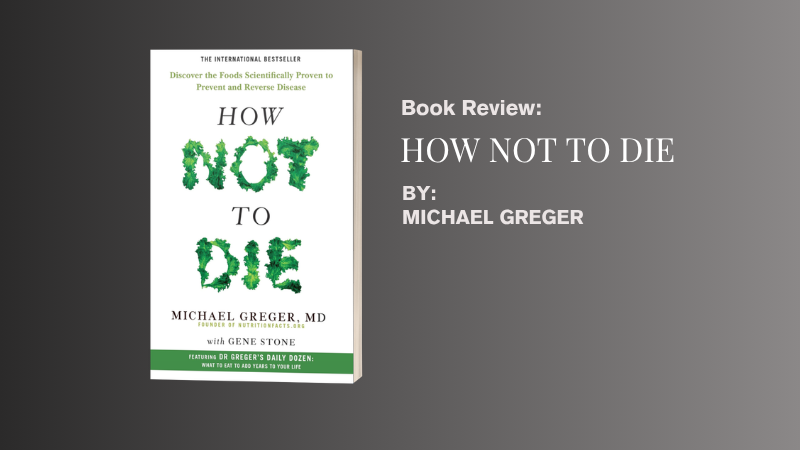
Can You Eat Your Way to a Longer Life? A Review of Michael Greger’s “How Not to Die”
Should one be browsing the selection in the health and wellness department of a Canadian bookstore, "How Not to Die"...

Your Body Explained Like Never Before: A Fascinating Tour from Head to Toe
If you were to take your body to a hardware store in an attempt to price out the various elements within...
The Nightly Elixir: Why Sleep is the Billion-Dollar Secret to Living Longer
What if there was a tool, a biological tool, that was part of all of our makeup, which could improve your memory...