Your Body Explained Like Never Before: A Fascinating Tour from Head to Toe
From cells to systems – discover the miracle you live in every day.
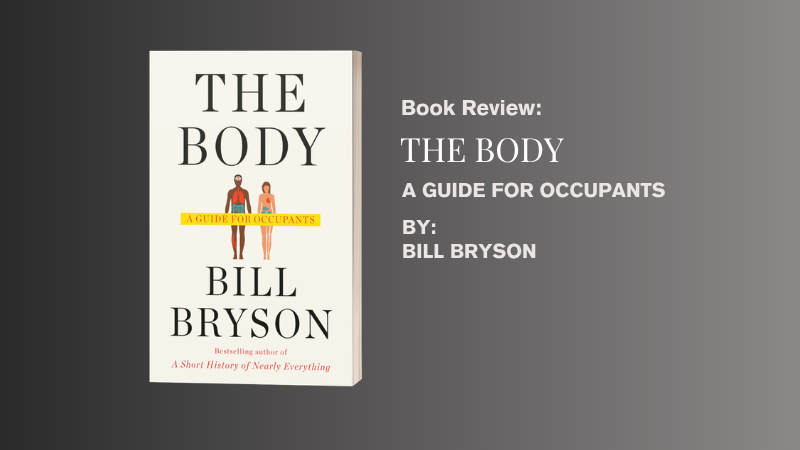
If you were to take your body to a hardware store in an attempt to price out the various elements within, you would likely leave the store feeling rather cheap. In his most recent book, The Body: A Guide for Occupants, released in 2019, Bryson sets the record straight in his inimitable style, referencing the Royal Society of Chemistry, which has determined, “To make a human being of the size of the actor Benedict Cumberbatch, you would need to spend about $151,578.46 on the open market.”
This is the quintessential Bryson approach: taking the mundane reality of our physical existence and presenting it in shocking, often pricey, statistics and historical curiosities. As a nation of Canadians living in an era of high-speed living, Bryson provides a rather sobering, yet celebratory, reality check in reminding us that we are, in fact, “warm wobbles of flesh” that we take completely for granted.
The book is more like a witty and gruesome tour of a highly complex museum than a dense medical textbook. Bryson’s main thesis is that the body is a miracle of self-organization. We are a group of inert materials – the same stuff we find in a pile of dirt – and we somehow decide to be “us.” From the density of the DNA in every cell (which would stretch ten billion miles to Pluto and beyond if woven into a single strand) to the fourteen thousand blinks we make every day, the scope of what goes on inside us is “positively enormous.”
Perhaps one of the most interesting things about Bryson is that he is able to humanize the history of science. Instead of just describing the immune system, he introduces us to the “noble and selfless” scientists who risked their very lives to study it. He tells us about the “harrowing experience” of novelist Fanny Burney, who had to undergo a mastectomy in 1810 without any anesthesia. This is just one of how Bryson keeps the reader interested, even in chapters that are essentially just a refresher on Grade XII biology.
However, the book is not without criticism. As a critic of wellness, one must say that Bryson becomes much sharper – and perhaps more necessary – when writing about how we deal with the form we inhabit. The author argues that we are currently living in a slow-motion “suicide by lifestyle.” He argues that for most of our history, we were killed by infectious diseases. Now, however, we are killed by our own decisions. He argues that 70% of the diseases that kill us today, such as type 2 diabetes and some heart diseases, are “mismatch diseases,” or diseases that occur when our hunter-gatherer bodies are trying to survive in a world of sedentary lifestyles and overeating.
Bryson’s treatment of nutrition is especially interesting to the contemporary wellness seeker. He unmasks the “massive racket” of the antioxidant supplement industry, pointing out that there is no scientific evidence to support the idea that these supplements will counteract the effects of aging. He also unmasks the insidious effects of sugar, pointing out that Heinz ketchup is nearly one-quarter sugar, more sugar per volume than Coca-Cola. His advice on how to deal with this is refreshingly simple: stick to the outside aisles of the supermarket.
Another issue the author addresses is the “more is better” philosophy that is commonly found in medicine. The author argues that America is spending more on healthcare than any other nation in the world. However, America is ranked mediocre at number thirty-one when it comes to life expectancy. The author also addresses the issue of “incidentalomas,” which are discoveries made during routine checkups. These discoveries lead to overtreatment, which is harmful to patients. The author argues that some medical procedures, such as the testing for prostate cancer, are “hardly more effective than the flip of a coin,” leading to surgeries that alter the lives of patients for something that might never have harmed them.
Bryson is at his best when he is debunking myths, and he sets the record straight: “We don’t lose most of our heat from our heads, we don’t use only 10 percent of our brains, and the eight glasses of water a day thing has no basis in science whatsoever.” This is all done in a witty manner, so the book doesn’t feel like a lecture.
The writing moves along at a breakneck pace, and this is perhaps the only flaw with the book. The author is in such a hurry to get to everything from the “Microbial You” to the “Nether Regions” that some subjects, such as the pain of chronic pain or migraines, are dealt with in just a handful of paragraphs. Of course, this is probably done to avoid bogging down the average reader with too much cellular detail.
The prose moves at a breakneck pace, and this may be the only problem with the book. The author is so intent on getting through everything from “The Microbial You” to “The Nether Regions” that he glosses over such things as the suffering that is chronic pain or the intricacies of migraines, but perhaps this is a ploy to prevent the layperson from getting lost in the details of cell structure.
In the last chapters, Bryson’s writing becomes less full of wonder and fuller of urgency. “For every year of increased life expectancy we have gained since 1990, only ten months of that are ‘healthy’.” We have become very good at adding to the duration of our deterioration, but less successful at adding to our wellness. Bryson’s final advice on the secret to life, after reading thousands and thousands of pages and talking to experts, is surprisingly unglamorous: “Eat a little less, move a little more.”
The Body: A Guide for Occupants is a magnificent example of science communication, capable of evoking in the reader a sense of being “cosmic and miraculous,” while also keeping them aware that they are a “warm wobble of flesh” inhabited by trillions of microbes who do not even realize they exist. It is a book that all occupants of a human body should try to read, to understand the manual for the vessel they find themselves in, and perhaps even treat it a bit kindlier.
This review is for informational purposes only and does not constitute medical advice. Always consult with a qualified healthcare professional before making significant changes to your health or wellness routine.
- Share

Suman Dhar
A qualified professional with extensive experience in education and human resources. As a HR Professional, Management Consultant, or Training Specialist, he is interested in cultivating intellect and curating insight.

The Simple Device That Is Keeping People Alive During an Age of Excessive Complexity: An Analysis of Atul Gawande’s “The Checklist Manifesto”
From Surgical Safety to Money Management: How Expertise Is Not Sufficient To Stop Avoidable Mistakes...
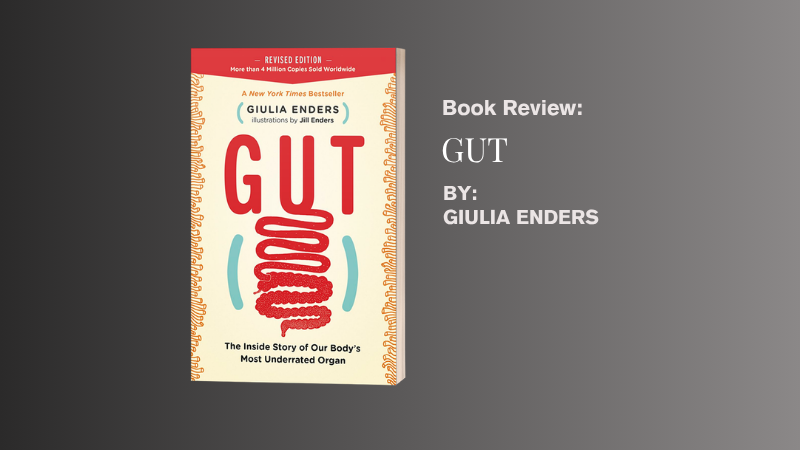
Why Your Microbiome is the Secret to Wellness: A Review of Giulia Enders’ “Gut”
To most of us, the gut is a "Quasimodo" in the body’s architecture – unappealing, uneven and disregarded until it...
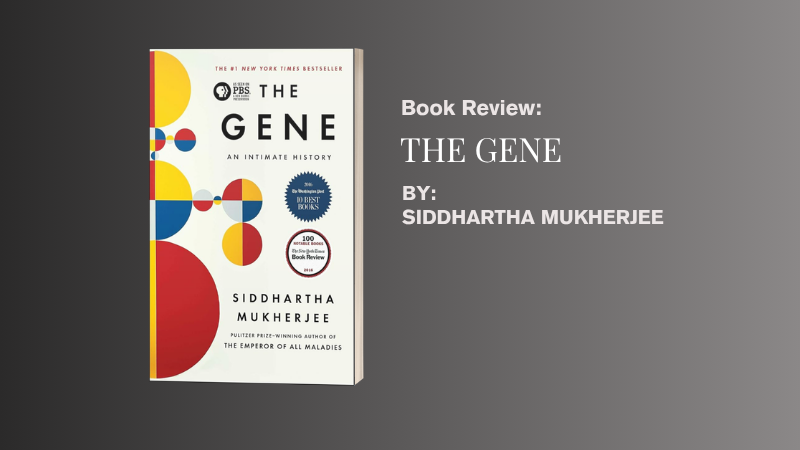
Is Your Destiny Written in DNA? A Review of Siddhartha Mukherjee’s “The Gene”
Whereas the twentieth century could be described as the age of the splitting of atoms and the creation of the digital bits...
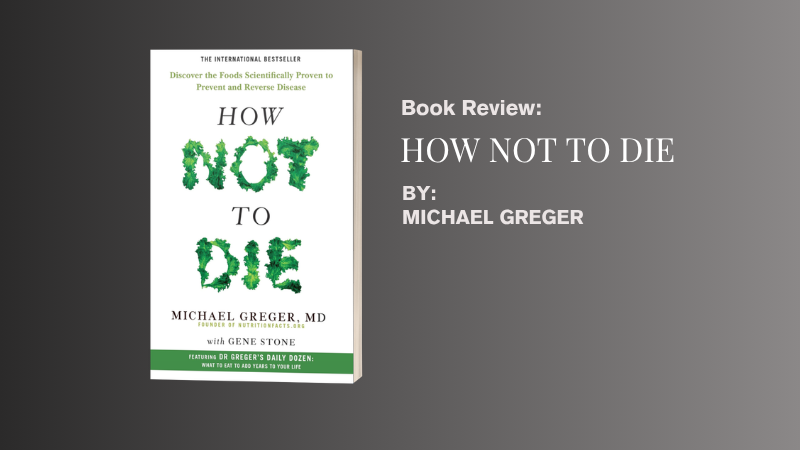
Can You Eat Your Way to a Longer Life? A Review of Michael Greger’s “How Not to Die”
Should one be browsing the selection in the health and wellness department of a Canadian bookstore, "How Not to Die"...
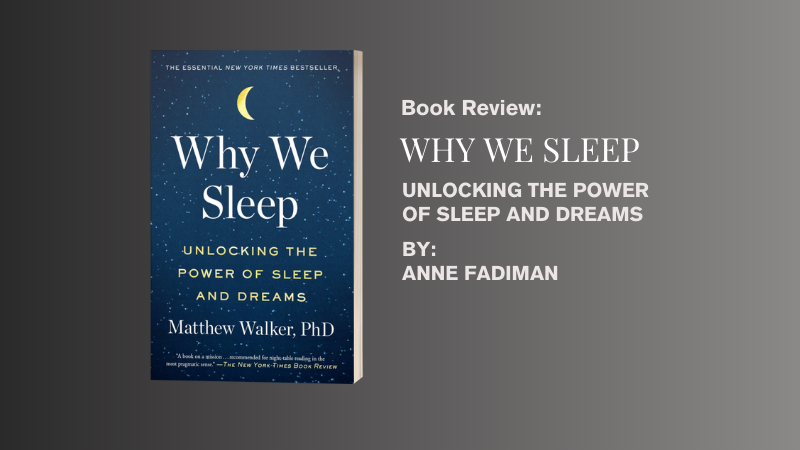
The Nightly Elixir: Why Sleep is the Billion-Dollar Secret to Living Longer
What if there was a tool, a biological tool, that was part of all of our makeup, which could improve your memory...
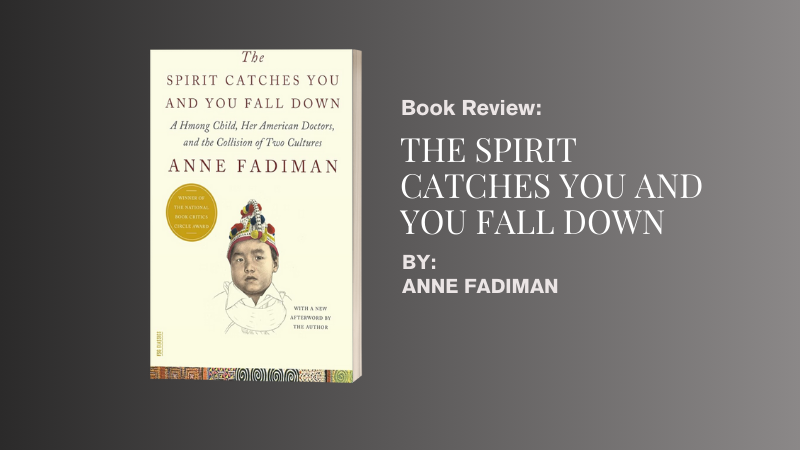
The Spirit Catches You and You Fall Down By Anne Fadiman
Midnight lights buzz at a pitch found only in hospitals. Inside Merced Community Medical Center’s ER...