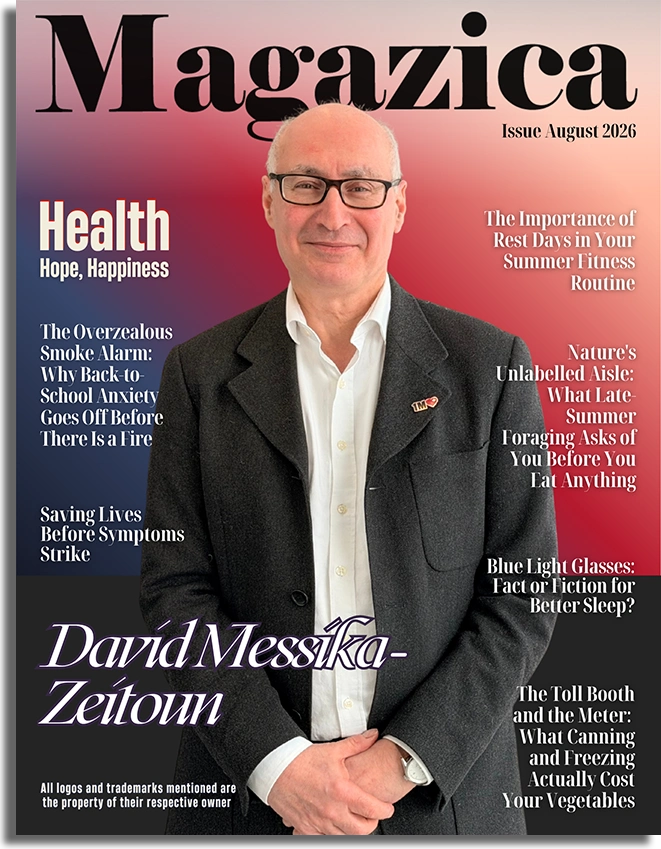

From Scalpel to Scarless Healing: Dr. Marc Ruel on Robotics, Research, and the Human Side of Surgery
What if the future of heart surgery didn’t involve cracking open the chest? What if healing could happen without scars – and recovery felt more like a stroll than a marathon? Dr. Marc Ruel isn’t just asking these questions – he’s answering them. As Professor and Director of Minimally Invasive Cardiac Surgery at the University of Ottawa Heart Institute, Dr. Ruel has pioneered techniques that are changing lives and rewriting surgical textbooks. In this conversation, he opens up about the human side of medicine, the power of teamwork, and the bold innovations shaping tomorrow’s cardiac operations. This isn’t just medicine – it’s a movement.
Magazica: A few surgeons redefine the way life-saving procedures are performed. Dr. Marc Ruel has done just that as a professor and the endowed chair of minimally invasive cardiac research at the University of Ottawa Heart Institute. He has pioneered techniques that have transformed cardiac surgery worldwide. His groundbreaking work in minimally invasive coronary artery bypass surgery has given thousands of patients a safer, less invasive path to recovery – changing the future of heart health beyond the operating room.
Dr. Ruel is a leader, educator, and researcher, shaping the next generation of cardiac surgeons while driving innovation in surgical techniques. Today, he joins us to share his journey, the lessons he has learned, and the future of cardiac care. Dr. Ruel, welcome. It’s an honor to have you.
Dr. Marc Ruel: Thank you. The honor is mine. Very happy to be here.
Magazica: Let’s start with the human side of heart surgery. Your work is at the cutting edge of cardiac surgery, but beyond the science, what’s the most rewarding part of helping patients through such life-saving procedures?
Dr. Marc Ruel: Thank you. That’s a great question. Cardiac surgery is a rather dramatic field of medicine and surgery. We sometimes deal with situations that seem hopeless or impossible. The technology and teamwork involved must be tremendously well tuned.
You cannot perform an open-heart operation on your own, even if you’re the most gifted person on the planet – that would be absolutely impossible. For any given operation, there are probably between seven and ten people working around the operating room, each focused on the patient being safe and getting better.
Regardless, heart surgery remains a scary experience for patients. And even as one develops as a surgeon, a nurse, a cardiac anesthesiologist, a technologist, or a perfusionist, you continue to feel very high stakes, and rightly so. There’s also a bit of magic, if you will, that emanates when the chest is open and you see the heart beating. You start working on the heart – first exposing it, then diverting blood away, then stopping it and working on the valves, the arteries, the muscle itself, or the aorta. These procedures are all tremendously advanced, not only from a technological standpoint but also in terms of teamwork.
That being said, the human side of cardiac surgery is ever-present. Everyone realizes the implications and the huge stakes of cardiac surgery – first and foremost, for the patients and their families. You feel like you’re in a trench together.
So, cardiac surgery is generally very effective and safe, but it is quite invasive and understandably frightening for patients and families. If I had to summarize the theme of my career, it has been, alongside my colleagues and teammates, to make heart surgery less invasive and easier for the patient.
Sometimes this means we don’t cut the breastbone to perform operations that previously required it. Other times, we still perform a conventional breastbone incision but with less morbidity, by not stopping the heart, by minimizing dissection or blood loss, and by using innovative techniques that make the experience easier for the patient.
In a nutshell, that has been my focus, and my team has been incredibly supportive throughout this journey of several decades.
Magazica: Coming from the last part of your conversation, this idea of making surgery less scary – from my layman’s perspective, minimally invasive or less invasive cardiac surgery sounds revolutionary. For someone unfamiliar with this field, how does it differ from traditional open-heart surgery, and why is it a game changer?
Dr. Marc Ruel: This is a great question and hopefully I can summarize – there are four types of adult heart surgery: surgery on the arteries of the heart, surgery on the valves, surgery on the aorta. The aorta is the largest blood vessel from which all the blood escapes the heart. Sometimes the aorta can have aneurysms or outpouchings that can rupture, break apart, or have other issues like infection or disease – even cholesterol and clot can sometimes accumulate into it.
The fourth type is when the heart muscle itself gives up or obstructs itself. We call it cardiomyopathy – essentially the failure of the heart to contract or provide a smooth path for the blood to move forward. The heart muscle becomes either very, very poor, fails to relax, or is literraly obstructed. These four types of heart conditions intersect; they’re not always completely separate. Sometimes you’ll do an operation n the heart muscle that requires bypassing an artery and repairing a valve. You might replace an aorta that requires a valve or a bypass as well. So they can be quite intermingled.
Importantly , the way to perform these surgeries is now very safe, and ways to make them less invasive are available.
When I started as a young surgeon back in 2002, coming back from Harvard, I felt that we should design a way to perform multiple coronary bypasses without splitting the breastbone, which could not be achieved back then. We worked very hard on that. We even worked for a while in cadaver labs to go through a bunch of experimental incisions and approaches. We finally determined that if we made an incision at that particular spot and used specialized techniques, we could access all areas of the heart and safely and successfully perform bypass grafting on multiple artieries. Prior to that, surgeons could really only address one bypass minimal invasively.
So, a colleague in New York and I then started doing the first operations at the same time. I fondly remember my very first patient, who was from the Quebec side of the Ottawa region, called Gatineau . I told him, “This has not really been done before. But based on what we know, based on what we’ve already done, and based on the experimentation we’ve performed – including in cadavers – I think I can do it safely.” I explained to him, “We’re going to make sure you’re safe. I’m going to make sure the operation is effective. And if we can do it less invasively, we’ll make that happen too.”
His response was surprising and quite invigorating. He said, “I trust you, young man. Just go ahead. Do it. Do your best, and I know we’re going to be fine!” The patient was right and he has done well for decades.
Magazica: Wow! That’s fascinating to hear. So, this journey to innovation – you pioneered this technique, and now it’s used worldwide. Can you take us back to the moment you just described, when you realized that minimally invasive coronary artery bypass surgery could change the future of cardiac care? How did that moment occur?
Dr. Marc Ruel: Absolutely. It’s an important question because heart surgery is effective. It’s also quite safe. The problem is: why is it so invasive. Part of this invasion comes from two ways: either from stopping the heart using the heart-lung machine, or from splitting the breastbone.
The breastbone is a bone that moves with every single breath. If you performed CT scans on everyone, you’d find out that up to 30% of patients never completely heal their breastbone after heart surgery. They may be okay and not feel it – indeed, many patients don’t feel it at all – but if you were to do a CT scan on everyone, you’d find that about 30% of patients have incomplete healing of their bone.
There are many reasons for that. The bone is constantly moving, and many patients are elderly – the average age is probably between 65 and 70 years old. Healing a major bone that moves every second with respiration is a bit of a ludicrous goal. It certainly won’t happen in everybody.
When I started as a surgeon, I also felt that we could reduce bleeding and inflammation during surgeries, which come in part because of the heart-lung machine that drains the patient out and circulates and thins the blood. I wanted to find ways to avoid that and ideally do everything at once – avoid the heart-lung machine, avoid stopping the heart, the breastbone incision – and really reduce the bleeding and inflammation aspect of cardiac surgery. I think we’ve achieved that.

Now, this new surgery has been emulated in some form or fashion across the world. Many great teams have since contributed and moved the field forward. Thousands of surgeries are performed every year that follow this principle of performing multi-bypass surgery less invasively. Less invasive valve surgery has also grown tremendously. It’s quite commonly performed without spreading the breastbone, even multi-valve surgery. So there’s really now a bit of a minimally invasive revolution in heart surgery.
But it took quite a while for things to happen! Because cardiac surgery is not like cancer surgery, where you come and remove an organ, or like gallbladder surgery. In cardiac surgery, you almost never remove anything – sometimes you might take out an aneurysm – but you have to reconstruct everything, knowing that twice the body’s blood flow cycles through every minute. Yes, twice, because both the right heart and the left heart handle a complete blood cycle. Cardiac Surgery is by definition always a reconstructive rather than an ablative form of surgery.
The heart is also subjected to tremendous pressures, yet it’s exclusively made of soft tissues! So all the blood goes through it in every single cardiac cycle, and the tissues are quite fragile. Surgeons thought for centuries that operating on the heart was impossible. They thought that the heart was the surgical limit that would never be achieved.
Of course we’ve learned that this is not true. Since the 1950s, when the first open heart operations started being performed – initially on children, and later on adults – we’ve come a really long way. But the reconstructive nature of the surgery still makes less invasive approaches very difficult.
I often say that when you do minimally invasive heart surgery, the surgeon bears much of the pain that the patient would otherwise be experiencing. The surgeon is essentially giving up some of their comfort so that the patient has more comfort, which is a great philosophy – a great starting principle!
Magazica: Thank you. Even for laypeople like us, we clearly understand it. On that note, let’s digress a bit – but meaningfully. Can you shed some light on BEaTS Research? I can see the logo on your coat. There are two more people involved – Dr. Eric and Dr. Emilio – as we saw on the website. Please tell us more.
Dr. Marc Ruel: BEaTS Research is a translational research program. What does translational mean? Essentially, translational research means developing discoveries that will have a clinical impact. It’s rather difficult to do translational research because, as you may know, very many things discovered in labs don’t turn into clinical advances.
Sometimes we try, but the discovery gets blocked at the animal model level, or later with large animals. There can be human trials – what we call phase one trials – that turn out to be negative and show that the new discovery, unfortunately, is not helpful to modern clinical medicine and surgery.
It’s estimated – though we don’t know the exact number – that more than 95% of basic science research does not have a direct clinical application going forward. That doesn’t mean that research not important. I do want to stress that. Sometimes, one discovers a gene, a new mechanism, or an enzyme, the discovery may be put into action a generation later.
There are examples of that. One beautiful basic science study was done in Yellowstone National Park back in the 1960s. Those hot water pools – called prismatic pools – harbored a special bacteria that could survive at temperatures higher than 60 degrees centigrade. These pools are volcanic in origin and very hot. You wouldn’t want to swim in them – everyone would get burned. They’re not even prone to sustaining life.
But this bacteria stayed alive in those pools despite the very high temperature. Enzymes from that discovery were used and led to one of the greatest advances in medicine. It was the opportunity to expand genetic material, which ultimately led to the Genome Project. The enzyme was called Taq Polymerase. At the time, it was published in a fairly obscure scientific journal. No one thought it was important!
Since, it has become one of the most important scientific papers in all of medicine…. because it has a direct link to the Genome Project and opened the door to understanding so many of the genetics and mechanisms that are now available to us.
Magazica: One of your publications came up during our conversation with Lianne as well. The article you published in Advanced Functional Materials is titled Multipurpose On-the-Spot Peptide-Based Hydrogels for Skin, Cornea, and Heart Repair. It’s widely circulated. I’ve gone through the whole article, and what I realized is that you’ve created a bio-inspired synthetic material that can be very effectively utilized for treating damaged tissues and organs. Can you shed a bit of light on this for the general public?
Dr. Marc Ruel: Absolutely. I appreciate the question. We’re quite passionate about this project. Part of doing minimally invasive surgery is also that you want to minimize scar formation for our patients.
Dr. Erik Suuronen, my colleague in the translational lab, now heads the lab with Dr. Emilio Alarcon. Erik was working on understanding scar formation in hearts after a heart attack. For that work, Erik and I recruited Emilio to join our research group. Emilio then thought, “This is very interesting… I think some of the polymers we’re using can actually be manufactured on the spot. And can be optimized and used to lead to scarless skin healing.”
So Emilio started working on this with Erik’s help, my help, and of course, the lab members’ help. I think we now have a really cool product, which – certainly in the lab and on small animals – has greatly reduced scar formation, to the point of eliminating it. That is our ultimate goal!
If one could truly mitigate and eliminate scar formation, it would open many doors in surgery. Perhaps some of the efforts we’re putting into keyhole approaches for coronary and valve surgery wouldn’t be necessary. If you could have instantaneous healing, that might change things.
The future could bring a completely new paradigm – where you go through the tissues you need to access, so you have full comfort during the operation. I’ll tell you, with minimally invasive cardiac surgery right now, you don’t always. It’s not a simple surgery – it’s can be very acrobatic. As I said before, the surgeon takes the pain to provide the patient comfort.
But perhaps in the future, things will be different. We might have on-the-spot, much quicker repair and recovery for any incision, and even potentially scarless healing.
I want to commend my team for this. They are absolutely fantastic. Erik is a very wise presence in the lab. He always provides big-picture insights – how this fits into the overall field, how feasible it is, and how much future it has. Emilio is raw genius. He has so many ideas constantly flowing in and limitless energy. The two of them make an amazingly strong combination.
I’m just there on the sidelines watching people who are way smarter than I am come up with such discoveries. What I think I can contribute – and we complement each other well – is clinical and surgical relevance. When we discuss a project and develop research together, I can help us identify how we could use it for a specific medical condition or after a particular surgery. Sometimes we don’t have enough conduits. Sometimes we face problems with hypertrophic scars. I’ll say, “Emilio, Erik, can you help us?”
It’s been a wonderful journey. We’ve even recruited a new investigator recently as part of the BEaTS Research program – Marcelo Munoz. He’s developing his own research program and has already published a very impactful paper on behalf of the team.
Magazica: Fascinating. But when I tried to read it, there were lots of technical details – seven types of peptides, graphs, charts. I actually used AI to help me understand the basic terminology and implications in simpler terms.
In that connection, I also want to ask about something Lianne mentioned briefly. We didn’t get into it much because we thought we’d touch base with you directly. Are you working on robotic surgery? Could you shed some light on that?
Dr. Marc Ruel: Yeah, robotic heart surgery is really cool – it’s the future, in my opinion. The surgical robot is used in many specialties. I would venture that the specialties that use the robot the most are urology, gynecology, general surgery to some extent, thoracic surgery, as well, and ear, nose, and throat. I’m sure I’m forgetting some area of surgery that probably uses it a lot.
Interestingly, the robot was not so used in cardiac surgery, even though the original intent of surgical robots was actually to perform heart operations. The company at the time – Computer Motion, and later Intuitive Surgical – thought that robots were especially needed in heart surgery – because it is the most invasive! That however proved to be a daunting task, in part because of what I was telling you earlier: the complex reconstructive nature of cardiac surgery makes it more difficult to safely bring innovation and less invasive ways to do it.
The valve has to hold. Every single aspect of the repair has to be functional. If there’s any piece of the valve, or of the bypasses, or of the suture during the reconstruction that doesn’t work, the valve will leak, the valve will not work as well, the patient will bleed, and the patient could die.
So, the cardiac surgery robot came relatively late. Now, it’s important to know that the robot doesn’t think – it’s not an AI robot like some might imagine. It’s basically just an extended surgical telemedicine manipulation instrument. Each arm is like a mini hand – a microscopic extension of the surgeon’s hand – at the tip of a trocar that goes through a small hole in the chest. Typically, we use three, four, five small holes like this. One of the holes is for a 3-D camera.
At the tip of each trocar is also a micro instrument. Because of that, you’re able to get into a cavity or small area. In addition, you can insufflate a little bit within the cavity to give yourself some space. This brings a lot of advantages: miniature access, insufflation, and the instruments themselves that have six degrees of freedom. There’s even a wrist – the instruments can be moved in almost every direction.
You’re not going to play the Schumann piano concerto with a robot – it’s not going to work! – but you can certainly do surgery. You can do micro-dissection, micro-reconstruction, all within a closed space. The advantage is that it allows you to do heart surgery essentially without opening the chest – working within the closed chest. That’s a tremendous advantage.
But again, as I said earlier, it’s not an easy task. There’s a huge learning curve. And as I always like to say when I teach minimally invasive cardiac surgery, the first thing is always safety. The second thing after safety is always efficacy. Only after these two things have been fulfilled can you really say that the minimally invasive aspect of surgery on the heart can go ahead and be completed.
In other words, if you compromise safety or efficacy because you want to limit the size of the incision and the amount of invasion, you’re not taking the right approach…. and your team will notice! That’s why sometimes you start a surgery thinking it will be minimally invasive, and at some point you hit a wall. You just decide, “Well, guess what…. Let’s do a regular incision. Let’s make sure the surgery is done perfectly well – perfectly effective and very safe.”
Magazica: Listening to all this, we can only thank you and your team for doing such impressive work in this sector. On behalf of all of Canada, I’ll take the opportunity to thank you.
The last two words you just said – safety and efficacy – really resonated with me. I’m an HR person, and one of my specialties is occupational health and safety. So it’s very meaningful to hear that.
You’ve talked plenty about how you operate and how you research. What’s one lesson – from all your years in surgery – that applies not just to medicine, but to life in general as well?
Dr. Marc Ruel: I think the two most important aspects of a career as a surgeon are – allow me to say two, because I think a single one is not enough.

First, to be able to work as a team. That implies a lot of things. To work well with your team, you have to respect your team, and your team has to respect you. The latter is key…. for your team to respect you, that doesn’t happen the first day you walk into the OR. It is an acquired privilege. They have to know you, have seen you prevail in times of extreme difficulty, and feel that if you can’t fix something, then likely nobody could either. It’s a longitudinal process. It doesn’t happen overnight just because you come in with all the credentials and you trained at Harvard or likes – that doesn’t mean much. I probably sound like “that don’t impress me much,” you know, the Shania Twain thing, right? (laughs)
Working as a team is so important as a heart surgeon because you can do nothing alone. Nothing happens entirely on your own. The ability to understand what your colleagues and team members are going through and relate to them – and have them relate to you – is tremendously important.
The second aspect, which is not unrelated to the first, is to be humble. I think it is very important. By humble I don’t mean coming into the OR and saying, “Oh, I really can’t do this surgery, but I have no choice.” That’s not the type of humility I’m talking about…. that actually would not resonate well. But if something is impossible or futile, if there is a problem, if there is a mistake, if something could have been done better – to have the humility and honesty to see it, to learn from it, to debrief with your team, and to do better next time – that is key to the growth of a surgeon and their team.
So, the growth of a surgeon’s team, of herself or himself and the team members, doesn’t happen overnight. It takes a while. There also has to be a bit of a gradation. For instance, if someone enters the complex field of minimally invasive heart surgery, you’re not going to do well by starting with the most difficult operations right away. You start in a selective manner. The same thing applied every time I brought in a new surgeon as part of our growing team – we carefully choose the type of operations he or she would be doing.
Yes I think that humility is very, very important. Like in everything else, there are surgeons who are extremely gifted, and there are surgeons who are average, and there are surgeons who are below average. The key is really to be safe, and not get into doing something that is above your abilities.
Even if, say, a surgeon is average but knows that they are, and is very humble in front of the patient and in front of the operation that has to be performed, and gives it extra attention, doesn’t cut corners at any level – a surgeon like that can have tremendous outcomes and be extremely safe, effective, and successful throughout their entire career.
Magazica: Fantastic. Whenever I say to my clients or students, “How do you manage people?” I say, “Make a list of people you love and people you respect.” The second list is always smaller than the first one – almost always. So when you say being able to work as a team and having respect from your team members and colleagues – that’s so important.
And the second element you mentioned complements the first so well: be humble. It’s so nice to hear. Thank you very much for that.
What would you say to aspiring medical professionals – young people considering a career in medicine, especially surgery? What’s one piece of advice you’d wish someone to have?
Dr. Marc Ruel: It’s an excellent question. I would say: worry more about what you can offer to your field of medicine. That sounds a little JFK-esque, but worry more about what you can offer to medicine and surgery, to your patients, to your colleagues, and to your institution than about what the field can offer to you.
Medicine is an extremely rewarding profession – whether you’re a surgeon, psychiatrist, public health specialist, family doctor. There’s always someone you can help and something interesting or an opportunity around the corner. It’s so interesting that – this is perhaps one of the reasons why doctors have such a hard time retiring – because you’re constantly in one of the most stimulating (I’m probably very biased) lines of duty or fields. There’s always something new on the horizon an someone you can help!
As a doctor, you’re such an important part of providing care, and you work with a multidisciplinary team that’s all engaged toward doing that. Like in every family, there are highs and some lows, but that too is part of the excitement from this profession.
To come back to what’s most important for medical professionals – I wouldn’t want any young doctor in training to think that he or she can only be, say, an ophthalmologist, a heart surgeon, or a family doctor working in remote communities. These are all great jobs, no question. But in medicine, if you have an open mind, you will receive a lot from the field, whatever that field is. You will receive a lot of reward from helping people and from assisting your colleagues in what they do.
It’s not an easy profession, no question. But it’s a tremendously rewarding one. Sometimes I get asked, “What is the single most important quality?” I think it would be courage – not only for leadership roles, but even as a doctor in general.
There are discouraging moments, no question. Sometimes you cannot save a patient. Sometimes you feel like you’re going to crumble under the amount of work. Sometimes you get disappointed with the way the healthcare system is running. But complaining and curling up in a hole is not the answer. The answer is to give your 120% and try to fix it – do your little part in moving that big ship toward something better for the health of Canadians, or whichever country you work in.
Magazica: Fascinating – the whole thing is truly fascinating. I’m having so many fascinating moments in this conversation. You remind me of my UofT professor who said, “The day your curiosity dies, you are becoming old, and the day that you stop helping others, you become poor.” You remind me of that line. That’s fascinating.
And how do you see the future of cardiac health? What advancements in technology and research – where do you see cardiac surgery heading in the next decade? Are there innovations on the horizon that excite you?
Dr. Marc Ruel: Absolutely. It’s a great question.
The past century was probably the century of cardiovascular advances. Some of the greatest strides in being able to treat lethal conditions came from the cardiovascular field.
The 21st century – interestingly – we’re now starting to see major forays in other fields of medicine, such as cancer as a whole. Not that they weren’t there in the 20th century, but I think cancer therapeutics have already gained a lot of momentum in this century. And also neurology – neurological diseases, brain and peripheral conditions – are met with much more hope than they were in the previous century.
I’ll give you two big examples: multiple sclerosis and stroke. We now have treatments. There’s now some hope. And maybe in 10–20 years, we’ll have some hope for ALS patients. There’s not a lot right now, but it’s amazing – the progress being made in medicine and surgery as a whole.
Yet I would maintain that perhaps one of the first fields to really take away some of the mortality from completely lethal conditions, outside of infections, was cardiovascular. Valve and pediatric heart disease started first being treated by heart surgeons. Coronary artery disease – again, a lot of bypass surgeries – was then literally halted. And then heart transplant and aortic surgery.
Interestingly, minimally invasive bypass surgery is the single operation in heart surgery that is growing the most globally over the last several years. I think our team in Ottawa had an important impact in developing the field and developing the evidence to make that impact known and accepted. Obviously, other players outside of Ottawa have also contributed to making that happen. But it’s so nice to see now that the fastest-growing single heart operation is now minimally invasive coronary bypass surgery.
So I would say, for future cardiac surgeons, minimally invasive approaches are going to be the future. And, at the other end of the spectrum, there will also be very complex heart surgeries that only a fraction of heart surgeons will be able to do – like multiple repeat surgeries in very difficult situations, where the only choice is between that very high-risk surgery and almost certain death. Minimally invasive heart surgery requires a lot of technical mastery, so it will often be the same surgeons and teams performing both kinds of operations.
It’s a bright future. And the beauty here is that in Canada we are making strides in life expectancy. Yet we’ve had major challenges. I think the two recent challenges are first access to care – because many people who are at risk of dying from heart disease and cardiovascular disease are not getting the care they should have.
The prime example of that is actually down south in the United States. When you have access to care, you have some of the best care in the world. But the problem is that so many Americans don’t have access to it. When you look at cardiovascular diseases as a whole, the US mortality burden is actually increasing. The life expectancy at birth of an American male is now down to less than 75 years of age. Life expectancy is actually going down for several subgroups of the population.
The other challenge with cardiovascular diseases is that we tend to forget about it. I was talking earlier about advances in cancer and neurological diseases. COVID was also a key player recently. When I was President of the Canadian Cardiovascular Society, one thing we really took to heart – no pun intended – was to remind the public and policymakers that despite the burden and impact of COVID, on any given day, there were always more people dying from their heart than from COVID.
I think the message came through. I think we were able to continue providing top care to Canadians, despite being in the worst of the COVID pandemic, as well as throughout the COVID episode, if you will.
Magazica: That brings us to the last talking point of our session – at least for today. We will have more sessions in the future, hopefully.
How do you see your legacy? How do you see your work in the future? How do you want to be remembered? Because so far, we have heard – and probably whoever is listening to this conversation will agree – medical or cardiac surgery is not a profession for you. It’s a calling. It’s a passion. It’s a calling. So how would you like to be remembered? What is your dream for the future in this field?
Dr. Marc Ruel: Well, I think the dream of every physician is to be remembered as someone who always put their patients first. I think that is a common theme.
We’re filming this in June 2025, and it’s a bit of a pondering moment for us at the University of Ottawa Heart Institute because we have two giants who are retiring. Dr. Mark Hynes from cardiac anesthesia – after almost 40 years of providing some of the safest anesthesia for heart operations in the world. I’ve operated at many heart centers around the world, and Mark is an absolute top-notch anesthesiologist who never faltered in putting the patient first.
At any time of the day, in any condition, to always advocate and always do what’s best for the patient. That, in my opinion, is how every physician wants to be remembered.
Another physician retiring at the Ottawa Heart Institute is Dr. Kwan Chan, after 40 years of being a leader in echocardiography – making ultrasounds of the heart. Dr. Chan was one of the very first in the world who could measure the blood pressure in the lungs from the echocardiogram. When he started as a cardiologist, this was the new field he helped develop.
The same comment I made for Dr. Hynes applies to Dr. Chan. They are two physicians who will be remembered as always putting patients first. And in order to do that, there’s a lot of collateral behavior, if you will. You have to work well as a team, and recognize and be recognized by your team. If you’re not engaged, respected, conducive, and even galvanizing to your team, you won’t be able to completely fulfill your mission of putting patients first. That’s just the reality. You can’t do it all on your own. You’re not going to provide great nursing care, recover the patients, deliver meals, clean the room, and give the pills yourself!
The importance of teamwork is very real. And the goal – whether you’re a surgeon, anesthesiologist, family doctor, cardiologist or pulmonologist – is to be able -and enabled by your team and institution- to put patients first. That is certainly my hope, and I hope one day I get on the way to being remembered as such. So thank you.
Magazica: Definitely, you are on that path. You are making that journey, and we are honored to experience it firsthand from you. We are listening to it from you. And at the very end, I will again take the chance to thank you and your team on behalf of Magazica and on behalf of the Canadian people.
Thank you for being with us – with all your passion, intellect, and in such a proactive way. Thank you. It’s an honor.
Dr. Marc Ruel: The pleasure was mine. Thank you, Shuman, and good luck with your magazine. Thank you very much for your consideration in doing this interview today.
Magazica: Thank you.
Dr. Marc Ruel: Take care!
- Share
Dr. Marc Ruel
Dr. Marc Ruel is a graduate of the University of Ottawa and Harvard University. He is known for having developed the world's first multi-vessel Minimally Invasive Coronary Bypass operations. Surgeons and teams from around the world have visited the Ottawa Heart Institute to learn these advanced techniques, and Dr. Ruel has performed surgeries at numerous institutions globally and trained learners from every continent. Dr. Ruel is Past President of the Canadian Cardiovascular Society. He serves as Surgery Editor for the journal Circulation, the world's premier cardiovascular journal. A prolific scholar, Dr. Ruel has published over 500 scientific articles, authored seven books, and delivered nearly 400 invited lectures. His primary textbook on Cardiac Surgical Techniques has been published in 3 editions and 5 languages.

Blue Light Glasses: Fact or Fiction for Better Sleep?
As Canadians spend more time than ever staring at screens—with 72% clocking over 8 hours daily on digital devices...
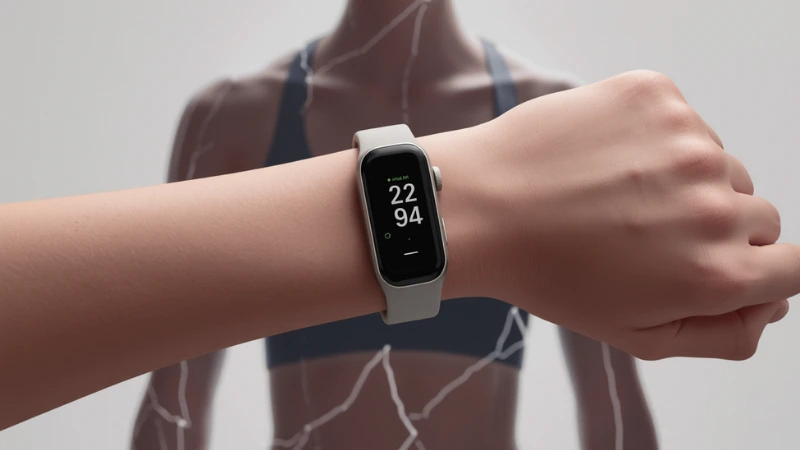
Wearable Tech: Are Fitness Trackers Helping or Hurting Your Body Image?
“By the time you finish reading this sentence, your fitness tracker has likely logged another dozen steps.” In my own experience...

Ergonomics for the Hybrid Worker: Avoiding the Couch-Slouch
You're on a video call from your kitchen table, laptop propped on a stack of cookbooks, neck craned forward...

Digital Detox Weekends: Reclaiming Your Attention Span
So, if perusing your weekly screen time report is like binge-watching, well, you are certainly in good company...
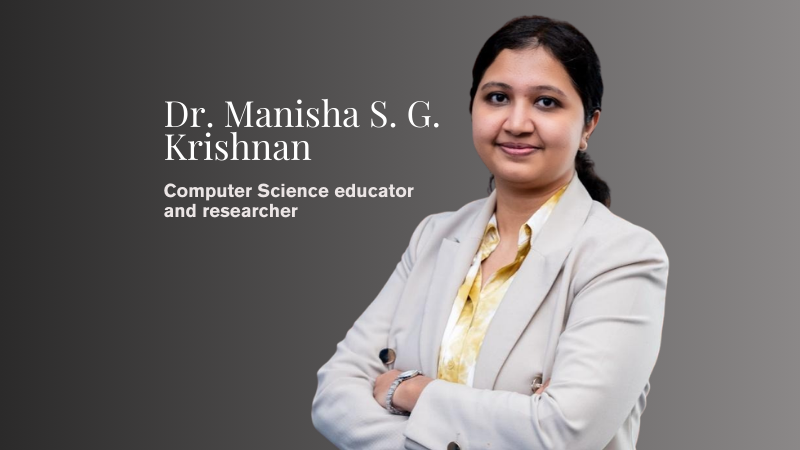
Predictive Analytics in Public Health: Preventing Illness Before It Begins
A public health department identifies rising indicators of respiratory distress across a specific neighborhood...

The Predictive Mind: When Generative AI Learns to Anticipate Human Thought
Why Generative AI’s Next Evolution Is Anticipation, Not Automation. Medicine has always been...