

The Predictive Mind: When Generative AI Learns to Anticipate Human Thought
Why Generative AI’s Next Evolution Is Anticipation, Not Automation.
Medicine has always been, at its core, a predictive discipline.
Every diagnosis reflects an inferred future state.
Every treatment plan represents an expectation of response.
Every clinical decision is a projection made under uncertainty and time pressure.
Clinicians do not merely react to information, they continuously anticipate what might happen next. This anticipatory reasoning is not optional or stylistic, it is foundational to safe and effective care. Yet despite this reality, much of today’s medical technology remains fundamentally reactive, responding only after explicit input is provided.
Recent advances in Generative Artificial Intelligence (GenAI) suggest that this paradigm may be quietly shifting. Emerging systems are no longer limited to task execution or information retrieval. Instead, they increasingly demonstrate the capacity to anticipate context, intent, and informational need. This evolution raises a critical question for healthcare, what happens when medical AI begins to align with the predictive nature of human cognition itself?
From Reactive Software to Anticipatory Systems.
Traditional clinical decision support tools are built on rules, thresholds, and retrospective correlations. While valuable, these systems typically intervene late in the cognitive process, after clinicians have already formulated hypotheses, identified concerns, or experienced cognitive overload.
Generative AI systems operate differently.
At their foundation, large language models are probabilistic prediction engines, trained to infer what comes next based on context. While they do not possess understanding or intention, their ability to synthesize longitudinal data, recognize complex patterns, and generate context aware outputs allows them to exhibit anticipatory behavior when embedded within clinical workflows.
This distinction is subtle but consequential.
A reactive system waits for a request.
An anticipatory system prepares before the request is made.
In clinical practice, this difference can reshape how decisions unfold.
Anticipation as Cognitive Support.
In high complexity clinical environments such as intensive care units, emergency departments, and oncology services, anticipation is not a convenience, it is a safety mechanism.
Properly designed generative systems may support care by:
- Preparing integrated patient narratives before rounds,
- Highlighting subtle trend deviations before thresholds are crossed,
- Anticipating follow up questions during diagnostic reasoning,
- Adapting explanations based on clinician specialty or experience,
- Reducing documentation burden through context aware drafting.
The primary value of these capabilities is not speed.
It is cognitive alignment.
By reducing unnecessary mental effort, anticipatory systems may preserve clinicians’ attention for judgment, ethical reasoning, and human presence, areas where machine substitution is neither appropriate nor desirable.
A Neuroscientific Parallel.
The growing appeal of anticipatory AI may be explained, in part, by its resonance with how the human brain operates.
Contemporary neuroscience increasingly describes cognition as predictive rather than reactive. The brain continuously generates expectations about the world, updating its internal models only when prediction errors occur. Perception itself is shaped by anticipation, not passive reception.
This framework offers an instructive analogy for medical AI design.
Systems that minimize surprise, adapt through feedback, and align with clinicians’ mental workflows are more likely to feel intuitive rather than intrusive.
Importantly, this cognitive familiarity may influence adoption as strongly as traditional performance metrics such as accuracy or sensitivity.
Clinicians tend to trust systems that think in recognizable ways.
The Risk of Overreach.
Despite its promise, anticipatory AI introduces new and underappreciated risks.
Prediction can easily drift into prescription. When systems consistently surface relevant insights, or appear confident in their outputs, clinicians may defer judgment unconsciously. In medicine, such deference is unacceptable.
Anticipatory systems must remain advisory rather than authoritative. They should surface uncertainty instead of obscuring it, explain reasoning rather than issuing directives, and support decision making without replacing professional judgment.
Equally important is the issue of bias. Systems trained on historical data may reproduce existing inequities, practice variations, or institutional norms. Without careful governance, anticipation may optimize for efficiency while undermining fairness or individualized care.
Anticipation without accountability is not innovation, it is risk.
Implications for Medical Technology Design.
The emergence of predictive AI challenges existing approaches to validation and regulation. Traditional frameworks emphasize output correctness, but anticipatory systems influence cognition itself, shaping attention, framing, and perceived relevance.
Future evaluation models may need to consider:
- Effects on clinician cognitive load,
- Influence on diagnostic reasoning pathways,
- Interaction with fatigue and time pressure,
- Transparency of anticipatory logic,
- Alignment with ethical and professional standards.
Design priorities should emphasize adaptability, explainability, and human in the loop control, rather than automation for its own sake.
A Quiet Transition Already Underway.
This transition is not theoretical.
Early forms of anticipatory behavior already exist in clinical documentation tools, triage systems, and care coordination platforms. What distinguishes the next phase is not the introduction of AI into medicine, but its deeper integration into clinical cognition.
As these systems mature, the defining question will not be whether they can predict accurately, but whether they can anticipate responsibly.
Anticipation Without Authority.
Medicine does not need AI that decides. It needs AI that understands context, respects uncertainty, and supports human judgment.
The concept of the Predictive Mind provides a useful lens for guiding this evolution, not as a technological ambition, but as a cognitive partnership.
If generative systems are to earn a place in clinical practice, they must align with how clinicians think, not attempt to replace that thinking.
Anticipation, when bounded by transparency and ethics, may become the most valuable contribution AI makes to medicine, not because it is powerful, but because it is supportive.
In the end, the future of medical AI will not be defined by how much it can do, but by how well it knows when to step back.
Thank you
References
- U.S. FDA.
Proposed regulatory framework for modifications to AI/ML-based software as a medical device.
Updated guidance, 2023–2024. - Blease C, et al.
Chatbots in healthcare, ethical and epistemic challenges.
Journal of Medical Ethics. 2023. - Rao RPN, Ballard DH.
Predictive coding in the visual cortex, a functional interpretation of some extra-classical receptive-field effects.
Nature Neuroscience. 1999, 2(1), 79–87. - Tversky A, Kahneman D.
Judgment under uncertainty, heuristics and biases.
Science. 1974, 185(4157), 1124–1131. - Nori H, et al.
Capabilities of GPT-4 on medical challenge problems.
arXiv preprint. 2023. - Singhal K, et al.
Large language models encode clinical knowledge.
Nature. 2023, 620, 172–180. - Shortliffe EH, Sepúlveda MJ.
Clinical decision support in the era of artificial intelligence.
JAMA. 2018, 320(21), 2199–2200. - Amershi S, et al.
Guidelines for human-AI interaction.
Proceedings of the ACM Conference on Human Factors in Computing Systems (CHI). 2019. - Rajkomar A, Dean J, Kohane I.
Machine learning in medicine.
New England Journal of Medicine. 2019, 380(14), 1347–1358. - Sendak MP, et al.
A path for translation of machine learning products into healthcare delivery.
EMJ Innovations. 2020, 4(1), 19–26. - Obermeyer Z, et al.
Dissecting racial bias in an algorithm used to manage the health of populations.
Science. 2019, 366(6464), 447–453. - European Commission High-Level Expert Group on AI.
Ethics Guidelines for Trustworthy AI.
2019. - U.S. Food and Drug Administration (FDA).
Artificial Intelligence and Machine Learning in Software as a Medical Device Action Plan.
2021. - Saria S, Subbaswamy A.
Tutorial, safe and reliable machine learning.
Journal of Machine Learning Research. 2019, 20(1), 1–29. - Bates DW, et al.
Big data in health care, using analytics to identify and manage high-risk and high-cost patients.
Health Affairs. 2014, 33(7), 1123–1131.
- Topol EJ.
Deep Medicine, How Artificial Intelligence Can Make Healthcare Human Again.
Updated perspectives and post-COVID reflections. Basic Books, 2023.
(Explicitly addresses clinician cognitive load and AI as augmentation)
- Share

Dr. Arman Kamran
Arman Kamran is an enterprise transformation strategist and Multi-Agent Generative AI innovator with over two decades of experience leading automation-driven modernization across healthcare, government, financial services, and telecommunications. A member of the Harvard Business Review Advisory Council, Harvard Digital Data Design Institute (D³), and the Amazon Web Services Customer Experience Council, Arman operates at the intersection of intelligent automation, neuroscience-inspired design, and digital system transformation. He has led some of Canada’s most complex data-driven modernization programs, including the Ontario Panorama and Ontario Laboratory Information System (OLIS) initiatives—defining blueprints for interoperability, regulatory compliance, and scalable public-health platforms. Nationally, he also guided the Federal Data Hub and its AI-powered fraud-detection engine, and most recently architected an Integrated Healthcare GenAI Automation Solution that blends multi-agent intelligence, patient logistics, and cognitive augmentation across clinics and dispatch networks. A former early Certified Scrum Master, Arman has evolved beyond methodology to pioneer agentic augmentation frameworks—where autonomous AI agents act as cognitive collaborators across delivery ecosystems. His current research and implementation work focus on enabling self-organizing, neuro-adaptive enterprise systems that unite human decision-making with AI-driven precision. Arman is also a university educator, teaching transformative technology at the University of Texas, and a prolific author and speaker on Gen AI-enabled transformation, AI ethics, and the future of intelligent operations.

Blue Light Glasses: Fact or Fiction for Better Sleep?
As Canadians spend more time than ever staring at screens—with 72% clocking over 8 hours daily on digital devices...

Wearable Tech: Are Fitness Trackers Helping or Hurting Your Body Image?
“By the time you finish reading this sentence, your fitness tracker has likely logged another dozen steps.” In my own experience...

Ergonomics for the Hybrid Worker: Avoiding the Couch-Slouch
You're on a video call from your kitchen table, laptop propped on a stack of cookbooks, neck craned forward...

Digital Detox Weekends: Reclaiming Your Attention Span
So, if perusing your weekly screen time report is like binge-watching, well, you are certainly in good company...

Predictive Analytics in Public Health: Preventing Illness Before It Begins
A public health department identifies rising indicators of respiratory distress across a specific neighborhood...
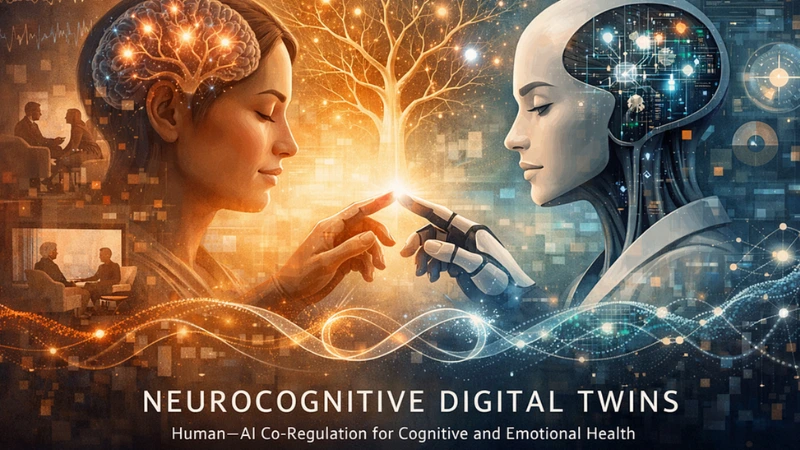
Neurocognitive Digital Twin: Human–AI Co-Regulation at the Intersection of GenAI, Psychotherapy, and Neurotherapy
Mental health care is entering a moment of quiet but profound transition. Psychotherapy has always...