

Predictive Analytics in Public Health: Preventing Illness Before It Begins
Most healthcare systems were built to respond.
A patient feels unwell -> Symptoms worsen -> An appointment is scheduled -> Tests are ordered -> Treatment begins.
This model has saved millions of lives. But it is fundamentally reactive. We wait for something to go wrong before we intervene.
Now imagine a different scenario.
A public health department identifies rising indicators of respiratory distress across a specific neighborhood before emergency rooms begin filling. A regional health authority detects early risk markers for Type 2 diabetes across a population years before formal diagnosis rates increase. Policymakers allocate targeted funding to community prevention programs before hospital admissions spike.
Nothing dramatic has happened yet. But the system already knows something is shifting.
This is the promise of predictive analytics in public health. We are moving from reaction to anticipation.
From Treatment to Foresight.
Predictive analytics uses machine learning and statistical modeling to identify patterns in large datasets where patterns are often invisible to the human eye. In public health systems, these datasets may include electronic health records, demographic trends, environmental data, wearable device metrics, prescription histories, and social determinants of health.
When analyzed responsibly, this information can help forecast:
The goal is not to replace clinicians or policymakers. It is to equip them with foresight.
Public health has always been about prevention through vaccination programs, sanitation systems, and early screening initiatives. What predictive analytics does is enable prevention at scale and with precision.
Instead of broad, generalized interventions, health authorities can design targeted, data-informed strategies that reach the right communities at the right time. Funding decisions become proactive rather than reactive. Infrastructure planning becomes strategic rather than crisis-driven.
Anticipation as Policy.
There is something deeply transformative about prevention when it becomes embedded in policy.
When governments allocate resources before hospitals are overwhelmed, systems stabilize. When community health programs are funded based on predictive modeling rather than historical lag, disparities can be addressed earlier. When public health surveillance integrates real-time analytics, emergency response becomes coordinated rather than chaotic.
Predictive analytics transforms data from a record of what happened into insight about what might happen.
Consider chronic diseases such as heart disease or diabetes. By the time symptoms appear, physiological changes may have been progressing for years. Predictive models can identify subtle combinations of risk through lifestyle factors, access barriers, environmental conditions, long before traditional screening thresholds are met.
For policymakers, this means the opportunity to shift budgets toward prevention programs, nutrition initiatives, urban planning improvements, and community outreach long before acute care costs escalate.
This does not eliminate uncertainty. It reduces blind spots.
And in public health policy, reducing blind spots strengthens resilience.
Beyond Outbreak Detection.
The global pandemic brought predictive modeling into public awareness. Forecasting infection spread, hospital capacity needs, and vaccine distribution strategies became part of daily decision-making.
But predictive analytics extends far beyond infectious disease management. It can:
Each of these applications informs policy decisions right from infrastructure investments to workforce planning.
The value lies not just in technological capability, but in timing. Intervention before escalation changes both outcomes and costs.
The Ethical Responsibility of Prediction.
With predictive power comes responsibility.
Health data is deeply personal. Models are only as equitable as the data used to train them. Historical inequities in healthcare access can become embedded in algorithms if governance structures are not intentional.
If underserved communities have historically received less care, predictive systems may inadvertently reinforce disparities rather than correct them.
This is why predictive analytics must be guided by strong public policy frameworks. Responsible implementation requires:
Prediction should inform public policy, not quietly shape it without scrutiny.
Technology can highlight patterns. It cannot replace ethical judgment, public accountability, or democratic decision-making.
Building Trust in Data-Driven Governance.
Public health depends on trust.
If communities fear misuse of their data, participation declines. If clinicians distrust predictive tools, adoption stalls. If policymakers rely blindly on algorithms without understanding limitations, credibility erodes.
Trust is built when systems are explainable and accountable. Health leaders must be able to answer:
Predictive analytics should function as steady, transparent, and accountable infrastructure rather than as an invisible authority.
When implemented thoughtfully, it becomes a policy asset that quietly strengthens decision-making at every level of government.
A Shift in Public Health Strategy.
Perhaps the most significant transformation is not technological, but strategic.
Reactive systems operate in cycles of crisis and recovery. Predictive systems operate in cycles of monitoring and prevention.
One waits for strain to appear. The other watches for subtle signals.
This shift requires investment in digital infrastructure, interdisciplinary training, ethical oversight, and long-term planning. It requires leaders who understand both algorithms and accountability. It requires policymakers willing to prioritize prevention even when results are less visible than emergency response.
But the return on that investment is profound.
Health systems become less overwhelmed.
Communities receive support earlier.
Resources are allocated more efficiently.
Public spending becomes more sustainable.
Prevention may not always command headlines. But it shapes stability.
The Future of Public Health Policy.
Predictive analytics will not eliminate illness. It will not remove uncertainty. And it will not resolve structural challenges overnight.
What it can do is provide earlier visibility for those responsible for protecting public wellbeing.
Earlier visibility enables earlier policy intervention.
Earlier intervention reduces severity.
Reduced severity protects both lives and systems.
Public health has always been about creating conditions in which people can thrive. Clean water systems, vaccination programs, and safety regulations were once transformative innovations. Today, they are foundational.
Predictive analytics may become the next foundation.
Not because it is novel. But because it allows governance to be proactive rather than reactive.
In a world shaped by climate change, aging populations, urban density, and global mobility, waiting for problems to manifest is increasingly costly.
Anticipation is becoming a form of care.
And for policymakers committed to sustainable, equitable health systems, predictive analytics offers not just technological advancement, but strategic foresight.
- Share

Dr. Manisha SG Krishnan
Dr. Manisha S. G. Krishnan is a Computer Science educator and researcher specializing in artificial intelligence and emerging technologies in education and healthcare. With over a decade of experience in higher education, she focuses on the ethical and policy implications of data-driven systems. Her work explores how AI can strengthen decision-making, resilience, and long-term institutional wellbeing.

Blue Light Glasses: Fact or Fiction for Better Sleep?
As Canadians spend more time than ever staring at screens—with 72% clocking over 8 hours daily on digital devices...

Wearable Tech: Are Fitness Trackers Helping or Hurting Your Body Image?
“By the time you finish reading this sentence, your fitness tracker has likely logged another dozen steps.” In my own experience...

Ergonomics for the Hybrid Worker: Avoiding the Couch-Slouch
You're on a video call from your kitchen table, laptop propped on a stack of cookbooks, neck craned forward...

Digital Detox Weekends: Reclaiming Your Attention Span
So, if perusing your weekly screen time report is like binge-watching, well, you are certainly in good company...

The Predictive Mind: When Generative AI Learns to Anticipate Human Thought
Why Generative AI’s Next Evolution Is Anticipation, Not Automation. Medicine has always been...
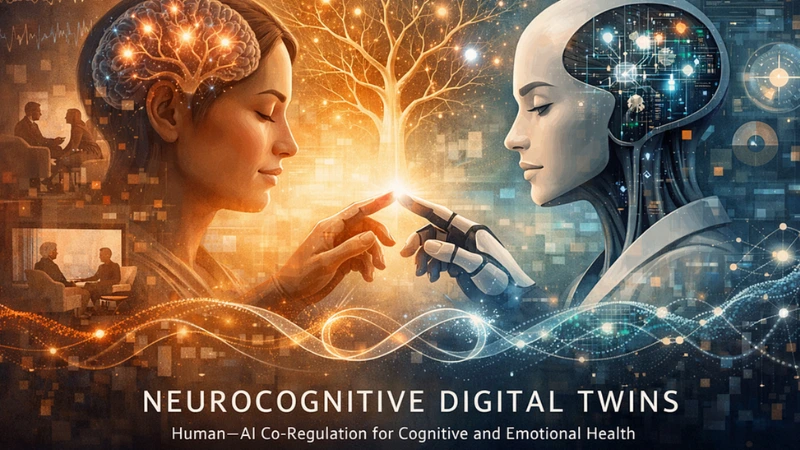
Neurocognitive Digital Twin: Human–AI Co-Regulation at the Intersection of GenAI, Psychotherapy, and Neurotherapy
Mental health care is entering a moment of quiet but profound transition. Psychotherapy has always...