
Digital Detox Weekends: Reclaiming Your Attention Span
So, if perusing your weekly screen time report is like binge-watching, well, you are certainly in good company. We have all had that moment of “tech-induced vertigo” when we suddenly grasp the fact that we have spent more time perusing other people’s vacations than actually living our own. The problem, however, is that this “hum” is not just a personality quirk, but actually a biological toll on the brain and the body. The silver lining, however, is that science is now indicating that taking a “time-out” from technology is the answer to rebooting the hardware in your head.
Your Brain is an Overheated Laptop: The Science of Digital Overload.
Think of your brain as a high-powered laptop. When you’ve got fifty tabs open, from email to social media to news notifications, and that one random Wikipedia page about poutine, the fan is screaming, and the whole thing comes to a grinding halt. This is what researchers call “cognitive overload.” Research has demonstrated that when we are constantly immersed in the digital world, not only are our attention spans fatigued, but they are, in fact, depleted.
In one study, a staggering 80% of university students reported that they used their smartphones for more than four hours a day every single day. This, of course, puts one into a state of “Chronic Overstimulation.” But if people choose to take a step back from this “digital noise,” then “Attention Restoration” happens. This is not just a “feel-good” theory; this is actually letting your brain’s cognitive resources recharge, just like letting that overheated laptop cool down in a quiet room.
Evicting Stress Rent-Free: Why Digital Detox Lowers Your Cortisol.
Stress is often thought of as a mental battle, and while that is certainly true, the body also keeps a remarkably detailed scorecard. When we’re glued to our phones, our “smoke alarm,” or the HPA axis, is often stuck in a state of high alert. Scientists recently put this to the test among medical students, or “the ultimate keeners,” to use a Canadian expression for those who are ultra-competitive.
The results, after just two weeks without any digital distractions, were astounding. The students experienced an 18 percent reduction in morning cortisol levels, or the body’s main stress hormone. The really impressive numbers, though, were for the “nightclub bouncer” of the body, or the immune system. Inflammation markers such as CRP and Interleukin-6 (IL-6) fell by 40 percent. In other words, by unplugging, these students didn’t just become less stressed; they literally began healing from the inside out.
Breaking Up with Your Wi-Fi: Managing Nomophobia and Netlessphobia.
If the thought of going outside without your phone makes your heart skip a beat, then you may be suffering from “nomophobia,” or no-mobile-phone phobia. Or perhaps you are suffering from “netlessphobia,” that particular kind of fear that strikes when the WiFi bars are gone. These are no longer just modern phenomena; these are actual anxiety responses to disconnection.
The research indicates that a digital detox is actually a form of exposure therapy. “By engaging in this self-regulation strategy, the brain can develop a kind of ‘psychological tolerance.’ While the initial three days may be a bit of a struggle, like kicking a sugar habit, the ‘digital craving’ soon passes.” Students who did this self-regulation strategy felt significantly more peaceful and less distracted, proving that one doesn’t need to be “connected” to be whole.
Fill Your Boots with Real Life: The Power of Alternative Activities.
Perhaps one of the most interesting findings in the latest crop of “detox” studies is that once the phone is tucked away in the drawer, half the battle is won. The other half is getting on with some “alternative activities.” These are the magic things that will get the brain back on track. This is supported by the “Attention Restoration Theory,” which argues that natural environments are particularly good at restoring our brains to normal after the “focused concentration” demanded by our devices.
Medical students in the study found that when they added things like mindfulness and social time with peers to their screen time detox, they had the greatest improvement in heart rate variability. This is an important marker of a strong nervous system. It turns out that the “mental reset” is much easier to accomplish when one is actually doing something.
Why It Matters: Reclaiming Your “True North” and GPA.
Beyond the immediate stress-relieving benefits, the idea of digital detox is about “eudaimonic well-being,” or, in plain English, living life with purpose and self-enhancement. Without the distraction of every “ping” and “buzz,” you have the mental energy to focus on what really matters.
Perhaps the greatest benefit of digital detox is reserved for students. Those who practice digital detox have been shown to have significantly higher GPAs. By removing the small but regular interruptions to study time brought on by smartphones, they are more effective learners. Are you a student or a professional? Either way, having an attention span is having the ability to perform at peak levels. So why not give it a try this weekend? Give yourself a little “technology sabbath.” Your brain – and your “bouncer” – will thank you.
Key Takeaways.
Reference:
Farrukh, S., Reza, S., Babar, S., Alam, M. F., & Imtiaz, M. (2025). From screens to serenity: evaluating the effect of digital detox on mental and physiological health. BMC Medical Education, 25(1), 1738.
Kolhe, D., & Naik, A. R. (2025). Digital detox as a means to enhance eudaimonic well-being. Frontiers in Human Dynamics, 7, 1572587.
Özbay, Ö. (2026). ‘Brain Rot’Among University Students in the Digital Age: A Phenomenological Study. Current Psychiatry Reports, 28(1), 11.
Disclaimer:
This article is for informational and educational purposes only and does not constitute medical advice. It should not be taken as a medical diagnosis or treatment.
Always consult with a qualified healthcare professional for personalized medical guidance.
- Share

Magazica Editorial Team
Magazica is a dedicated platform for businesses, subject matter experts, health advocates, and various sectors within the health industry. At Magazica, we are committed to sharing the latest health information and developments with our audience. We serve as a gateway for health-related businesses to showcase their progress and advancements, demonstrating how they contribute to enhancing people's wellness.
Blue Light Glasses: Fact or Fiction for Better Sleep?
As Canadians spend more time than ever staring at screens—with 72% clocking over 8 hours daily on digital devices...
Wearable Tech: Are Fitness Trackers Helping or Hurting Your Body Image?
“By the time you finish reading this sentence, your fitness tracker has likely logged another dozen steps.” In my own experience...
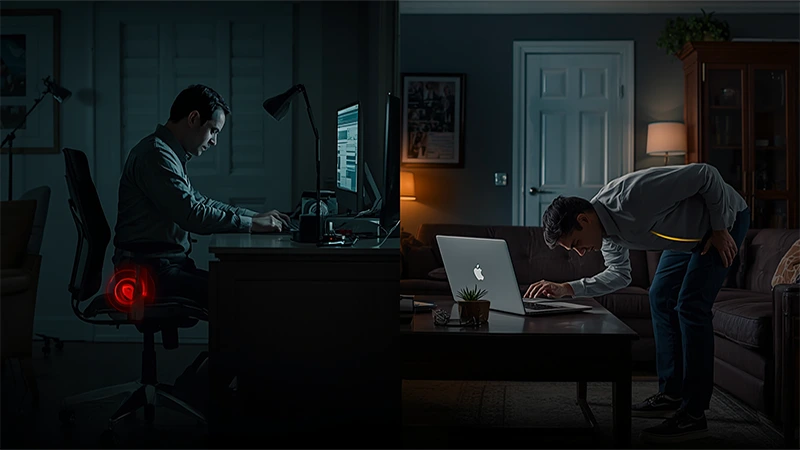
Ergonomics for the Hybrid Worker: Avoiding the Couch-Slouch
You're on a video call from your kitchen table, laptop propped on a stack of cookbooks, neck craned forward...

Predictive Analytics in Public Health: Preventing Illness Before It Begins
A public health department identifies rising indicators of respiratory distress across a specific neighborhood...
The Predictive Mind: When Generative AI Learns to Anticipate Human Thought
Why Generative AI’s Next Evolution Is Anticipation, Not Automation. Medicine has always been...
Neurocognitive Digital Twin: Human–AI Co-Regulation at the Intersection of GenAI, Psychotherapy, and Neurotherapy
Mental health care is entering a moment of quiet but profound transition. Psychotherapy has always...