Plant-Based Proteins: Fueling Muscle Recovery Naturally
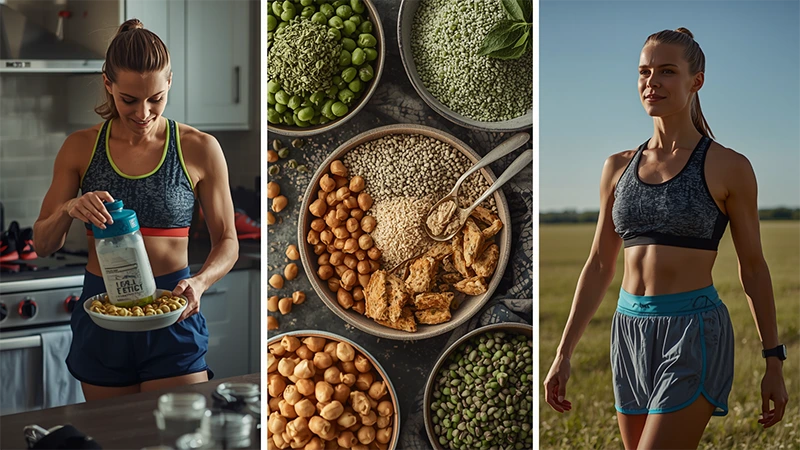
Whether you’re a weekend cyclist, a hockey player recovering from hard practice, or a gym-goer trying to maintain muscle as you age, what you eat after exercise matters.
For decades, animal-based proteins — especially whey —dominated the sports nutrition conversation. But the shift is underway. Science-backed Canadian researchers are leading it.
Canada’s Dietary Shift.
The push toward plant protein in Canada is national policy. In January 2019, Health Canada released a landmark revision to Canada’s Food Guide, consolidating all proteins into a single “protein foods” category with one clear directive: choose plant-based protein foods more often (Health Canada, 2019).
Legumes, nuts, seeds, tofu, and fortified soy beverages were elevated as preferred sources, driven by evidence linking plant-forward diets to reduced risks of cardiovascular disease and type 2 diabetes, as well as a lower environmental footprint.
The shift is not without challenges. Research involving institutions including McMaster University, the University of Guelph, and the University of Alberta found that most Canadian adults derived roughly two-thirds of their protein from animal sources in 2015 — meaning the Food Guide’s vision requires a significant dietary overhaul.
The same researchers flagged older adults and women face the highest risk of protein inadequacy during this transition, underscoring the need for smart plant protein choices (Fernandez et al., 2020).
What Protein Does for Recovering Muscles.
After resistance exercise, microscopic damage to muscle fibres triggers the body to synthesize new proteins — a process called muscle protein synthesis (MPS). Dietary protein supplies the essential amino acids (EAAs) needed to drive this repair, with leucine playing a particularly important signaling role in activating the cellular machinery behind muscle building.
Animal proteins like whey have long been considered superior for MPS because they are rich in leucine, rapidly digested, and contain a full EAA profile. Most plant proteins, by contrast, are lower in leucine and limited in one or more EAAs — pea protein, for instance, is low in methionine and cysteine.
The question Canadian researchers have been tackling: are these limitations fundamental, or can they be overcome?
McMaster University: Closing the Gap.
Nowhere in Canada has plant protein research been more productive than at McMaster University in Hamilton, Ontario. Dr. Stuart Phillips and his Exercise Metabolism Research Group have produced findings that are reshaping sports nutrition science.
In a 2024 study published in Current Developments in Nutrition, McMaster researchers tested a blend of 88% pea protein and 12% canola protein — a pairing chosen because canola’s high sulfur-containing amino acids compensate for pea protein’s relative deficiency. The key finding: when leucine was added to match whey’s leucine content, the plant blend stimulated MPS at comparable rates to whey in young men and women. Strategic blending and leucine fortification can close the gap between plant and animal proteins (Lim et al., 2024).
A second 2024 McMaster trial, published in the American Journal of Clinical Nutrition, examined men aged 65–80 in a double-blind randomized controlled study. Participants supplemented either whey, pea, or collagen protein above the recommended dietary allowance (RDA). Both whey and pea significantly increased integrated MPS rates; collagen did not.
The researchers concluded that pea protein — alongside whey — represents a viable strategy to combat age-related muscle loss in older Canadians (McKendry et al., 2024).
Practical Guidance: Best Plant Proteins for Recovery.
Given the research, a few plant proteins stand out:
Pea protein is the frontrunner — rich in branched-chain amino acids, widely available, and backed by strong clinical evidence. Canadian company Merit Functional Foods (Winnipeg) supplies high-purity pea isolates used in McMaster’s own research.
Soy protein is a well-studied complete protein that performs reliably across multiple recovery metrics.
Pea-rice or pea-canola blends are smart choices, as combining sources fills amino acid gaps that exist in any single plant protein.
For timing, aim for 20–40 grams of high-quality protein within two hours of exercise, though total daily protein intake is the more important variable overall.
A Balanced Aproach.
It would be misleading to suggest plant proteins are a perfect one-for-one swap for whey. A 2025 systematic review found that single-source plant proteins often fell short of whey in reducing delayed-onset muscle soreness within 48–72 hours post-exercise. However, blended plant formulations — exactly what McMaster’s research champions — consistently narrowed that gap. The science is rapidly evolving, and Canada is helping to write it.
The takeaway.
Plant-based proteins are no longer a compromise — they are a credible strategy for muscle recovery. Backed by national dietary policy, world-class research from McMaster and partner institutions, and a domestic pulse crop industry among the largest in the world, Canada is uniquely positioned at the intersection of this nutritional shift. For active Canadians, the message is clear: choose wisely, blend smartly, and the plants will deliver.
References.
- Health Canada (2019). Canada’s Food Guide — Dietary Guidelines for Health Professionals and Policy Makers. Government of Canada. https://food-guide.canada.ca/en/guidelines/section-1-foundation-healthy-eating/
- Fernandez, M.A. et al. (2020). Translating “protein foods” from the new Canada’s Food Guide to consumers: knowledge gaps and recommendations. Applied Physiology, Nutrition, and Metabolism, 45(12), 1311–1323. [University of Alberta, McMaster University, University of Guelph, UBC, Université Laval, University of Manitoba] https://doi.org/10.1139/apnm-2020-0192
- Lim, C. et al. (2024). Muscle Protein Synthesis in Response to Plant-Based Protein Isolates With and Without Added Leucine Versus Whey Protein in Young Men and Women. Current Developments in Nutrition, 8(6), 103769. [McMaster University, Hamilton, Ontario] https://doi.org/10.1016/j.cdnut.2024.103769
- McKendry, J. et al. (2024). The effects of whey, pea, and collagen protein supplementation beyond the recommended dietary allowance on integrated myofibrillar protein synthetic rates in older males: a randomized controlled trial. The American Journal of Clinical Nutrition, 120(1), 34–46. [McMaster University; University of Ottawa] https://doi.org/10.1016/j.ajcnut.2024.05.009
- Share

Magazica Editorial Team
Magazica is a dedicated platform for businesses, subject matter experts, health advocates, and various sectors within the health industry. At Magazica, we are committed to sharing the latest health information and developments with our audience. We serve as a gateway for health-related businesses to showcase their progress and advancements, demonstrating how they contribute to enhancing people's wellness.

The Toll Booth and the Meter: What Canning and Freezing Actually Cost Your Vegetables
What canning and freezing really do to nutrients, why heat sometimes helps, and the acidity rule that keeps...
Farmers’ Market Feasts: Maximizing Local Summer Produce
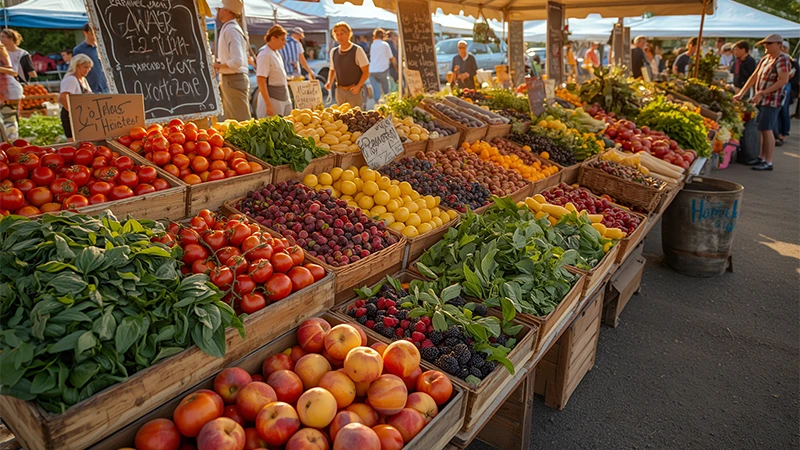
There is a moment in the Canadian summer—brief, golden, and intensely flavourful—when the farmers' market becomes...

Hydration Hacks: Beyond Plain Water for Summer Sweat Sessions
Canada's summers pack a punch. From the humidity of southern Ontario to the dry heat rolling across the Prairies...
The Gut-Brain Connection: How Early Spring Produce Feeds Your Mood
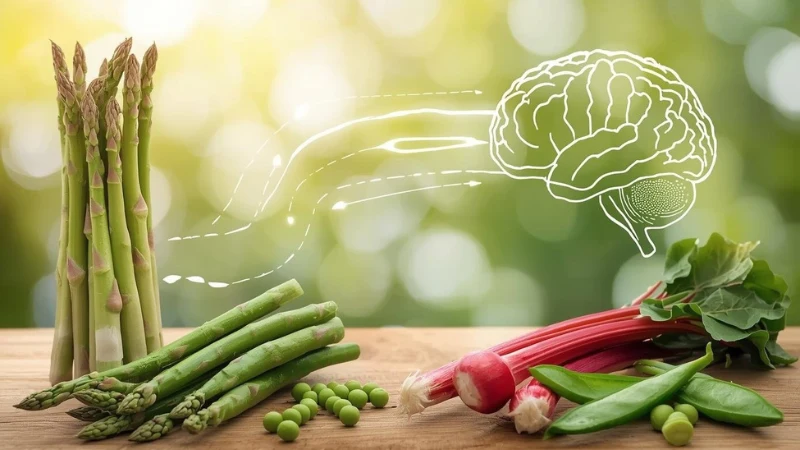
Do you feel weird this time of year? Canadian asparagus, peas, and rhubarb can fix that. You know that feeling...

Mindful Eating 101: Slowing Down, Chewing Thoroughly and Telling True Hunger From Emotional Cravings
In a world of constant multitasking and rushed meals, many of us finish a plate before our brains have even...

Food and Nutrition in Transition: From Food Security to Plant Proteins
Nutrition underpins health and longevity. Canadians’ dietary habits are...