
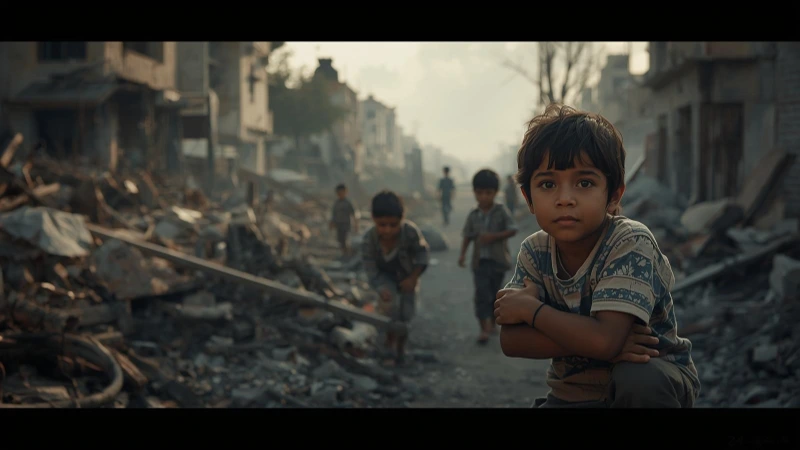
The Weight of a Thousand Miles: Why War’s Greatest Toll Is the Hearts of Our Children
Imagine if your biggest worry today wasn’t a deadline at work or a bill in the mail, but whether the ceiling of your home would still be there when you wake up tomorrow.
The Invisible Scars on the Mind.
War is never just about the physical destruction we see on the evening news; the most serious damage happens inside the minds of children who have no choice but to endure it. Recent studies show that nearly 32% of Ukrainian adolescents screen positive for moderate to severe depression, while 17.9% struggle with significant anxiety.
We must recognize that mental health is a fundamental human right, and for children of war, the psychological burden is often heavier than any physical wound.
Beyond the immediate fear of conflict, the long-term mental health burden can persist for years after a child reaches safety. In East Africa, research reveals a staggering 47.8% prevalence of PTSD among children exposed to armed conflict, highlighting how trauma can linger long after the guns fall silent.
True healing requires a long-term commitment to mental health support that extends far beyond the initial period of resettlement.
A Childhood Interrupted.
The most basic need of any child is a sense of predictable safety, yet war replaces that foundation with chaos and separation. During conflicts, children are frequently ripped away from their parents, a trauma that research shows has consistently negative effects on their social-emotional development and future well-being.
A child’s sense of security is built on the presence of their loved ones; when that bond is broken, their entire world feels unsafe.
When children are forced to flee their homes, they lose more than just a house – they lose their schools, their friends, and their routines. This “displacement trauma” creates a cumulative burden of stress that can lead to significant delays in cognitive and social development if not addressed early.
Stability is the soil in which children grow; without it, meeting developmental milestones becomes an uphill battle.
The Ripple Effect of Family Stress.
Children are like mirrors, often reflecting the trauma and stress held by the adults who care for them. Evidence suggests that war-related trauma can impact children indirectly through the family system, where a parent’s own distress can lead to difficulties in the parent-child relationship.
To effectively help a child recover from war, we must also provide the resources and support necessary to help their parents heal.
The way a parent interacts with their child during and after a conflict is a major predictor of the child’s long-term adjustment. Studies indicate that helping parents maintain warmth and limit harshness, even amidst the atrocities of war, acts as a critical protective shield for a child’s mental health.
Compassionate parenting is one of the strongest tools we have to foster resilience in the face of adversity.
Building Bridges to Resilience.
Resilience isn’t just something a child is born with; it’s something we build together through community and school support. Schools in Canada and around the world play an essential role in helping newcomer youth feel valued and connected, which is a key ingredient in “bouncing back” from the horrors of war.
Inclusion and a sense of belonging in our local communities are the best medicines for a heart burdened by war.
Effective recovery requires a “trauma-informed” approach that prioritizes emotional safety and helps children rebuild a sense of control over their lives. This includes everything from psychological first aid to creating safe places where children can simply be children again through play and interaction.
Small, concrete acts of kindness and structured routines are the building blocks of a new, safe reality for war-affected learners.
References.
Aloka, P. J. O., Ajayi, O., Zindoga, L., & Mnyamana, N. (2025). Psychosocial impact of war on the social and emotional development of young learners – An integrative review of literature. Perspectives in Education, 43(2), 5–19.
DOI:10.38140/pie.v43i2.8282
Bürgin, D., Anagnostopoulos, D., Vitiello, B., Sukale, T., Schmid, M., & Fegert, J. M. (2022). Impact of war and forced displacement on children’s mental health—multilevel, needs-oriented, and trauma-informed approaches. European Child & Adolescent Psychiatry, 31, 845–853. https://doi.org/10.1007/s00787-022-01974-z
Elvevåg, B., & DeLisi, L. E. (2022). The mental health consequences on children of the war in Ukraine: A commentary. Psychiatry Research, 317, 114798. https://doi.org/10.1016/j.psychres.2022.114798
Goto, R., Skokauskas, N., et al. (2024). Mental health of adolescents exposed to the war in Ukraine. JAMA Pediatrics. Advance online publication. https://doi.org/10.1001/jamapediatrics.2024.0295
Hazer, L., & Gredebäck, G. (2023). The effects of war, displacement, and trauma on child development. Humanities & Social Sciences Communications, 10, 861. https://doi.org/10.1057/s41599-023-02438-8
McElroy, E., Hyland, P., Shevlin, M., Karatzias, T., Vallières, F., Ben-Ezra, M., Vang, M. L., Lorberg, B., & Martsenkovskyi, D. (2024). Change in child mental health during the Ukraine war: Evidence from a large sample of parents. European Child & Adolescent Psychiatry, 33, 1495–1502. https://doi.org/10.1007/s00787-023-02255-z
Adugna A, Abebe GF, Alie MS, Girma D. Post-traumatic stress disorder among children and adolescents affected by armed conflict in East Africa: a systematic review and meta-analysis. BMJ Paediatrics Open. 2026;10:e004100. https://doi.org/10.1136/bmjpo-2025-004100
Vostanis, P. (2024). Mental health provision for children affected by war and armed conflicts. European Child & Adolescent Psychiatry, 33, 3293–3299.
https://doi.org/10.1007/s00787-024-02492-w
- Share

Magazica Editorial Team
Magazica is a dedicated platform for businesses, subject matter experts, health advocates, and various sectors within the health industry. At Magazica, we are committed to sharing the latest health information and developments with our audience. We serve as a gateway for health-related businesses to showcase their progress and advancements, demonstrating how they contribute to enhancing people's wellness.
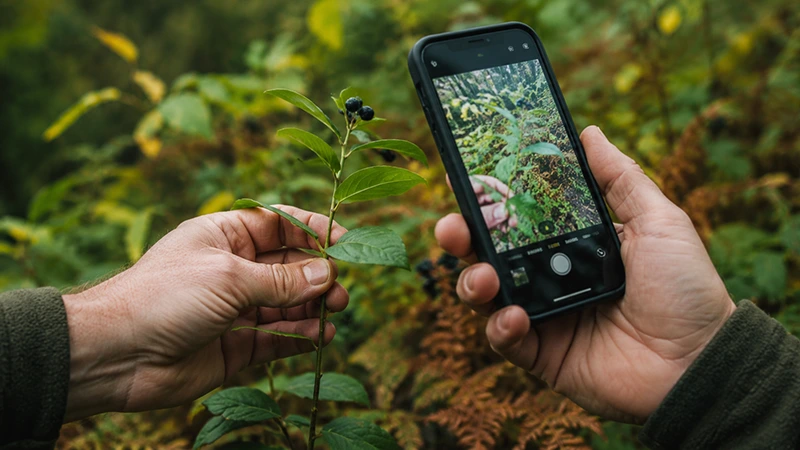
Nature’s Unlabelled Aisle: What Late-Summer Foraging Asks of You Before You Eat Anything
Late-summer foraging explained: why there is no shortcut test, what apps get wrong, how the knowledge is really learned...

Saving Lives Before Symptoms Strike: How Dr. David Messika‑Zeitoun Is Transforming Heart Valve Care in Canada
Dr. David Messika-Zeitoun is a global leader in valvular heart disease, combining scientific precision with deeply...
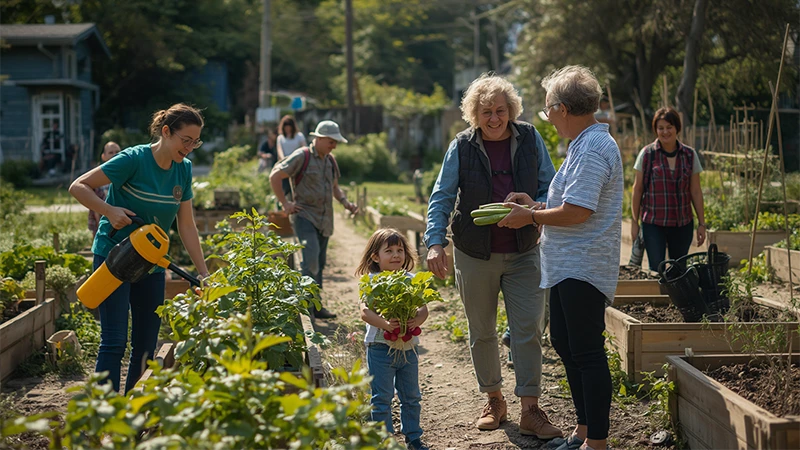
Community Gardens: Cultivating Food and Neighbourhood Bonds
On a sunny Saturday morning in many Canadian neighbourhoods, a community garden is one of the liveliest places...

Indigenous Canoe Journeys: Healing Through Water and Tradition
Think of a river upon which no cedar canoe had set foot for more than a hundred years. Not due to any changes in the...
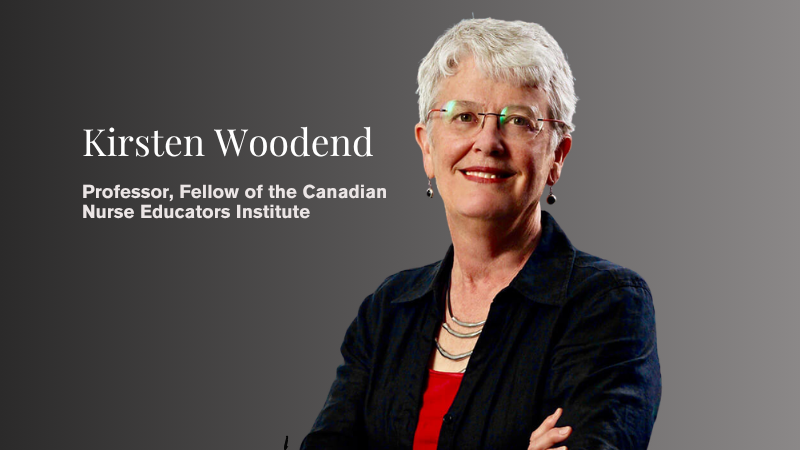
Living Fully, Caring Deeply: Kirsten Woodend on Nursing, Loss, Resilience, and the Power of Human Connection
Some people spend a lifetime mastering a craft. Others spend a lifetime mastering what it means to be human...
Breaking the Stigma: Community Initiatives for Youth Mental Health in Canada
There is a quiet crisis unfolding in communities across Canada — one that doesn't always make the front page but...