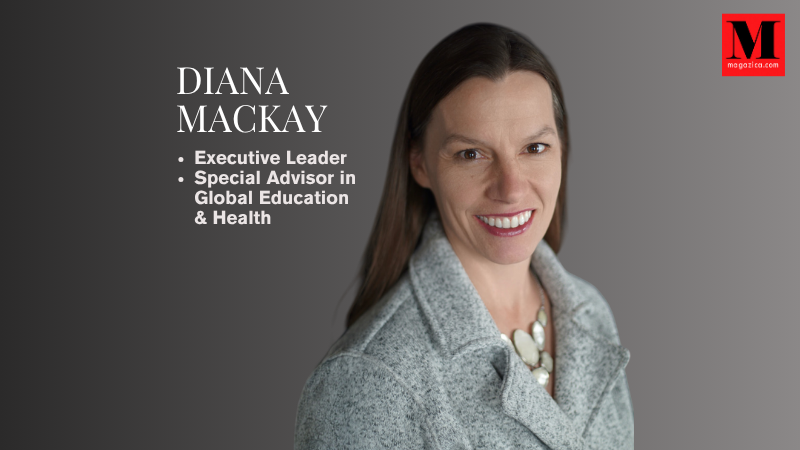
Diana Gifford-Jones on Global Health, Education, and Carrying Forward the Legacy of Dr. W. Gifford-Jones, MD (Dr. Ken Walker)
Imagine a voice that bridges the worlds of health, education, and human resilience—a voice sharpened by decades of global leadership and personal legacy. Diana MacKay, daughter of the fearless Canadian health columnist W. Gifford-Jones, MD, has spent over 25 years shaping conversations that matter: how we learn, how we live, and how we care for one another. From the World Bank to Canadian universities, her work connects ideas to action and people to purpose. In this candid conversation, Diana reveals lessons from her father, insights from her career, and a vision for building healthier, fairer systems worldwide. According to her, “I was deeply influenced by the conversations we shared—often around the kitchen table—about the importance of preventative health and questioning conventional wisdom. My father encouraged me to think critically and to approach challenges with both curiosity and compassion, which ultimately shaped my path in advocating for change beyond clinical practice.” Let us dive in.
Magazica: Dear viewers and readers, today we welcome someone whose work sits at the powerful intersection of education, health, and human resilience. Diana Gifford-Jones has spent over 25 years shaping global conversations around how we learn, how we live, and how we care for one another. From her leadership at the World Bank to her work with Canadian universities and global health institutions, Diana has built a career on connecting ideas to action and people to purpose.
But today’s conversation carries a deeper resonance. Just days ago, Diana lost her father, beloved and known to millions as W. Gifford-Jones, MD. For over five decades, Dr. Gifford-Jones was a fearless voice in Canadian health journalism, a champion of common-sense medicine, and a tireless advocate for patient rights. His columns, books, and bold opinions shaped public discourse and inspired generations to take charge of their own health.
Now Diana continues that legacy—not just as a daughter, but as a thought leader in her own right. Through her writing, advocacy, and leadership, she is helping to carry forward the values her father stood for: courage, clarity, and compassion.
Ladies and gentlemen, let’s dive into a deeper conversation with Diana. Diana, welcome to Magazica.
Diana Gifford-Jones: Thank you very much.
Magazica: We’ve seen your profile and your work spanning over 25 years across continents and institutions. Was there any personal experience or moment with your father that first lit the fire for your work in education and health?
Diana Gifford-Jones: Looking back, I suppose the fire might best have been lit if I had become a doctor like my father. But from the time I was a little girl—and still to this day—I’m extraordinarily squeamish when it comes to blood.
My father was a gynecological surgeon, and that involves being comfortable in the operating theater. That was my understanding of what it meant to be a doctor, so I never pursued it. Now, I’m deeply involved in many aspects of health and healthcare. It would have been terrific if I’d had the early motivation to study anatomy, biology, chemistry—all the things that are so important now, especially as we see advances in science and medicine leaping into new frontiers.
But for me, it was more a story of observing my father’s energy, feeling it within me, and wanting to do something exciting and different. I ran off to do it, without a strong early connection to medicine.
Magazica: Your father, W. Gifford-Jones, was a bold and beloved voice in Canadian health. This is a very emotional and relevant moment, especially in light of the discoveries you’ve just mentioned. What lessons from his life and work inspire you most and are ones you want to carry forward?
Diana Gifford-Jones: One of the most inspiring aspects was his passion for natural health. He was an anti-establishment medical doctor—a maverick. That’s not to say he didn’t pursue perfection in his craft as a traditional doctor and surgeon, but he was always deeply respectful of the importance of natural health.
He believed in looking first to common-sense solutions that didn’t involve high-tech pharmaceutical products. He was very cautious about those and considered them only as a second-order possibility. I’d like very much to pursue his passion for natural health.
Interestingly, that passion was closely tied to cardiovascular and heart health, which was really the core of his life’s work. Certainly, over the last 30 years, he has focused on questioning the immediate, knee-jerk solution of prescribing cholesterol-lowering drugs for heart disease. If you’ve read his work, you’ll see it shines in that regard.
He suffered a heart attack himself at 74—a really bad one that nearly killed him. His cardiologists all encouraged him to take cholesterol-lowering drugs. Some even said, “You won’t make it for two years if you don’t take those drugs.” But my father had interviewed Linus Pauling, the Nobel laureate who studied molecular and cellular science. Pauling was a strong advocate for the role of natural vitamin C.
So my father’s life’s work—understanding the role of vitamin C and other natural ingredients like lysine and magnesium in cardiovascular health—was instrumental to him. It gave him another 30 years of life, and it gave me 30 more years with him. I will definitely continue to pursue that work and convey to people that it’s not always a high-tech solution. Sometimes Mother Nature has a really good one for us.
Magazica: Regarding magnesium, my doctor is also a naturopath, so he believes in naturopathy and practices it if patients are willing. I was very willing. He told me magnesium plays a big role in cardiovascular health, but I had no clue about vitamin C.
It was from Dr. Gifford-Jones’ final book—Chris was kind enough to send it to me, Healthy Retirement Residence Living: What Does the Doctor Say?—that I first learned about vitamin C in detail. Right at the beginning of the book, he explained it. It was fascinating and eye-opening for me. I was really looking forward to having a conversation with him, but unfortunately, that wasn’t possible. Still, I was enlightened, as you mentioned, about the very big role vitamin C plays.
Diana Gifford-Jones: This speaks to another wonderful feature of my father—he always had an opinion. He certainly had one about vitamin C. It was often perceived as just that, an opinion. But what’s really interesting is that there has been a lot of research on vitamin C. The vast majority, however, is on microscopic doses—what my father would consider very small, like 90 milligrams. Health authorities around the world give recommendations based on immunity or basic day-to-day functioning.
But what my father, Linus Pauling, and select others were interested in was cardiovascular performance. For that, you need high doses—much higher than you’d normally get in your diet. That’s the part of his opinion I will carry forward. We need more research with high doses of vitamin C, and we need large-scale human trials to see if the findings of Dr. Pauling and others can be credibly validated. If so, we could throw cholesterol-lowering drugs out the door and give people a much cheaper, easier solution—one that doesn’t cause harm, is low-cost, and is accessible to everyone.
Magazica: Yes. And the book is written in such a conversational tone. I guess he was a very good sport in speaking and in conversation, because while I was reading, it felt as if I were listening to him right in front of me. His style—addressing “ladies and gentlemen” and then moving into the next thought—made me feel like he was speaking directly to me, not to a big audience. I felt like the only audience.
Diana Gifford-Jones: He was a real classic doctor in that sense—true bedside manner.
Magazica: Yes, I can totally see that. From reading his book, I imagine one of the fondest pictures of his life’s activity: him sitting in a chair, totally relaxed, sharing his ideas. Whether speaking to one patient, a small group, or a large audience, he seemed completely at ease. People would come away with new insights, often awed by what they heard. I think that must be one of the pictures you carry of your father, isn’t it?
Diana Gifford-Jones: Absolutely. And it’s a picture many people are writing to me about now. The tributes are pouring in—from past patients, past colleagues, people who heard him speak across the country, and even those who never met him but read his weekly column. They all say the same thing: “I feel like I’ve lost a member of my family.”
Magazica: Totally. I never met him personally, not even over Zoom, but whenever I was reading his book, I felt the same vibe. That’s why I mentioned earlier—it’s so conversational and fascinating.
Okay, moving on. You worked at the World Bank, and now you’re back on home soil, holding leadership roles on both national and global scales. How has your international experience shaped your approach? You’ve seen so much—worked with various nationalities, and every country’s healthcare system has its own character and tone. How have those experiences influenced your approach to health and education here in Canada?
Diana Gifford-Jones: For sure, it’s reminded me how lucky we are here in Canada. Sometimes, especially recently, we hear a lot of discourse about difficulties in finding a doctor, wait lists, and so on. But we have a wonderful system, and we need to be very grateful that it’s a proudly public system. Very few countries in the world have what we have.
That’s been made very clear to me. But we’re bankrupting it. My father underscored that point year after year. The epidemic of diabetes, the epidemics of poor lifestyle choices—these are causing costs to skyrocket, and they’re completely avoidable.
That’s the real pain in my heart about our system. We’ve got a beautiful healthcare system, but we’re not showing it the respect it deserves. We’re not taking the steps, as individuals or as a society, to protect it and ensure we don’t bankrupt it.
Magazica: Yes. And one of the major themes your father shared with so many other luminary doctors we’ve spoken to on this platform is that prevention is always better than cure.
Diana Gifford-Jones: Absolutely. Prevention is better than a cure. Unfortunately, what’s becoming clear to me is that even after a lifetime of making noise and having influence—in individual households and in the Canadian system—we’re still seeing trend lines moving in the wrong direction.
So advocacy alone is not enough. I look forward to getting into the trenches on what we can do to turn things around. That requires systems change, and it also requires individuals to think about their own lives—how they can live better, start early, and stick with it.
But we also need to put more pressure on larger stakeholders in our system—the ones who have created some of the challenges people are facing. That’s what I’m thinking about these days.
Magazica: I really like how you used and contextualized the word “advocacy.” That leads us to our next point. For many of our readers, education and health might seem like separate worlds, but in reality, they’re deeply connected. How do you see them working together to improve people’s lives—through advocacy, awareness, and how did your father’s philosophy influence that view?
Diana Gifford-Jones: The best answer I can give is in his column. Here was a medical doctor who, at a later stage of his life—around the age I am now—decided to become a journalist, a writer, and an educator.
It began back in the late 1950s, when he encountered women coming into his office who didn’t understand how their bodies worked. He realized he had work to do to educate women about their bodies and the basic procedures they could expect when they went to see a doctor. That’s when he wrote his first book on hysterectomy.
He had a flair for writing—or at least for reaching people. My mother, an English major, would say he had no flair for writing at all, because his style didn’t follow grammatical norms. But he had a gift for connecting with people. That’s why he was invited to write a weekly newspaper column, which he did—and people loved it.
He married education and health beautifully. Not everyone can do that, but he chose to, and he did it very well.
Magazica: You’ve helped shape major partnerships and programs. Can you share a story where a seemingly small decision—something that might have looked trivial at the time, perhaps even inspired by your father’s no-nonsense, straight-to-the-point approach—ended up leading to a big impact?
Diana Gifford-Jones: That’s a good question. The occasion that comes to mind, and one I’m proud of, was when I was working at The Conference Board of Canada in Ottawa. We had a number of executive networks that convened leaders, and one of them was floundering. It didn’t have many members, and no one was paying much attention to it.
It was called the Roundtable on the Socioeconomic Determinants of Health. That’s a big set of words, but I understood what it was getting at—addressing health outcomes by looking at societal and economic factors. Without thinking too much, I got involved.
It turned out to be incredibly rewarding and impactful. We brought business leaders together with government and community leaders, and we started talking about what really drives health outcomes—beyond the things individuals can control, like diet and exercise. We are also shaped by the packaged food available in grocery stores, the way our communities are organized, how governments tax us, and what benefits they provide. These larger forces have an outsized influence on our lives.
My role wasn’t to dictate solutions but to bring people together. And from those conversations, some fantastic ideas emerged. One example was the recognition that companies filing taxes could play a huge role in health outcomes. It never occurred to me before that filing taxes would matter for low-income people who don’t owe any. But filing gives them access to benefits they’re entitled to.
H&R Block, for instance, offered free tax filing for low-income Canadians. That small service had a huge impact—helping people access benefits that could support them in getting back into employment or housing. It was a low-cost action for the company, but it made a massive difference for individuals and communities. That’s the kind of small, no-nonsense decision that can ripple outward in powerful ways.
Magazica: Oh, wow! I’m based in Toronto, and there’s actually an H&R Block office close to my house. I had no idea they did that.
Diana Gifford-Jones: I’m reaching back into the past now, but I hope they’re still doing it. And if they’re not, someone from H&R Block should hear this—because they ought to be. And so should other companies.
Magazica: I’ll definitely look into it, because that’s fascinating. And it’s exactly what Magazica is trying to do. We don’t always realize how many motivated, compassionate people are working to make lives better. We want to bring those stories of service to public knowledge. That’s the spirit of Magazica—what we stand for.
Let’s now go one layer deeper into the Canadian lens. What are some of the unique challenges—and opportunities—you see in Canada’s post-secondary or health education system when it comes to preparing students for a healthier, more resilient future?
Diana Gifford-Jones: I wish I had a happier story to tell here. I feel for our post-secondary institutions. On one hand, they’ve embraced the opportunity to provide wraparound services—housing, academic supports, and more. But when it comes to health supports, students have great needs.
Through lack of broader attention, we’ve downloaded responsibility onto colleges and universities to provide mental health supports. Students increasingly need them—especially after the pandemic, but really at any time, because this is such a difficult stage of life. It’s not surprising that students struggle with anxiety and other challenges.
But is that the role of a college or university? My preference would be that they focus on delivering education and skills training, with staff and experts dedicated to that mandate. Yet the reality is that institutions are now expected to respond to health issues as well. That’s a challenge.
And if we look earlier, at the K–12 level, we’re not doing what we should be doing either. Too often, schools send the wrong message—for example, that it’s okay to eat hot dogs or pizza for lunch. In my view, it’s not. Those foods are laden with salt, sugar, and unhealthy fats.
I admire the European model, where schools serve students a proper hot lunch at mealtime. We should be replicating that.
At the high school and post-secondary levels, we also need to do more around life skills training. Right now, we’re giving young people an education, but not enough tools to navigate life. In fact, I’d say we’ve done almost nothing in that regard. And that needs to change.
Magazica: I have some random thoughts about this. I usually jot them down in my pocket notebook, which I always carry with me. Before preparing for this interview, I flipped through its pages to see if any of those notes might connect with our conversation. I didn’t find one, but as you were talking about pizza lunches and so on, another thought struck me.
Should we really be putting vending machines in schools—stocked with chocolate bars, soda, and carbonated drinks?
Diana Gifford-Jones: This is exactly where I say we need to move from advocacy to action. We already know those things aren’t good for us. What astounds me is that companies producing soda drinks aren’t doing more themselves. I hope we’ll reach a tipping point where parents and young people realize these drinks are not healthy.
Let’s just take the soda industry as an example—but it could just as easily be vending machines filled with chocolate bars. These companies need to shift from positioning their products as everyday staples to positioning them as occasional rewards—say, after a hard workout. And beyond that, they should be in the business of providing healthier alternatives.
Magazica: Exactly. And we’re not trying to paint everyone as negative. But from the perspective of schools, parents, and teachers, the real question is: are we teaching our kids to make healthier choices about life? Isn’t that what your father, and now you, have always wanted for the next generation?
Diana Gifford-Jones: Absolutely. But the reality is that most people don’t invest in their health until it’s too late. There’s always a wake-up call. That’s why education is so important—we need to provide compelling evidence to young people in ways that encourage them to make healthy decisions early in life and stick with them.
Magazica: And this generation is smart. If we present the information in the right way, with the right statistics, I think they’ll follow along.
Diana Gifford-Jones: I hope so. I hope they get there soon.
Magazica: We all hope so—for the sake of the next generation. Now, shifting gears a little. You’ve built revenue-generating programs and led major initiatives. What’s one leadership lesson—perhaps passed on from your father, Dr. Gifford-Jones—that you wish more people knew? Just one, if you can.
Diana Gifford-Jones: I’d say it comes down to focusing on a good idea and addressing problems with solutions. My father had that in spades. He knew what he was doing with his life and what his work was going to be. That’s a wonderful gift—to focus on your passion, address problems with clarity, and pursue solutions with purpose.
Magazica: And in that connection, how do you bridge the gap for so many of our readers who want to make a difference but don’t know where to start? What advice would you give to someone who wants to contribute to global or local education and health without a formal background?
Diana Gifford-Jones: I tell people to read more—and to put down their phones. Read the old-fashioned way. I know I sound a bit old-fashioned myself, but I think it’s good advice. Even last night, I told my husband I was going to read, but the pull of my phone was strong. These devices are powerful influences.
If you want to have an impact—whether in global health or anything else—read more. Read widely. Read locally. Read globally. Find what interests you and pursue it. That’s how you’ll discover your passion. Once you do, you won’t need to look any further—you’ll find it, and you’ll enjoy it.
Magazica: Yes, and reading also does a great service to us. It slows us down. Instead of scrolling or rushing from email to email, a book forces us to settle into an idea, to sit with the words, to have a conversation with the author.
Diana Gifford-Jones: Exactly. Be authentic.
Magazica: That steadiness, that slowness—it keeps us grounded. I’d even say it makes us more sane.
Diana Gifford-Jones: More sane, more settled. And we all need more of that these days.
Magazica: Truly. Especially with the economy and the broader socioeconomic turbulence we’re facing. Which brings me to my next point. Let me batch two questions together: how do you see the role of innovation, and how do you see resilience in systems—particularly how technology is reshaping how we learn and live? We’re living in times of change and uncertainty. We’ve already touched on book reading as one way to ground ourselves. How do you see these forces shaping a better way of living?
Diana Gifford-Jones: You know, a lot of people are excited about innovation, technology, and systemic change. And while I share some of that excitement, it also frightens me a little.
All this innovation and technology—it’s certainly going to result in wonderful discoveries, and that’s the promise. But I worry that we’re innovating too quickly. The pace of change is so fast that we don’t have time to stop, reflect, and consider the consequences—or even study them. That leaves us living in an increasingly dangerous environment and society.
I wish we could spend more time studying innovation from every angle before rushing ahead. In healthcare, for example, there’s great promise that machine learning and AI will accelerate the discovery of cures for diseases. Scientists and labs everywhere are hoping for breakthroughs—like a cure for cancer or the cause of Alzheimer’s. But we’ve been hoping for a while, and the big discoveries haven’t come yet.
The promise is still there, and we’ll cheer on everyone working to crack those mysteries. But in day-to-day life, the breakneck speed of change is overwhelming. For young minds especially, the flood of information isn’t healthy. We all know it, and we’re struggling to manage it. That’s where we need to focus more effort.
Magazica: Yes, I couldn’t agree more. These are confusing, fast-paced times. And as we near the end of our conversation, I want to circle back to where we began—with your father, Dr. Gifford-Jones.
From what I’ve read of his writings, and from your book as well, he had a remarkable ability to see through confusion. Where others felt lost, he could cut through with clarity. His pen was like a scalpel—always advocating for patients, always putting patients first.
So let me ask you this: if you had a magic wand—knowing you already have the knowledge and experience, but multiplied many times over—and you could change one thing about how we approach education and health globally, what would it be? How would you carry forward W. Gifford-Jones’ legacy in that way?
Diana Gifford-Jones: That’s a big question. At times like this, I wish I had my dad on my shoulder to help me answer. He would have responded with wit, probably a historical reference, and then a quote from Shakespeare. He had a way of astounding us with those.
If he could wave a magic wand, he’d probably tell us all to pull up our socks, live healthier lifestyles, and take responsibility for ourselves.
For me, as a policy person who has worked in big systems, my perspective is a little different. Unlike my father, who focused on the individual at the bedside, I’d wave my wand to reduce inequalities in the world.
Inequalities have become so vast that they’re causing all kinds of harm. I would love for everyone to have a fair start in life. We don’t have that now, but we should. If I could wave a wand, every child would begin life with a fair chance.
And while I’m at it, I’d encourage everyone to follow the Golden Rule: do unto others as you would have them do unto you. My father wasn’t a fan of religion, and I’m not particularly religious either, but if I had the choice, I’d make everyone a Taoist.
Maybe that would make the world more stable—perhaps even more boring—but it would also be healthier, fairer, and more humble. It would give Mother Nature a fighting chance. The trees, the animals, the forests—they’d all have a better life, and humanity wouldn’t wreck it all.
Magazica: Thank you very much, Diana, for giving us your time and for such a candid, thoughtful conversation—in loving memory of W. Gifford-Jones and through the lens of your own vast experience. Thank you for enriching us.
Diana Gifford-Jones: It’s been a pleasure to speak with you, and I look forward to many more occasions.
Magazica: Thank you.
- Share
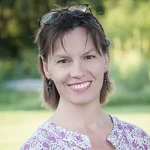
Diana MacKay
Diana Gifford-Jones (the pen name, shared with her father, of Diana MacKay) has extensive global experience in health and healthcare policy. She served as a Special Advisor with the Aga Khan University and also worked for ten years in the Human Development sectors at the World Bank, including health policy and economics, nutrition, and population health. For a decade, she managed health-related executive networks at The Conference Board of Canada, including the Roundtable on Socio-Economic Determinants of Health, the Centre for Chronic Disease Prevention and Management, the Canadian Centre for Environmental Health, and the Centre for Health System Design and Management. She is the author of No Nonsense Health – Naturally (2019).
Elderly Care with Empathy: Dr. Anthony Di Cintio on Bringing Back Medical House Calls
An eighty-eight-year-old man stands in his living room. Tired, near the end of his life. He asks his wife for one....

Nature’s Unlabelled Aisle: What Late-Summer Foraging Asks of You Before You Eat Anything
Late-summer foraging explained: why there is no shortcut test, what apps get wrong, how the knowledge is really learned...
Saving Lives Before Symptoms Strike: How Dr. David Messika‑Zeitoun Is Transforming Heart Valve Care in Canada
Dr. David Messika-Zeitoun is a global leader in valvular heart disease, combining scientific precision with deeply...
Community Gardens: Cultivating Food and Neighbourhood Bonds
On a sunny Saturday morning in many Canadian neighbourhoods, a community garden is one of the liveliest places...

Indigenous Canoe Journeys: Healing Through Water and Tradition
Think of a river upon which no cedar canoe had set foot for more than a hundred years. Not due to any changes in the...
Living Fully, Caring Deeply: Kirsten Woodend on Nursing, Loss, Resilience, and the Power of Human Connection
Some people spend a lifetime mastering a craft. Others spend a lifetime mastering what it means to be human...