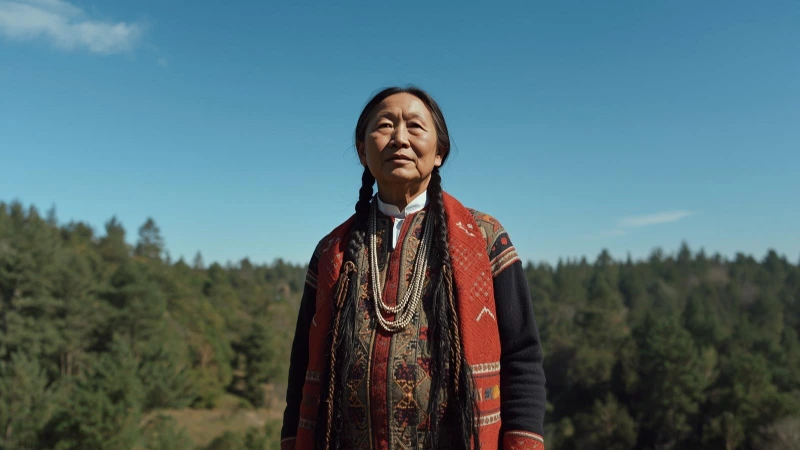
Land as Medicine: How Reconnecting with Traditional Territories Heals Indigenous Youth
For countless generations, Indigenous Peoples have understood what Western science is only beginning to confirm: the Land is not merely a backdrop for human activity—it is a source of healing, identity, and profound wellness. As one Elder beautifully expressed, “Mother Earth is like our spiritual grandmother —Nokomis—she taught us to live the good and correct life”.
This understanding, rooted in thousands of years of experience, is now being reclaimed by Indigenous communities across Canada as a powerful response to intergenerational trauma and a pathway to healing for the emerging generation.
The Land as First Teacher.
Indigenous education has always centred on the Land as its primary teacher. For Peoples like the Omushkego Mushkegowuk of northern Ontario, connection to traditional territories is not simply recreational—it is integral to identity. It encompasses both physical and spiritual bonds that sustain life. The United Nations Declaration on the Rights of Indigenous Peoples affirms this fundamental relationship, recognizing the right “to maintain and strengthen their distinctive spiritual relationship with their traditionally owned or otherwise occupied and used lands, territories, waters and coastal seas”.
Yet colonization intentionally disrupted these critical connections. Through mechanisms researchers term “environmental dispossession,” The physical removal from traditional territories. Indigenous Peoples experienced both direct removal from their lands and indirect assaults. Forced relocation to reserves, land surrenders through treaties that were often coerced and legislation that restricted movement and access to traditional lands.
Policies like the Residential School system severed physical, emotional, and spiritual relationships with traditional territories. Banning traditional ceremonies and practices that connected people to the land. Banning of traditional hunting, fishing, harvesting practices and destruction of traditional languages that carried land-based knowledge.
Cultural, spiritual and practical relationships were systematically dismantled.
The intergenerational trauma that followed continues to affect communities today, contributing to health disparities that see First Nations people in British Columbia nearly six times more likely to die from toxic-drug poisoning than non-First Nations people.
What Is Land-Based Healing?.
Land-based healing encompasses diverse practices, each unique to the Indigenous Community practicing it. These are not generic programs, but culturally specific interventions, rooted in traditional knowledge. A comprehensive 2025 scoping review, led by Madison Cachagee (Omushkego Mushkegowuk) and colleagues, examined 27 studies representing 13 Indigenous Communities across four countries, confirming that land-based healing practices share common principles while remaining distinctly Nation-specific.
Through access to traditional territories, Indigenous Peoples engage in activities that researchers refer to as “environmental repossession”—the social, cultural, and political processes of reclaiming traditional Lands and ways of life. These activities include hunting, food preparation, weaving, ceremonial practices such as smudging, smoke ceremonies, and sweat lodges, as well as traditional medicine harvesting.
In practical terms, programs across Canada are putting these principles into action. Giishkaandago’Ikwe Health Services in Ontario offers year-round land-based programming to ten First Nation communities, including traditional ceremonies like full moon ceremonies, men’s and women’s teachings, and water walks.
Participants engage in cultural activities such as moccasin making, medicine harvesting, hand drum making, and learning Anishinaabemowin. Similarly, the Sweetgrass Health Centre in Cochrane provides traditional healing programs that include land-based activities, cultural awareness training, and healing trauma retreats for both adults and youth.
The Role of Elders and Intergenerational Connection.
Central to the success of land-based healing is the role of Elders as knowledge keepers and cultural guides. Research by Dr. David Danto of the University of Guelph-Humber, published in the International Journal of Mental Health and Addiction, explored how Elders facilitate healing in Mushkegowuk communities.
The study employed a “two-eyed seeing” approach—a framework developed by Mi’kmaw Elder Albert Marshall that honours both Indigenous and Western ways of knowing simultaneously.
Jocelyn Sommerfeld, who co-authored the study, noted a particularly significant finding: the connection between youth and Elders fills a crucial gap created by Residential Schools. “The parents of these youth were among those who attended residential schools,” she explained. “I think this connection between Elders and youth is a really important part of land-based programs, because that’s how youth are going to be connected with their culture”.
This intergenerational transmission of knowledge embodies what Indigenous Peoples call the principle of seven generations—the understanding that each generation bears responsibility for safeguarding the well-being and survival of the next. When youth trap, harvest medicines, or participate in ceremonies alongside Elders, they are not merely learning skills; they are receiving cultural continuity disrupted by colonization.
Evidence of Healing.
The evidence supporting land-based healing is compelling. Dr. Danto’s research found that land-based activities improve wellbeing and mental health in many Indigenous communities. These interventions work because they recognize what psychologists term the “eco-centric self”—the understanding that for Indigenous Peoples, identity is fundamentally connected to the land.
In British Columbia, this evidence has translated into significant government investment. In August 2025, the Province announced $8.3 million for a Tŝilhqot’in-led healing and wellness model responding to the toxic-drug crisis. The Red Road River Tŝilhqox project will offer both traditional treatment and land-based healing, including 35 beds across supportive recovery, treatment, and after-care. As Nits’ilʔin (Chief) Otis Guichon, Tribal Chief of the Tŝilhqot’in National Government, stated, “The strength of the Tsilhqot’in Nation is in our unity: six communities working together as one to protect and care for our people”.
This approach recognizes that untreated psychological effects of colonialism have been passed down through generations, creating ongoing cycles of trauma and addiction. As Scott Tremblett, CEO of Red Road Recovery, explained, “We believe true healing begins when people are connected to culture, land and community.”
Challenges and the Path Forward
Despite demonstrated benefits, land-based healing programs face significant challenges, particularly with sustainable funding. Dr. Danto notes that “these approaches are often run by families or by individuals within the community who don’t have the resources or the ability to go through complex funding processes. It’s very difficult to get the funding, and yet I would argue that these are some of the most effective approaches to healing the community and their youth.”
Researchers also caution against homogenizing diverse Indigenous practices. The unique values and approaches of each Nation must be respected rather than forced into generic categories—a consequence of colonization that continues to cause harm.
For psychologists and healthcare providers, the path forward requires humility and a willingness to learn. “The profession of psychology has a responsibility to provide culturally appropriate treatment,” Dr. Danto emphasizes. “Where many Indigenous people find healing, strength and resilience is within their own culture, their own traditions, their own language and their own ways. The knowledge for healing is there among the Elders and within the community”.
A Return to Balance.
As Sarah Wright Cardinal’s research at the University of Victoria explores, before the Indian Act and the Potlatch Ban, Indigenous nations had complex healthcare systems with intrinsic ties to the land. These holistic systems cared for the individual, family, and community through medicinal plant use, ceremonial practices, mentorship, and land-based connections.
The Mashkiwizii Manido Foundation in Ontario, serving the urban Indigenous population of Renfrew County on unceded Algonquin territory, exemplifies this holistic approach. Their programs connect community members to culture, language, traditions, and ceremonies while walking a journey of healing that addresses intergenerational trauma, the impacts of colonization, and the legacy of Residential Schools.
The significance of land-based healing for Indigenous well-being is, as the research makes clear, indisputable. For the emerging generation of Indigenous youth, reconnecting with the Land offers not only healing from past wounds but also a renewed sense of identity, purpose, and belonging. In returning to the Land, they find their way back to themselves—and ensure that the seven generations yet to come will know the healing power of their ancestral territories.
Sources for Further Reading.
Cachagee, M., Poirier, B., Cachagee, C., Jamieson, L., & Neufeld, H. (2025). Nurturing roots: A scoping review on Indigenous acts of resistance through Land-based healing practices. AlterNative: An International Journal of Indigenous Peoples, 21(2), 328-338.
Danto, D., Walsh, R., & Sommerfeld, J. (2021). Land-Based Healing: Toward Understanding the Role of Elders. International Journal of Mental Health and Addiction.
Government of British Columbia. (2025). Province funds Tŝilhqot’in-led healing and wellness model. BC Gov News.
Mashkiwizii Manido Foundation. (2025). About Us. CCIB.
University of Guelph-Humber. (2021). UofGH’s Dr. David Danto publishes new research on Indigenous land-based healing.
Wright Cardinal, S. (2024). Sharing medicine bundles and pathways to community wellness. Michael Smith Health Research BC.
- Share

Magazica Editorial Team
Magazica is a dedicated platform for businesses, subject matter experts, health advocates, and various sectors within the health industry. At Magazica, we are committed to sharing the latest health information and developments with our audience. We serve as a gateway for health-related businesses to showcase their progress and advancements, demonstrating how they contribute to enhancing people's wellness.
Splash Safely: Why Your Skin and Ears Might Throw a Summer Tantrum
Think about the ideal day out by the lake. The cooler is packed, you've found the perfect spot to lie on the beach, and now...
Men’s Health Checklist: Screenings You Shouldn’t Ignore This Year
For decades, Canadian men have embraced a "if it isn't broken, don't fix it" approach to health. “As a man, I can...
Come Together: Canadian Mental Health Week, May 4–10
Every May, something important happens across Canada. In schools, workplaces, community centres, and...

Eyes in the Digital Age: How the 20-20-20 Rule Can Ease Strain and Headaches
Staring at screens is a defining feature of modern life. Whether working from home or scrolling through social media...
The Canine Cleanup Crew: How Dogs’ Outdoor Adventures May Shape Our Microbiome and Immune System
When your dog charges back into the house after chasing squirrels or splashing through puddles, it picks up soil- and...

Move, Don’t Hibernate: Staying Active and Protecting Your Heart in Winter
When temperatures drop, exercise often falls by the wayside. Yet staying active in winter is crucial for...