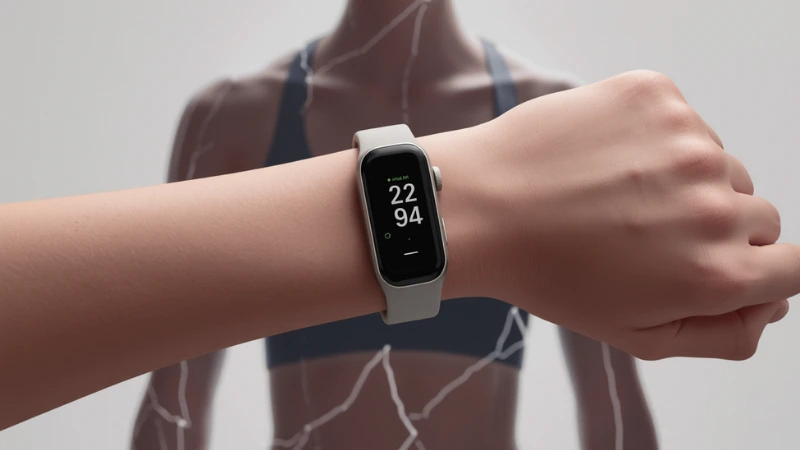
Wearable Tech: Are Fitness Trackers Helping or Hurting Your Body Image?
The Double-Edged Screen: How Fitness Trackers Are Reshaping Body Image in Canada.
“By the time you finish reading this sentence, your fitness tracker has likely logged another dozen steps.” In my own experience, the device can be useful when I treat it as a guide rather than a judge. It helps me stay aware of my habits and gives me structure, but only when I remember that the numbers are meant to inform me—not define me.
For the one in five Canadians wearing these devices, that constant stream of data—steps, calories, heart rate, sleep quality—has become a normal part of daily life. But as these screens have wrapped around our wrists, a pressing question has emerged: are fitness trackers helping Canadians build healthier relationships with their bodies, or are they quietly fueling body shame and disordered eating?
The Promise: Awareness and Accountability.
For many users, the benefits are real. Health tracking devices can help your awareness of lifestyle patterns and motivate behavioural changes. The data can empower users by providing a source of accountability that helps them stick to fitness goals. When a wearable nudges someone to take the stairs instead of the elevator or go for an evening walk, that is a clear win for public health.
However, even proponents acknowledge that the outcome depends heavily on the individual. A person’s age, gender, and personality traits—particularly perfectionism and how they cope with setbacks—strongly influence whether tracking becomes a positive tool or a psychological burden.
The Hidden Cost: Guilt, Pressure, and Poor Body Image.
The darker side of fitness tracking is well-documented. A 2023 systematic literature review found that health and fitness tracking technology is consistently associated with guilt, pressure, stress, anxiety, frustration, rumination over unmet goals, poor body image, and a disconnection from the body’s internal signals.
When a user fails to hit their arbitrary step goal or calorie target, the device transforms from a cheerleader into a judge. The constant reminders and notifications can become nerve-racking. What began as a healthy habit can spiral into an unhealthy fixation, where exercise and eating choices start to generate internal judgment and criticism rather than wellness.
Even for someone like me who sees value in tracking, it is easy to understand how a missed goal can start to feel less like neutral data and more like a setback.
Young Adults at Greatest Risk.
The concern is particularly acute among younger Canadians. A 2025 systematic review led by Ontario researchers and published through the Ontario Dental Hygienists’ Association found that diet and fitness apps are associated with disordered eating symptoms. The review, which examined thirty-eight peer-reviewed studies, concluded that young adults who use these apps regularly have greater disordered eating symptoms, including body image concerns and compulsive exercise behaviours.
The emphasis on dietary restriction and weight loss that pervades many fitness apps may reinforce maladaptive behaviours, especially for individuals who already have preoccupations with their weight or body image. The research also revealed unintended consequences, such as feeling pressure to meet goals and experiencing guilt when those goals are not attained.
The authors caution that while causal conclusions cannot yet be established, the cross-sectional evidence is troubling: the very tools marketed as pathways to better health may be harming vulnerable users.
Athletes: A Particularly Vulnerable Population.
For athletes, the stakes are even higher. A master’s research project from the University of Alberta, completed in September 2024, specifically examined the relationship between digital self-tracking technologies and disordered eating behaviors within athlete populations. The study found that for some athletes, wearables like the Apple Watch and Fitbit, along with apps like MyFitnessPal and Strava, are associated with positive health outcomes. But for others, these same technologies are linked to “unintended negative health and athletic performance outcomes, including initiating and intensifying disordered eating behaviours.”
The researcher, Michael Peel, interviewed ten experts from product design, clinical psychology, and health sciences. Key findings included recognition of control, obsession, and addiction in health data tracking, as well as the potential for these technologies to disconnect users from their own internal sensory awareness. In other words, a runner might learn to ignore their body’s signals of hunger or fatigue because the data on their wrist tells a different story.
The study’s consent form explicitly warned participants: “Wearable health tracking devices and associated digital applications may also promote body dissatisfaction and disordered eating behaviours for some users.”
The Broader Canadian Context: Body Image and Physical Activity.
The fitness tracker debate sits within a larger Canadian conversation about body image and exercise. Research from Memorial University of Newfoundland, completed in July 2024, explored how physical activity affects body appreciation in adolescent girls. The study noted that body image is one of the most prominent factors inhibiting physical activity engagement among adolescent girls—and that this problem has intensified following the COVID-19 pandemic, when physical activity levels among Canadian youth sharply declined.
While this Newfoundland research focused on general physical activity rather than tracking devices specifically, its findings are relevant: the relationship between exercise and body image is complex, and for many young women, the pressure to conform to specific physique and fitness ideals can prompt disengagement from healthy activities. Fitness trackers, with their constant quantification of calories burned and steps taken, risk amplifying that pressure rather than alleviating it.
A Healthy Balance.
The Canadian research consensus suggests that fitness trackers are neither inherently good nor evil—their impact depends entirely on the user’s psychology and relationship with their body. For individuals prone to perfectionism, anxiety, or pre-existing body concerns, these devices may do more harm than good.
Experts recommend focusing on “process-oriented” goals—such as minutes of activity or sleep quality—rather than “outcome-oriented” goals like weight or calorie burning. Users should also be mindful of whether they feel guilt or anxiety when reviewing their data. If the answer is yes, a digital detox may be in order.
As wearable technology continues to evolve, the question is not whether these devices are good or bad. The real question is whether Canadians can use them as tools for genuine wellness, rather than allowing the numbers on a screen to dictate their self-worth.
For me, the healthiest mindset is to let the tracker support awareness and progress without letting it take control. It is important to remember that health is a marathon, not a sprint, and that meaningful progress often happens slowly.
Sources.
- Share

Magazica Editorial Team
Magazica is a dedicated platform for businesses, subject matter experts, health advocates, and various sectors within the health industry. At Magazica, we are committed to sharing the latest health information and developments with our audience. We serve as a gateway for health-related businesses to showcase their progress and advancements, demonstrating how they contribute to enhancing people's wellness.
The Study Station Nobody Sells You
It's 1 a.m. You're in bed, laptop balanced on a duvet, chin tucked toward your chest like you're reading the fine print...
Blue Light Glasses: Fact or Fiction for Better Sleep?
As Canadians spend more time than ever staring at screens—with 72% clocking over 8 hours daily on digital devices...
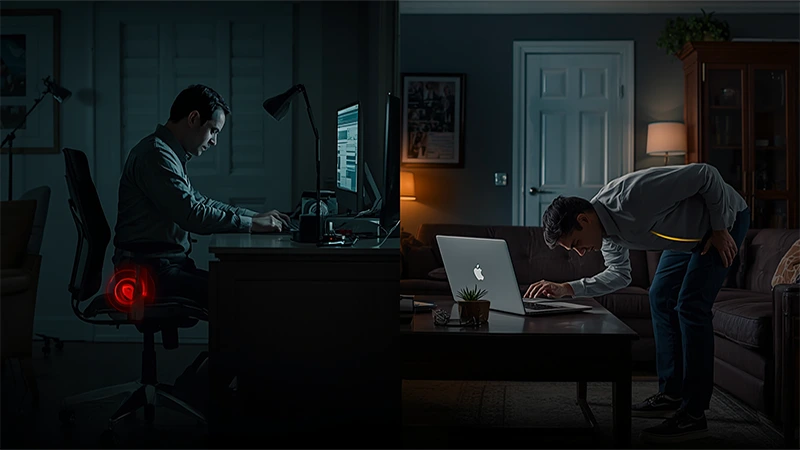
Ergonomics for the Hybrid Worker: Avoiding the Couch-Slouch
You're on a video call from your kitchen table, laptop propped on a stack of cookbooks, neck craned forward...

Digital Detox Weekends: Reclaiming Your Attention Span
So, if perusing your weekly screen time report is like binge-watching, well, you are certainly in good company...

Predictive Analytics in Public Health: Preventing Illness Before It Begins
A public health department identifies rising indicators of respiratory distress across a specific neighborhood...

The Predictive Mind: When Generative AI Learns to Anticipate Human Thought
Why Generative AI’s Next Evolution Is Anticipation, Not Automation. Medicine has always been...