Unstoppable Tracy Schmitt: The Leadership Mindset That Turns Barriers into Breakthroughs with Resilience, Reinvention, and Real Leadership
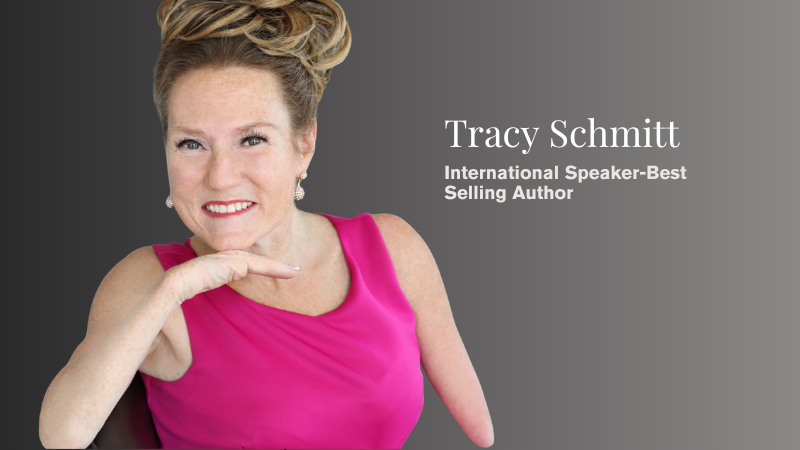
Tracy Schmitt doesn’t just talk about resilience — she embodies it. Known globally as Unstoppable Tracy, she has turned every barrier into a blueprint for possibility. From Paralympic trials to world‑class sailing, from corporate boardrooms to international stages, Tracy’s life reads like a masterclass in courage. Her stories don’t simply inspire; they instruct. They remind us that progress begins with a single step, that leadership is built in moments of uncertainty, and that the human spirit expands when challenged. In this conversation, Tracy pulls back the curtain on what it truly means to rise, reset, and lead with unstoppable energy.
Magazica: Dear readers and viewers, today we have Tracy Schmitt, known as Unstoppable Tracy, who has built a life on breaking barriers. She turns challenges into fuel for resilience, leadership, and global impact.
From Olympic trials to boardroom coaching, her journey proves that limitations are only stories we tell ourselves. She’s a best‑selling author, international speaker, globally winning boat racer, scuba diver, and an executive coach who inspires audiences in more than 40 countries.
With humour, grit, and practical strategies, Tracy shows how ordinary days can become extraordinary. This episode is a powerful reminder that perseverance isn’t just about surviving – it’s about thriving and leading with unstoppable energy. Tracy, welcome to Magazica.
Unstoppable Tracy: Oh, thank you so much! Marvellous Magazica! I just love the name and the big M and being with you and all your listeners today. What a wonderful, magical morning.
Magazica: Thank you very much for that. Let’s start at the beginning of your journey. Can you take us back to a defining moment in your life when you realized that resilience would become your superpower?
Unstoppable Tracy: You know, we all get big no’s, and one of my biggest no’s – super early in life, such a blessing, because life is rigged in our favour – was the first day of school.
I was face‑to‑face with my principal, with my mom beside me. The principal took one look at me. What your readers and listeners may not know is that I’m missing my hands and my legs above the knee. The principal looked at my mom and said, “I’m sorry. Tracy can’t go to this school.”
My little five‑year‑old heart just dropped. My stomach dropped. And you, and all your listeners, are probably ready to take on the principal – like, what do you mean? So you would understand if my mom went full mama bear. But she didn’t.
My mom had the kindest eyes. I’ve long since lost my mom, so when I talk about her, I get emotional. She had the kindest eyes. She looked at that principal, didn’t get mad, and simply said, “How come?” Open arms, super sweet.
Because she wasn’t defensive, he explained, “Well, because Tracy doesn’t have her hands, she probably can’t tie her shoelaces. And she doesn’t have her legs, she probably can’t go to the bathroom by herself.” In the 70s, children with disabilities went to segregated schools.
My mom said, “Oh, I understand.” And I looked at her like, what? Then she made a counteroffer: “But since we’re here today, can we just try?”
The principal said, “Okay, one week.” My mom shook his hand and thanked him very much. She didn’t react to the “only one week.” We walked around to the side of the school where the kindergarten kids were being led in, and she collapsed to her knees.
I thought she fell. She grabbed my arms with a ten‑finger super grip – five fingers on each forearm – holding me eye to eye, super serious. I had no idea why she was so serious. I had no idea that if I didn’t get outside at recess, I wouldn’t get to stay at the school.
She held my arms, looked me in the eye, and said, “Tracy. It’s really important that you… and everybody’s included. Nobody left behind.”
I was five years old. I had no idea. I just wanted to play. So I broke free of her super grip and ran into the schoolyard – and bumped into the principal.
The principal was standing there with his eyes all welled up. He had heard my mom on her knees saying, “Nobody left behind.”
So I like to say, in the spirit of the holiday season, his heart grew three sizes that day – like the Grinch. And of course, he didn’t want me to leave. Fast forward to recess time: he runs outside… and I’m not there.
Five minutes, ten minutes, fifteen minutes – I never made it outside.
So he’s trying to figure out what he’s going to say to my mom. He marches inside and asks my teacher, “What happened? Couldn’t Tracy tie her shoelaces?”
My teacher is confused. She says, “Tracy was the first one to tie her shoelaces.”
He asks, “Well, how come she wasn’t outside?” She says, “Oh, her little friend couldn’t tie her shoelaces.”
So – what did my mom say? Nobody left behind.
Magazica: Nobody left behind.
Unstoppable Tracy: So I tied my little friend’s shoelaces. It turns out none of the 30 kids tied their shoelaces. By the time I tied 30 shoelaces, the recess bell had gone off.
What I learned that day is that it doesn’t matter – everybody is a valuable contributor. I didn’t know I was going to be the shoelace leader. But now you know: how come the only student – male, female, they, them, Black, white, visible disability like me with no hands and no legs, or no disability, or invisible disability – how come the only student with no hands was the only student required to be able to tie their shoelaces?
And it actually makes sense. One teacher, 30 kids – this student has no hands, no legs, how is she going to manage? And some of your readers and listeners might think, “How am I going to write that book?” or “That’s the standard operating procedure – you’re not allowed to work from home.” Well, we figured it out. You figure it out. So “no” just means “know.” You just don’t know yet.
And that principal – he wasn’t mean. He was a lovely, kind man. He never said no again. From then on, he said, “I don’t know. I don’t know how we’re going to get her over the snowbank off the school bus,” or “I don’t know how she’s going to join swimming in grade three,” but he didn’t say no. He just said, “I don’t know, but we’ll figure it out.”
So that was the first unstoppable memory. My superpower comes from my magical mom.
Magazica: Fantastic. What a beautiful piece of your experience to open our conversation. So, let’s drive from challenges to strengths. Many people see obstacles as setbacks. How did you learn to see them as stepping stones instead?
Unstoppable Tracy: Sometimes we think we need a perfect plan, and really, we just need the courage to start. When I started sailing without my hands and without my legs, every time the boat heeled or we hit a wave, I fell out of the boat. That scared the sailing instructors for sure – and your face says it all.
I knew how to swim, I was wearing a life jacket, and I knew the parts of the boat and the points of sail. But that first summer, I failed. It turns out you’ve got to be able to stay in the boat to get your Level 1.
So you just keep climbing back in. I climbed back in over and over until I figured out how to balance in the boat.
And by looking out – you know, when we’re in our cubicle, we’re in our head; when we’re at home, we’re in our computer; and in a boat, we’re looking at the lines and inside the boat – I learned to get my head out of the boat. I learned to look at the water, read the water: Where’s the wind? Where’s that wave coming from? So I could brace myself or sail according to the wind.
And that was balance. I also learned forward balance. They were advanced study skills. So I got my Bronze 4, and then I got my 3, 2, 1 – when all my little friends got their Level 2.
So if you feel like you’re falling out of your boat, you’re just doing your advanced study… backwards.
Big successes – there’s no such thing. Everything is just one little stepping stone at a time. It’s not a tidal wave or a magic wand.
And we don’t take it alone. I wasn’t in that boat alone. I wasn’t in kindergarten alone. We rise up together.
Magazica: With that same spirit, let’s talk about your Paralympic trialist experience. Training at that level – Paralympic training – is incredibly demanding. What did that level of training teach you about discipline, mindset, and the human spirit? The Paralympic trialist experience – training at that level is incredibly demanding. What did that training teach you about discipline, mindset, and the human spirit?
Unstoppable Tracy: You know… now your listeners know: yes, I’m a World Cup sailor and climber, I earned an MBA, and I grew up to be an executive coach at Air Canada, Shoppers Drug Mart, Uber, and organizations around the world. But as a person with a disability, as a child, there were programs filled with sympathy and kindness – “We’ll take you on,” “We’ll give you a joyride in the boat,” “You can come watch us ski,” or “We’ll put you in a sled and drag you around so you can experience it.”
But Paralympic – Olympic, Paralympic – sailing is different.
When I had that lightbulb moment that I wanted to be a Paralympic trialist, I looked around for who was extraordinary. If you’re a girl, train with boys. If you’re a boy, train with teams older than you. All of us should train with people performing at a higher level. Be around those who are succeeding at the level you want to reach.
So I looked for a Gold Olympian. At the time, the only one in Canada was a man named Magnus Liljedahl in Miami, Florida, and I was in Toronto.
Everyone said it was impossible. You need $10,000 for a boat, 10,000 hours in a boat, 10,000 hours with a Gold Olympian – never mind becoming a Paralympic trialist. It was a no‑way situation.
So I recommend: when people say it’s impossible, you hear them – and then you ask, “Impossible unless what?”
They replied, “Magnus Liljedahl.” And then added, “But there’s no way.”
So I said, “Thanks so much,” and I took everything I owned – my bed, my wall unit, my dresser – everything. I put it on the internet and tried to sell it for funds. Then I drove down in my car.
My family and friends were lovingly worried. They said it was unrealistic. Their way of helping was refusing to help me load the car because they didn’t want to support what they thought was a bad decision. When I left, nobody even helped me carry a teapot to my car. If it didn’t fit, I didn’t bring it. And I drove five days to Magnus Ligidal.
And I’ll let you in on a secret: Magnus is a lot like Shrek. And I wish I were the Fiona of the story – but in fact, I’m the donkey.
I arrived… and guess who wasn’t there? Magnus.
So I took my car and hid it between two multi‑million‑dollar yachts. Because who you surround yourself with matters – maybe I’d become a millionaire by proximity. I hid in the boatyard. I wasn’t allowed to be there, but I tucked my car between the gigantic yachts and woke up at 5:30 in the morning.
Guess who finally showed up? Magnus – at 5:30 a.m. What does a high‑performance athlete do at 5:30? Something related to their craft. He was washing and waxing boats.
I jumped out of the car and ran over: “Magnus! Magnus! It’s Tracy from Toronto! I’m sorry I phoned you and tweeted you and Facebooked you and emailed you, but I’m Tracy from Toronto!” All this high energy.
Magnus just looked at me – deadpan, quiet, washing his boat. He didn’t say anything. Just stared like, “Who is this woman?”
And I realized Magnus had a slightly different energy than I did. I had forgotten my kindergarten lesson.
My mom didn’t say to the principal, “Oh, she can tie her shoelaces.” She listened. She heard that he was worried about being stuck with me.
With Magnus, I was all me, me, me.
So I picked up a sponge. And I started washing the boat. I reset my conversation with him.
I ended up washing and waxing boats – like Karate Kid – for three months. Secretly hiding in my car in Magnus’s boatyard, unbeknownst to him. Every day. 5:30 a.m. Ninety days in a row.
Three months before, Magnus finally said, “Come on. Let’s go sailing.”
So what’s the discipline, the mindset, the human spirit? It started before I even started. To be able to get – pardon the pun from a girl with no foot – a foot in the game.
Magazica: And all those three months, you were in that boatyard? In the dock?
Unstoppable Tracy: Yes. Someone invited me to sleep on their boat one night. Someone else said, “I have a residence in town when I’m here – you can stay on my balcony.” She didn’t invite me into her home – she invited me onto her balcony. So I slept on her balcony. Over those three months, there were moments when I had a balcony, or someone’s boat… but it wasn’t the Hilton by any means.
Magazica: And still – three months. People break down after two or three days, let alone three weeks.
Unstoppable Tracy: Yes.
Magazica: Three months is extraordinary.
Unstoppable Tracy: There’s power in progress. You don’t wait for “someday.” You take the next step forward. As soon as I decided I was going, I drove down there. And I invite you and your listeners and readers: write one page, make one call, take one action toward your dream.
Because once you start, the momentum builds. Those three months were packed with little momentous moments. Just like in The Karate Kid – I was learning; I just didn’t know I was learning.
Magazica: That’s very powerful. I don’t know about others, but I needed this at this moment. Thank you very much.
Let’s continue. We just learned about your MBA and your business education. You coach executives – you mentioned Uber, Shoppers Drug Mart, and many others. You give anecdotes and inspiration to executives, sharing your huge, kind spirit. It brings out the best in people. So, what’s one common barrier leaders usually face, and how do you help them break through it?
Unstoppable Tracy: A common barrier is that we all have a barrier – a roadblock, a challenge. For leaders, it’s often something like imposter syndrome.
Many people are promoted into leadership roles because they did their job well. At Air Canada, someone knows how to load baggage on an airplane – now they’re a supervisor. Or someone is an incredible customer‑service‑focused flight attendant – now they’re the head of training, bringing in new people who don’t know how to do the job. They have to relinquish the skill they mastered and take on a new task.
That’s happening everywhere. You could be a leader for 30 years and know your job extremely well, but change is inevitable. New technology arrives. Suddenly, you’re managing staff from home because of COVID. Or you’re a 30‑year director and your CEO changes – CEOs don’t stay for 30 years; they often rotate every four.
So there’s always something new. And you’re asking a 12‑month contract question – how do you break barriers? But an immediate thing everyone can do, and something I do with leaders, is what I call appreciative inquiry.
It’s like water. You’ve got hydrogen and oxygen – amazing molecules. Bring them together, and you get the magic of hydration. So you have “appreciate” – value, positive thinking, and “inquiry” – gather data, gather facts, get information. When you put appreciative inquiry together, you get the magic of discovery.
For example, the kinds of questions you ask determine the kinds of answers you find. If you ask, “What’s the problem here?” you’re going to find the problem. I’m not saying ignore the problem. In Canada, we have moose – some say, “What’s the elephant in the room?” I say, “What’s the moose in the room?” You can put a moose under a boardroom table and throw a tablecloth over it – you can still smell the moose. You still have to drag it out of the room. I’m not saying ignore the problem.
It’s just about the question you ask. Instead of “What’s the problem?” you could ask, “What worked last time you had a problem?”
You get more specific. You’ve heard my kindergarten story, my Magnus story – what worked? So ask yourself: What’s something you’re facing right now that’s a challenge? But don’t start there. Start appreciatively.
What’s something you’re super proud of? What’s something you did where you woke up and thought, “Oh my gosh, that was tough – and I did it”? Maybe you ran a marathon. Maybe you helped your child deal with a bully. Maybe you crushed a huge financial barrier in your company.
How did you do it? Who was there? What was exciting about it? Focus on that breakthrough story.
And then ask: What’s something you’re facing right now? We often start with the problem. Let’s start with the time we overcame a problem.
It’s usually resilience. It’s usually who you surround yourself with. It’s usually persistence. Then you bring that into what you’re facing now – with the confidence that you’ve already done it. You’ve already overcome a barrier.
And it doesn’t matter what age. Mine was at five years old in kindergarten. But I brought that into my business life.
Magazica: And then an inquiry about the solution part.
Unstoppable Tracy: Yes. What’s something you crushed?
Magazica: Because we already did it once.
Unstoppable Tracy: Yes.
Magazica: Maybe several times.
Unstoppable Tracy: Yes!
Magazica: So build on that.
Unstoppable Tracy: Exactly. And then you get through the imposter voice – “I don’t know how,” “I’ve never done it,” “I’ve never presented to a group before,” “I’ve never raised a teenager before,” “I’ve never written a book before.” But you have. You’ve crushed barriers before.
Magazica: No, that’s so powerful. Truly powerful. Let’s talk a bit about resilience in the workplace. For everyday people listening, what’s one simple practice they can use to build resilience at work – or at home? One small practice they can build on?
Unstoppable Tracy: In your mind, right off the bat, obstacles are not stop signs. You reframe the barrier. For example, yesterday I went to Tim Hortons. I pulled up to the first window, driving a brand‑new car – swanky.
During COVID, I got sepsis, and for the first time in my life, I felt like a four‑way amputee. I never felt like I was missing my hands and legs before. But when I got sepsis, I didn’t own a wheelchair, I didn’t live in an accessible apartment, and I didn’t have people around. My legs end above the knee, I have no left arm, I have one finger in an unusual place, and I live by myself. And then I lost my legs to sepsis.
But I don’t say, “I have to get an accessible apartment, I have to get a wheelchair, I have to get a different vehicle.” I say, “I get to drive a new car.”
So first: reframe. You get to, not have to. You get to do your laundry, not have to do your laundry. Reframe it as “I get to.”
I pulled up to Tim Hortons. I have an MBA, I’m a World Cup sailor, and I climb mountains. And I said at the window, hopefully sounding educated and capable enough, “Can I please have an extra‑large, steeped tea?”
I drove to the second window. And yesterday – 2025, almost 2026 – she said, “Oh… no.”
Your face right now is curious and confused. I was, too. Even now, I feel a little nauseous remembering it. Here I am, the only four‑way amputee who has ever climbed the Himalayas of Nepal – male, female, they, them – and these two words from a Tim Hortons lady crushed me.
I got a lump in my throat. My stomach felt nauseous. And that was yesterday. Words can hurt.
Magazica: Yeah.
Unstoppable Tracy: And that wasn’t her. That was me. I let myself interpret it that way. She’s just a kind person. And I could hear my mom whisper in my ear: “She just doesn’t know.”
Magazica: Doesn’t know.
Unstoppable Tracy: It’s like that “no” from kindergarten turning into “know.” She just doesn’t know.
So I reset. I thought, okay – she just doesn’t know. And I said, “It’s okay, I’ve got this. I can hold the cup.” I love my tea so much, I’m drinking out of a two‑cup measuring jug instead of a mug because I want more tea. It’s funny. But I can hold a cup. And she handed me my cup.
I said thank you, and I drove away. And from her face, I know she was amazed I could hold a cup.
She doesn’t know that I fly airplanes, that I jump out of airplanes, that I ride horses, that I’m a World Cup sailor competing against able‑bodied men – 80 of them in March 2025. Only a few women were there, and everyone else had their hands and legs.
And she was amazed I could hold a cup. But we get to reset. Even me.
So you get to ask yourself: What is this moment teaching me? With the Tim Hortons lady – what is this moment teaching me? How can I use this to become stronger? And what’s one action you can take right now to reset?
Reset. Reframe the barrier.
Magazica: You’re giving me so many learning points – and to the readers as well. So whenever you say that – full respect and full kindness to the Tim Hortons lady – whenever someone “does not know,” that is such a powerful message.
Unstoppable Tracy: And I didn’t know, in that moment, that I get to. She had zero intention of hurting my feelings.
Magazica: Yes.
Unstoppable Tracy: And my impression, in hindsight, is that it was actually her backwards way of kindness. She was giving me empathy in her culture. It was her way of trying to say, “I see you, and I feel for you,” even though it didn’t translate that way.
Magazica: Yes, yes.
Unstoppable Tracy: And unstoppable – as you said – you broke your hand, the rope was cut, but you were being unstoppable. Unstoppable isn’t falling. It’s rising every single time. I still see the passion, the pride, and the smile in your eyes when you share that you were there. You didn’t finish that climb, but you were there. You finished a symbolic climb – probably even bigger because of breaking that hand. I’m sorry you broke your hand.
Magazica: That’s okay.
Unstoppable Tracy: I’m so proud of you for having that smile on your face. It isn’t a broken‑wing story – it’s just a story.
Magazica: It’s just a story.
Unstoppable Tracy: Yeah.
Magazica: So many things. And now, remembering what you said, unstoppable doesn’t mean overcoming hurdles every time. It means that whenever you fall, you get up every time.
Unstoppable Tracy: Yes.
Magazica: My father used to say, “Rise and rise again until the lamb becomes the lion.”
Unstoppable Tracy: Oh – rise and rise again until the-
Magazica: The lamb becomes the lion.
Unstoppable Tracy: The lion.
Magazica: We were visiting a castle in Scotland, and it was written on a stone slab. I don’t know who wrote it – ancient or recent – but my father told me, in the pre‑mobile age, “Remember this quote throughout your life.”
Unstoppable Tracy: I love it! I can see the rock. I want to paint that rock!
Magazica: He said, “Be like that, and you become a castle by yourself.”
Unstoppable Tracy: Yes!
Magazica: “If you can follow this stone, you will become a Castle Wanda, and so many people will get their shelter here.” And you will inspire so many people. I’m seeing that inside you now.
Unstoppable Tracy: Aww, I see that inside you, too. It’s so true. I love that we’re together.
Magazica: You get together, yes.
Unstoppable Tracy: Yes.
Magazica: Rise and rise again – whenever you fall and rise again, it means you have translated your doubt…
Unstoppable Tracy: Yes – into drive.
Magazica: So, you often speak about self‑doubt and procrastination. What’s a practical way someone can shift from hesitation to action?
Unstoppable Tracy: One of the reasons we hesitate or procrastinate – or face bigger roadblocks – is that we just don’t know how. That feeds our doubt. That feeds our procrastination. We just don’t know how.
We didn’t know how I would ski without hands and without legs. We tried my long legs, but because both my knees are artificial, I’d get on the hill, and my knees would collapse. We tried a sitting ski with outriggers – poles with skis on the end, but because I don’t have hands, I wiped out into the trees. I didn’t have enough control.
We tried for many weeks. One day, we were sitting inside next to my ski instructor, and I looked at his feet. I had a bit of an inappropriate thought as a young girl: “Holy cow – he’s got big feet!”
And then I had a lightbulb moment: He’s got big feet. I can put my thighs – my stumps, my legs that end above the knee – into men’s boots. And then I’m knees‑to‑skis.
I wiped out some more because ski boots are canted forward. So we turned the boots around. I don’t have toes – the toes were empty. We put my thighs into men’s ski boots backwards. And then I was in this duck‑squat position, knees to skis, because I don’t have knees or ankles. My “knees” were in men’s ski boots backwards.
So you get to embrace possibility even when you don’t know how. You jump in. You get started. You’re going to find your backwards boots.
What do you do with doubt and procrastination? You get started. I had a ski instructor – I wasn’t alone. Who are you rallying yourself around with?
But you’re not going to find your backwards‑boot solutions…
Getting started. Do a little research, but eventually you have to start – even when you don’t know how. The act of starting is what helps you find your backwards boots. You do it one determined step at a time.
Every unstoppable person knows this truth: Progress beats perfection – every single time.
Magazica: That’s a powerful line.
Unstoppable Tracy: Progress beats perfection every time.
Magazica: Just jump in. Just get started. You’ll find your backwards boots.
Unstoppable Tracy: I did not become a Double Black Diamond bronze downhill medalist with those backwards boots – but they definitely got me started.
Magazica: Progress beats perfection every time. So powerful. How do you protect this energy? You inspire thousands, but sharing inspiration constantly can be draining. You’re giving your energy, and energy has a reserve. How do you protect your own well‑being while giving so much to others?
Unstoppable Tracy: You know, I told you I spent three months sleeping in my car. You can imagine – on the 89th day – there’s a lot of self‑doubt. I’m eating Cheerios for 89 days. I’m sleeping in my car. It’s not quality sleep; it’s not quality food.
And now, as an athlete, it’s a huge part of my everyday life. I have no sailing competitions this month or next month, but I’m still doing my lemon‑ginger, still eating vegetables and fruit, and taking vitamins. I’m protective of my sleep – and yes, it gets compromised, but I go back to it. I acknowledge when it’s been compromised, and I bring it back.
But on that 89th day… what got me through was this: every day I would look in the rearview mirror of my car and say, “Today’s the day you’re going to talk to Magnus. Today’s the day Magnus is going to take you on.”
By the 89th day, I was saying it 20 times before I believed it. I wouldn’t get out of the car until I believed it. And I recommend you don’t leave that mirror talk until you believe it.
That morning, I said it 25 times – and I didn’t believe it anymore. I couldn’t get out of the car.
So I flipped it. I said, “Today’s the day I’m going to be the best version of myself.” Because I didn’t believe I was going to convert Magnus anymore.
“Today’s the day I’m going to be the best version of myself.”
I got out of the car. Someone was struggling with the lift. I’d been there for three months – I knew how to Hoyer the boats, crane the boats into the water. So I went over and helped.
Then another boat came flying into the dock out of control. All these Gold Olympians from around the world – not just the U.S. – were standing around shouting, “STOP!” But if the guy knew how to stop the boat, he would. He needed more than “STOP.”
So I shouted, “Let off the main – the line in the middle! Push the boom away from you! Push the mainsail away!”
Then I went to the part of the dock where the wind was coming from and said, “Sail to me!” Now he was sailing into the wind – wind resistance instead of with the wind. It was a big U‑shaped area, so I ran to where the wind would slow him down. And he stopped – right at the dock, at my knees.
To get to the wind, I had my legs on. I had to bum‑shuffle – I’ve got one arm – and I bum‑shuffled over to the dock where the wind was. He stopped poetically right in front of me.
Magnus saw me.
He came clambering down. I tied off the boat. All the Gold Olympians ran over to help, shouting at the poor guy instead of empathizing with how terrified he must have been. You can educate later – why not give him empathy now?
But that’s not what Gold Olympians do.
Magnus said, “Tracy! You can sail!”
And I was like, “Yeah, man!” For three months!
So how do I take care of myself? Yes, I have to eat right. I have to sleep right. But also – in my mind. You start the day with, “Today I’m going to be the best version of myself.”
And that was the day Magnus said, “Come on, let’s go sailing.”
It wasn’t the 89 days I spent trying to impress him – though they mattered. He’s used to people wanting something from him and then going home. They hadn’t shown tenacity or resilience for three months.
He realized I wasn’t going home. And I realized I needed one more piece of the puzzle – my own best version.
That’s how I keep my strength. It’s body – but it’s mind and soul, too.
Magazica: That’s very powerful – that you don’t stop telling yourself something in the mirror until you believe it, and then you choose to be the best version of yourself. That’s very stoic as well. Marcus Aurelius – one of my favourite writers – said something similar: that today, whatever happens, however I’m treated by people, I will be my best version to all.
Unstoppable Tracy: Yeah.
Magazica: It’s very powerful. Very stoic. Looking ahead, what’s next for you? Any projects or dreams you’re excited to share that continue your mission of being unstoppable?
Unstoppable Tracy: What’s next? I’m super keen – I’m back at it. In 2025, I’m back at it with World Cup sailing. In 2016, sailing was removed from the Paralympics, and my dream disappeared. It’s been ten years since I focused on it in a huge way. But world sailing is coming back, and they’re bringing in open class. Thank you, thank you.
I went to Australia in March, but it’s open. When it was the Paralympics, there was classification. In March, my competitors included a German sailor missing his pointing finger, and a young, strong UK veteran whose disability was PTSD – physically, he was incredibly strong.
So my competitors were this German sailor and this UK veteran with big muscles. You get perspective. And of the 80 sailors, about 80% were able‑bodied men. The sailors with disabilities included missing a finger, PTSD, missing a foot, and a couple paralyzed from the waist down – but I still call all of those paper cuts in comparison.
I’ve been going everywhere – New York, Rhode Island, Chicago, San Diego, Australia, Quebec – all over regattas this past year, sailing across the world and North America.
And yes – sleeping in my car again.
Here I am, a mature woman – not a youth – sleeping in my car at regattas. I’m an older, dignified lady, and I was sleeping in my car. So I want to give up my condo and convert my van. I’m walking on my legs again – not 100% of the time, but I’m coming back to walking full‑time, which they told me would never happen at my age. They said I’d be using a wheelchair now. They said I should thank my lucky stars I wore artificial legs that long.
Most double amputees above the knee use a wheelchair and are not full‑time on prosthetic legs like I was. But I’m back. I’m part‑time on my prosthetic legs, building up skin tolerance. I need the van for the chair, and now that I have the van, I want to convert it into a sleeper van.
I’m hoping for sponsorship – someone who wants to co‑brand with Unstoppable Tracy. We could have Unstoppable Toyota, Unstoppable Honda, Unstoppable Audi. I love Volkswagen – those classic vans. My big dream is: on April 1st, when my lease is up, I want to go full‑time into my van. Then, when I go to regattas, my home is with me.
Magazica: And it’s better sleeping.
Unstoppable Tracy: Better groceries – because it’s all there in the van.
So that’s part of the dream. But I wouldn’t be out there living this dream – I wouldn’t be back on my legs – if it wasn’t for the Canadian Amputee Coalition. We just did a fun fundraiser called Foot First, where they took pictures of amputee feet doing fun things – a foot in a fish tank, a foot in spaghetti. For me, I had sexy fishnet stockings on my prosthetic foot.
And so I get to live this van life – not in hardship, not in struggle – but as part of being powerful in pursuing World Cup sailing for Canada. There were no other Canadians in Australia. If I didn’t go, Canada wouldn’t have been represented. I intend to get Canada out there. We are Canada proud, and my mission is to get Canada there.
But because sailing left the Paralympics in 2016, there’s no funding for World Cup sailing. But it’s coming back.
Magazica: And you want to be the Canadian rep.
Unstoppable Tracy: Yes. Sail Canada sent me a nice shirt, and they’re behind me – but they don’t have the funding to support it. So all of it is 100% on my dime.
Magazica: On behalf of the common Canadian people – thank you.
Unstoppable Tracy: Thank you.
Magazica: Thank you for representing us. That is the Canadian spirit I love. That’s why we started Magazica on July 1st.
Unstoppable Tracy: Really? Was it part of the Canadian spirit? Yes!
Magazica: First of July.
Unstoppable Tracy: Seriously?
Magazica: That’s the spirit. We speak for common people – for those trying to make a difference in the world, in the medical sector, in every sector, and for those continuously inspiring others. So thank you for being there on our behalf.
Unstoppable Tracy: You know, another coincidence – I was taking my first steps, the steps they told me I wouldn’t take, in July. And as soon as I was walking, even just a little, I thought, “I want to get back in a boat.”
It was a boat that helped my mindset when I was feeling at my lowest. I broke out of the hospital and went down to the sailing club just to be around it. Then I came back, and the nurses didn’t even know I had snuck out to be near the water for a short time.
And it was July – the same month you started your magazine. And since July, I’ve been training so hard to represent Canada in world sailing again.
Magazica: That’s a beautiful coincidence.
Unstoppable Tracy: It is. We’re choosing courage over comfort. I imagine starting your magazine in July was out of your comfort zone, too.
Magazica: Way to go. Way to go. And lastly, your whole interview has been one big inspiring message. But at the end of this conversation, what would be your message to the audience? If someone listening or reading feels stuck… defeated… what’s the first step you’d encourage them to take?
Unstoppable Tracy: I don’t know what’s going on behind your eyes as my interviewer, or what someone reading or listening is facing. I don’t know. I could have said, “I’ve lost my mom, I’m learning my legs again, I have sores and exhaustion from prosthetic training, and I really want to do this interview – but I can’t do it this morning.” And you would have understood. Those are real reasons.
There are real reasons. Very real reasons. But my mom always said, “No excuses.”
My mom was from Liverpool – like the Beatles – and came out of a time of war. Liverpool has unbelievable humour, but also a tough‑love culture. They don’t say these exact words, but it’s very “suck it up, buttercup.” You’ve probably heard “Get on with it, love” a hundred times.
Magazica: Many times.
Unstoppable Tracy: Yes – “Get on with it, love.” They make fun of the strife. That was my mom. She had a big heart, but she also had tough love. No excuses.
Even when there were real reasons – even when I was bawling my eyes out from being bullied – she’d say, “How’s that working for you?” It wasn’t. She’d kiss me on the forehead, then walk away and leave me to figure it out.
This isn’t the story I meant to tell, but as soon as you said, Liverpool…
So yes – no excuses. I have empathy for not knowing what someone is facing, and that they may have real reasons. So with the biggest heart, I say: no excuses.
But the bonus to no excuses is no limits. I make a joke – no limits, I’m limitless. I was born limitless. No excuses, no limits. There’s a bonus in that tough love.
Magazica: Thank you. Thank you for the wonderful gems sprinkled across this conversation. Thank you for being with us. And I can confirm – this is not the last time we’re talking.
Unstoppable Tracy: Aww, it’s such a pleasure.
Magazica: Thank you.
- Share
Tracy Schmitt
Tracy Schmitt - widely known as Unstoppable Tracy - is a globally recognized leadership expert who helps managers, executives, and educators reach their highest potential. A #1 international speaker, bestselling author, Paralympic trialist, and award winning executive coach, she blends lived experience with proven strategy to help leaders break barriers and elevate performance. As a TV and podcast host, she brings powerful conversations to audiences worldwide. Tracy’s work is grounded in resilience, practical leadership development, and the belief that with the right mindset, every individual can lead their best - personally and professionally.

Living Without Limits: Judy Mitri on Type 1 Diabetes, Resilience, and Redefining Strength
Some people build careers. Others build momentum. Judy Mitri does both. Her life reads like a masterclass in...
Stu Schwartz: Life Lessons acquired from Beating Cancer Twice, Surviving a Heart Attack, and Inspiring Ottawa’s Community
Stu Schwartz’s story reads like a blockbuster script - radio fame, life-threatening battles...

Turning Pain into Purpose: Angie Poirier’s Journey from Oncology Mom to Cancer Advocate
Angie Poirier didn’t ask for the cancer fight to arrive at her doorstep. But when...

A Disease to Be Believed: Canadian Tarlov cyst patients demand acknowledgment of their pain by healthcare professionals
Tarlov cyst disease found its way into Tara Matthews’ vocabulary in the...

Early Battles: The Promising Advances in Childhood Cancer Care Across Canada
Every September, golden leaves begin to fall—and with them, an urgent reminder...

From Diagnosis to Empowerment and Resilience: Ardra Shephard’s Inspiring Journey of Living with Multiple Sclerosis, Challenging Stigma, and Finding Joy
Imagine a life suddenly altered, a path redirected by an unexpected diagnosis....