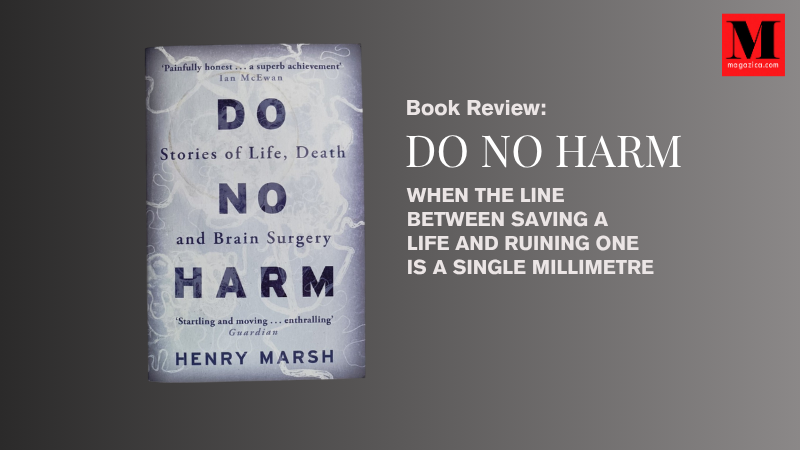
Book Review: “Do No Harm” by Henry Marsh
When the line between saving a life and ruining one is a single millimetre.
I am not a big fan of technical writing. But visiting hospitals as a patient or a caregiver gives you a different perspective on life and living. The same happened to me while reading the book of the month.
An Unflinchingly Honest Memoir
The theatre is silent except for the rhythmic beep of monitors and the low hum of ventilation. Under the intense white light, a landscape more alien and intricate than any on Earth is exposed: the living human brain. It pulses with a gentle, hypnotic rhythm, its glistening surfaces a tapestry of veins and arteries. This is the domain of Henry Marsh, a senior neurosurgeon whose memoir, “Do No Harm”, invites us into this sanctum of impossible choices.
With a scalpel in hand, he maneuvers around the fragile jelly holding the entire world of a person: his memories, his ability to love, even his consciousness. The tumour he is after is nestled deep within this vital tissue. A millimetre too far to the left, and the patient might not ever be able to speak again. A fraction too deep, and paralysis follows. Every move is a calculated risk, every decision a tightrope walk between a miraculous recovery and abysmal failure. It is a place of profound meaning but also one of profound terror.
This is the world Marsh lays bare in his unflinchingly honest memoir. It is not a story of heroic triumphs but a textured and deeply human account of what it means to hold another’s life and self in your hands.
Turning Toward Uncomfortable Reality
Modern culture often treats surgeons as infallible gods in scrubs, figures of ultimate authority and skill. We need to believe in their perfection as a shield against our own fear. “Do No Harm” systematically dismantles this myth. Marsh turns his gaze toward the subject medicine itself often avoids: the fallibility of the doctor. He writes not to shock, but to reveal a more complex truth—that neurosurgery is a profession of profound uncertainty, where success and failure are often separated by the thinnest of margins.
The title of the book is a direct reference to the Hippocratic oath, an ideal which Marsh reveals is fraught with compromise. Brain surgery often causes harm as part of the attempt to help. This is what makes Marsh’s achievement so radical: he confesses to this without reserve, confronting us with the uncomfortable reality that, after all, doctors are only human.
The Weight of the Philosophical Detachment being in the Gown
Each chapter in “Do No Harm”, named for a specific medical condition, plunges the reader into another high-stakes drama. We are there for the triumphs, like the delicate removal of a tumour from a pregnant woman, which saves her sight and her life. But Marsh gives equal, if not more, weight to the disasters. He refers to the “small cemetery” every surgeon carries within them, that place of bitterness and regret where one revisits one’s failures.
He recounts in agonizing detail the cases that haunt him: a young man left paralyzed after a marathon surgery went catastrophically wrong in its final hour; a misdiagnosis that led to a patient’s death, and the subsequent anger of the family. He is equally candid about his frustrations with the bureaucracy of the National Health Service (NHS), describing senseless inefficiencies and management directives that often stand in the way of patient care.
What elevates the book is Marsh’s philosophical introspection. Having studied philosophy, politics, and economics at Oxford before turning to medicine, he grapples with the profound mysteries of his work. How can the physical “jelly” of the brain produce the immaterial magic of consciousness? He is searingly honest about the emotional detachment required to perform his job, and the moments when that detachment shatters – particularly when his own infant son required brain surgery.
The Courage of Coming to Terms with Being Fallible
Ultimately, “Do No Harm” is not a book about medicine as much as it is a book about humanity. Marsh’s greatest contribution is not his pioneering work in awake craniotomies, but his courage in admitting his fears, his errors, and his regrets. In a profession that demands an aura of certainty, this vulnerability is a radical act of generosity. It gives patients and their families a more realistic, compassionate, and empathetic understanding of the immense pressures doctors face.
Marsh reveals that the most compassionate approach lies not in pretending to be infallible but in discussing the shared vulnerability of doctor and patient alike.
A Canadian Reflection
For Canadian readers, Marsh’s candid critique of a public health care system will deeply resonate. The frustration he has with budget cuts, maddening IT systems, and top-down managerial dictates mirrors debates of Canadian health care to this day. Such wide-ranging issues as resource allocation challenges, tensions between administrative efficiency and patient-centeredness, and the inordinate burdens on medical professionals are universal themes.
Marsh’s memoir thus serves as a strong reminder that, even as the structures of our health systems may differ, the human drama at their core is the same: the need for candour, compassion, and a willingness to acknowledge and confront failure transcends borders.
Closing Note
“Do No Harm” is a challenging, elating, and deeply affecting book. Marsh’s prose is both beautiful and unsparing, taking the reader along with the triumphs and tragedies of his career with remarkable candour. It may make some readers anxious, but it will leave all with a renewed appreciation for the fragility of life and the immense courage it takes to intervene.
Henry Marsh does more than just pull back the surgical curtain. He invites us to look at the flawed, fearful, and compassionate human being holding the scalpel, and in so doing, he reshapes our understanding of what it means to heal, to fail, and to care.
- Share

Suman Dhar
A qualified professional with extensive experience in education and human resources. As a HR Professional, Management Consultant, or Training Specialist, he is interested in cultivating intellect and curating insight.
Can Artificial Intelligence Restore Empathy to Medicine? A Review of Eric J. Topol’s “Deep Medicine”
Past the Keyboard: How Deep Learning and the "Gift of Time" Can Heal Shallow Healthcare in Canada...
The Simple Device That Is Keeping People Alive During an Age of Excessive Complexity: An Analysis of Atul Gawande’s “The Checklist Manifesto”
From Surgical Safety to Money Management: How Expertise Is Not Sufficient To Stop Avoidable Mistakes...
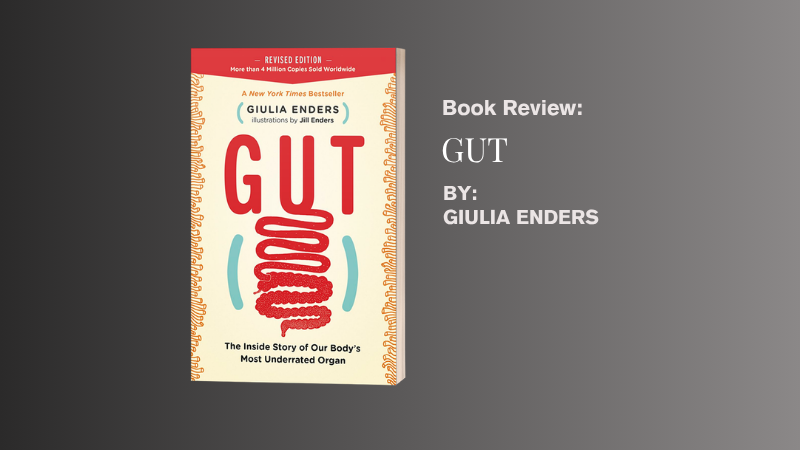
Why Your Microbiome is the Secret to Wellness: A Review of Giulia Enders’ “Gut”
To most of us, the gut is a "Quasimodo" in the body’s architecture – unappealing, uneven and disregarded until it...
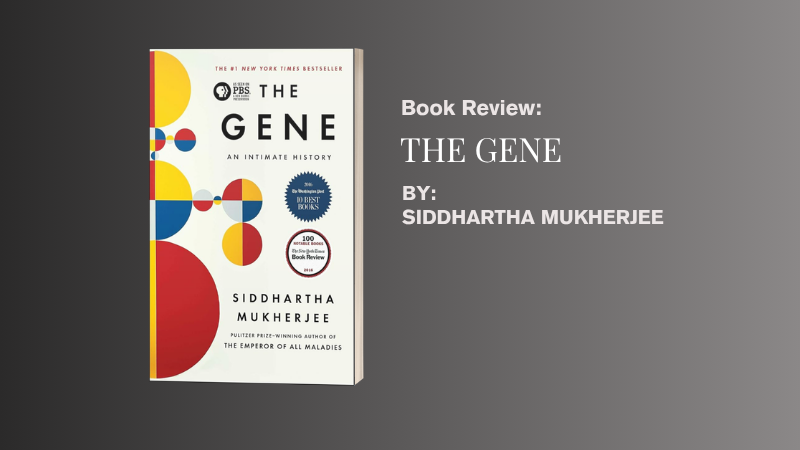
Is Your Destiny Written in DNA? A Review of Siddhartha Mukherjee’s “The Gene”
Whereas the twentieth century could be described as the age of the splitting of atoms and the creation of the digital bits...
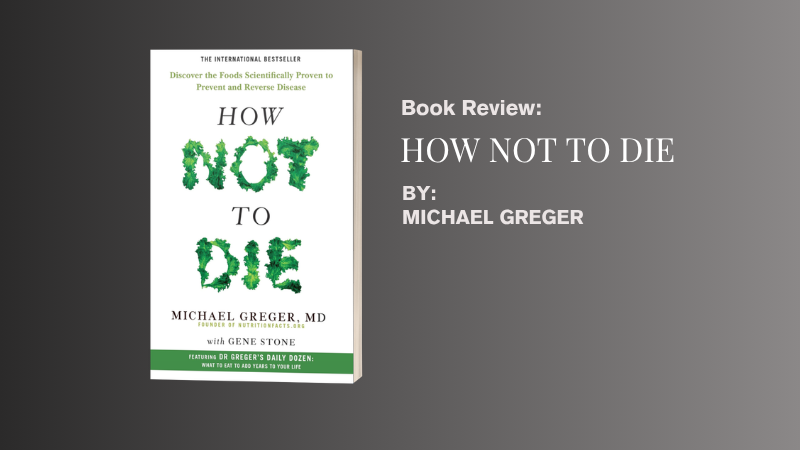
Can You Eat Your Way to a Longer Life? A Review of Michael Greger’s “How Not to Die”
Should one be browsing the selection in the health and wellness department of a Canadian bookstore, "How Not to Die"...
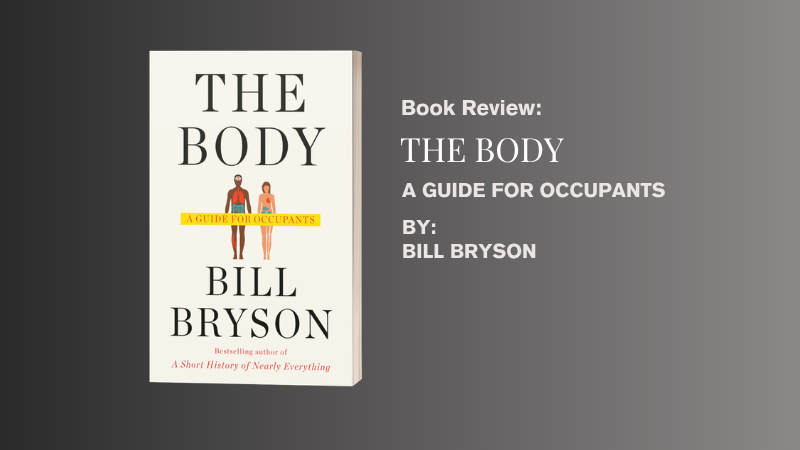
Your Body Explained Like Never Before: A Fascinating Tour from Head to Toe
If you were to take your body to a hardware store in an attempt to price out the various elements within...