
Book Review: Stiff: The Curious Lives of Human Cadavers by Mary Roach
“What happens when the body keeps working after life ends.”
A Scene Few of Us Imagine
The room is lit by harsh fluorescent bulbs, the kind that wash colour from faces and turn everything clinical. Around a steel table stand a group of young surgeons. Their instruments gleam. On the table rests not a patient under anaesthesia, but a cadaver head, carefully prepared for practice.
The students lean in. Their hands hesitate for a moment, then steady. Every movement here—the awkward first cut, the pause before a correction, the repetition of a gesture—will one day be performed in an operating room, only then the stakes will be measured in beating hearts.
It’s an image that can feel unsettling, even invasive. Yet behind the strangeness lies something profoundly generous. Someone once alive, with memories and attachments, chose to become a teacher after death.
This is the world Mary Roach explores in Stiff: The Curious Lives of Human Cadavers. It is not a book about dying, but about the afterlives of bodies. And in her hands, what could have been morbid becomes both illuminating and unexpectedly funny.
Turning Toward What We Avoid
Modern culture keeps death at a distance. We outsource it to hospitals, funeral homes, and institutions. The language is softened, the details hidden. Roach refuses to play along. She turns her gaze directly on the subject most of us avoid and asks: what do the dead actually do for the living?
The answer, it turns out, is far more than we realize. Cadavers have been the silent collaborators behind many of the advances we now take for granted: surgical breakthroughs, safer cars, forensic tools that bring justice to families. Roach’s achievement is to bring these contributions to light without stripping them of dignity.
The Hidden Work of the Dead
Each chapter of Stiff is a doorway into a space few readers have entered. In one, Roach describes how crash-test facilities once relied on cadavers before switching to modern dummies. These bodies endured impact after impact, giving engineers data no machine could replicate. The seatbelt you click into place every morning is part of that legacy.
In another, she takes us to a “body farm,” where donated corpses are left outdoors in different conditions so scientists can map how decay unfolds. It’s unsettling to read about the choreography of flies, maggots, and microbes, yet that research allows investigators to pinpoint time of death with startling accuracy. Without it, many murder cases would remain unsolved.
And then there are the classrooms, where donated heads and limbs allow medical students to make mistakes in a place where mistakes do not kill. Every confident surgeon, every smooth incision in a hospital, is built on hours spent learning from the dead.
What makes the book so readable is Roach’s voice. She never sensationalizes, never treats cadavers as props for shock. Instead, she writes with journalistic precision and a comic touch, as if she knows when the reader needs a joke to cut through the tension. Her humour is never cruel; it’s the kind that makes unbearable material just bearable enough to confront.
The Radical Act of Generosity
As strange as the details may be, Stiff is not really about the macabre. It is about generosity. Every cadaver in Roach’s pages was once a person who chose to keep giving after death. Their bodies became data, practice, or evidence. Their final act was one of service, an extension of community that most of us never consider.
In a culture that often measures generosity in money or hours, this is generosity at its most radical. Roach captures this tension perfectly: the mix of strangeness and nobility, of science and service. Reading Stiff is to realize that the very things we rely on for safety and healing—the airbag that deploys in a crash, the surgeon who saves a life—are built on these silent contributions.
A Canadian Reflection
For Canadian readers, Roach’s message resonates in a particular way. We often speak about giving back, about serving community beyond ourselves. Stiff presents that ethic in its most extreme form. It asks: what does it mean to contribute after you are no longer here to see the result?
It is an uncomfortable question, but also an inspiring one. In a society that tends to sanitize death, Roach restores a sense of meaning to what happens after. The dead are not simply gone. They remain present, woven into the fabric of the everyday—into the safety features of your car, the precision of your doctor, the justice of a solved case.
Closing Reflection
Stiff is not for the faint of heart. Some readers may put it down for a moment, unsettled by the imagery. Yet those who keep going will find a book that reshapes how we think about both death and life.
Mary Roach transforms the macabre into meditation. She makes you laugh in one sentence and pause in the next. And when you finish, you carry with you a new respect—not only for the science that cadavers make possible, but for the people who chose to remain useful even after their last breath.
Five Takeaways from Stiff
- Share

Suman Dhar
A qualified professional with extensive experience in education and human resources. As a HR Professional, Management Consultant, or Training Specialist, he is interested in cultivating intellect and curating insight.
The Simple Device That Is Keeping People Alive During an Age of Excessive Complexity: An Analysis of Atul Gawande’s “The Checklist Manifesto”
From Surgical Safety to Money Management: How Expertise Is Not Sufficient To Stop Avoidable Mistakes...
Why Your Microbiome is the Secret to Wellness: A Review of Giulia Enders’ “Gut”
To most of us, the gut is a "Quasimodo" in the body’s architecture – unappealing, uneven and disregarded until it...
Is Your Destiny Written in DNA? A Review of Siddhartha Mukherjee’s “The Gene”
Whereas the twentieth century could be described as the age of the splitting of atoms and the creation of the digital bits...
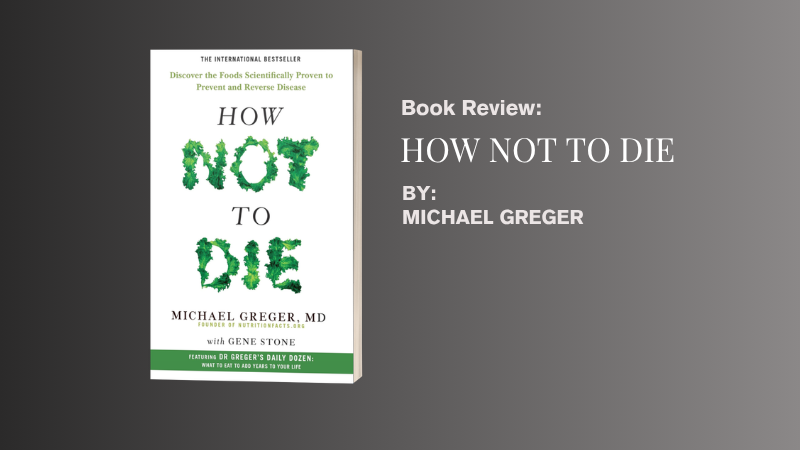
Can You Eat Your Way to a Longer Life? A Review of Michael Greger’s “How Not to Die”
Should one be browsing the selection in the health and wellness department of a Canadian bookstore, "How Not to Die"...
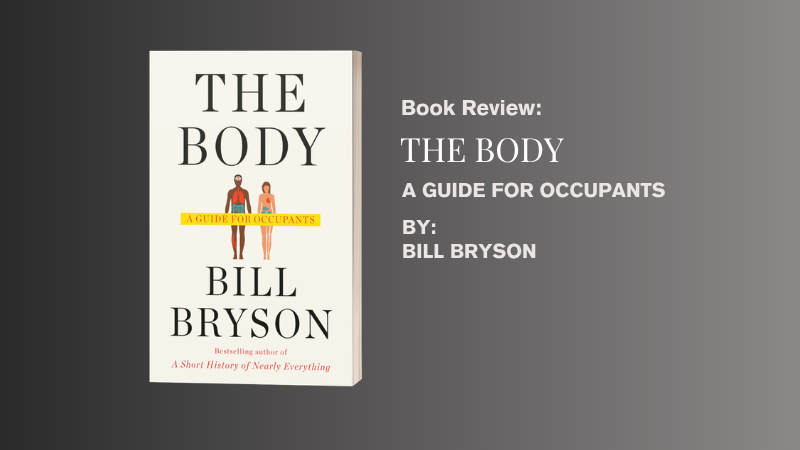
Your Body Explained Like Never Before: A Fascinating Tour from Head to Toe
If you were to take your body to a hardware store in an attempt to price out the various elements within...
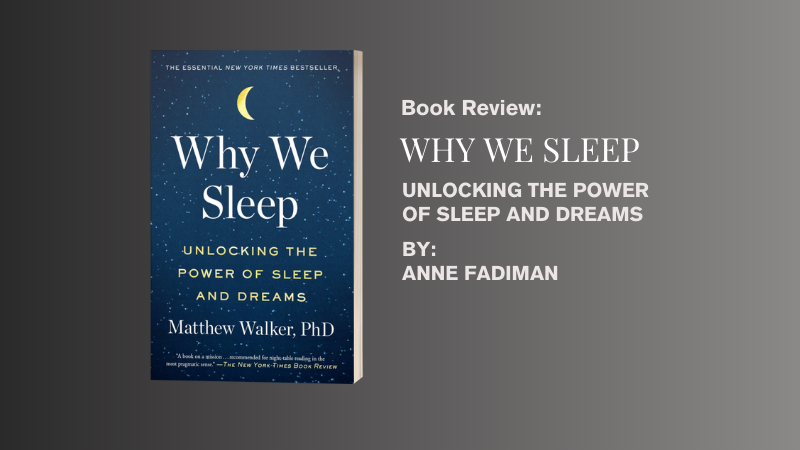
The Nightly Elixir: Why Sleep is the Billion-Dollar Secret to Living Longer
What if there was a tool, a biological tool, that was part of all of our makeup, which could improve your memory...